

than those produced with 1. The lowest vinyl selectivities and vinyl contents were
in polyethylenes based on 6 and 8. The introduction of a tetrahydroindenyl ligand or
change of the central metal to Hf reduced the vinyl selectivity to the level of
25–40%.
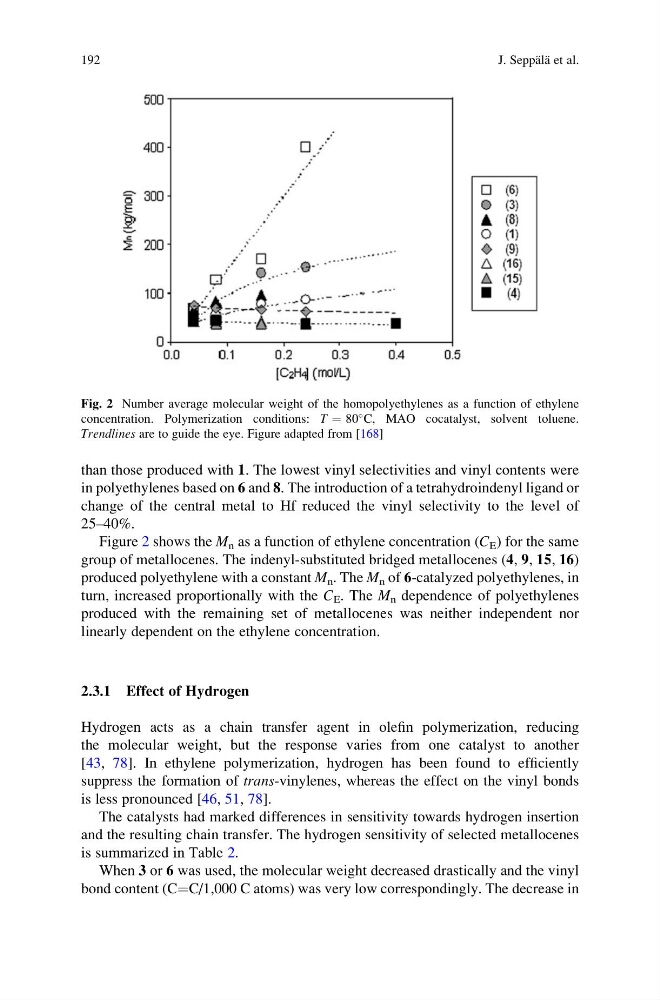
Figure 2 shows the M n as a function of ethylene concentration (C E ) for the same
group of metallocenes. The indenyl-substituted bridged metallocenes (4, 9, 15, 16)
produced polyethylene with a constant M n . The M n of 6-catalyzed polyethylenes, in
turn, increased proportionally with the C E . The M n dependence of polyethylenes
produced with the remaining set of metallocenes was neither independent nor
linearly dependent on the ethylene concentration.
2.3.1 Effect of Hydrogen
Hydrogen acts as a chain transfer agent in olefin polymerization, reducing
the molecular weight, but the response varies from one catalyst to another
[43, 78]. In ethylene polymerization, hydrogen has been found to efficiently
suppress the formation of trans-vinylenes, whereas the effect on the vinyl bonds
is less pronounced [46, 51, 78].
The catalysts had marked differences in sensitivity towards hydrogen insertion
and the resulting chain transfer. The hydrogen sensitivity of selected metallocenes
is summarized in Table 2.
When 3 or 6 was used, the molecular weight decreased drastically and the vinyl
bond content (C¼C/1,000 C atoms) was very low correspondingly. The decrease in
Fig. 2 Number average molecular weight of the homopolyethylenes as a function of ethylene
concentration. Polymerization conditions: T ¼ 80
C, MAO cocatalyst, solvent toluene.
Trendlines are to guide the eye. Figure adapted from [168]
192
J. Seppa ¨la ¨ et al.
in polyethylenes based on 6 and 8. The introduction of a tetrahydroindenyl ligand or
change of the central metal to Hf reduced the vinyl selectivity to the level of
25–40%.
Figure 2 shows the M n as a function of ethylene concentration (C E ) for the same
group of metallocenes. The indenyl-substituted bridged metallocenes (4, 9, 15, 16)
produced polyethylene with a constant M n . The M n of 6-catalyzed polyethylenes, in
turn, increased proportionally with the C E . The M n dependence of polyethylenes
produced with the remaining set of metallocenes was neither independent nor
linearly dependent on the ethylene concentration.
2.3.1 Effect of Hydrogen
Hydrogen acts as a chain transfer agent in olefin polymerization, reducing
the molecular weight, but the response varies from one catalyst to another
[43, 78]. In ethylene polymerization, hydrogen has been found to efficiently
suppress the formation of trans-vinylenes, whereas the effect on the vinyl bonds
is less pronounced [46, 51, 78].
The catalysts had marked differences in sensitivity towards hydrogen insertion
and the resulting chain transfer. The hydrogen sensitivity of selected metallocenes
is summarized in Table 2.
When 3 or 6 was used, the molecular weight decreased drastically and the vinyl
bond content (C¼C/1,000 C atoms) was very low correspondingly. The decrease in
Fig. 2 Number average molecular weight of the homopolyethylenes as a function of ethylene
concentration. Polymerization conditions: T ¼ 80
C, MAO cocatalyst, solvent toluene.
Trendlines are to guide the eye. Figure adapted from [168]
192
J. Seppa ¨la ¨ et al.