

elaboration of a novel strategy to instill molecules with well-defined folded secondary structures in solution.
3.2 Systematic Investigations of Oligorotaxane Foldamers
These remarkable results for the folded polyrotaxanes motivated us to undertake a
more detailed investigation of analogous monodisperse oligomers in order to shed
more light on the dynamics and secondary structures they adopt in solution. We
anticipated that a more complete understanding of the solution-state structures and
a
b
c
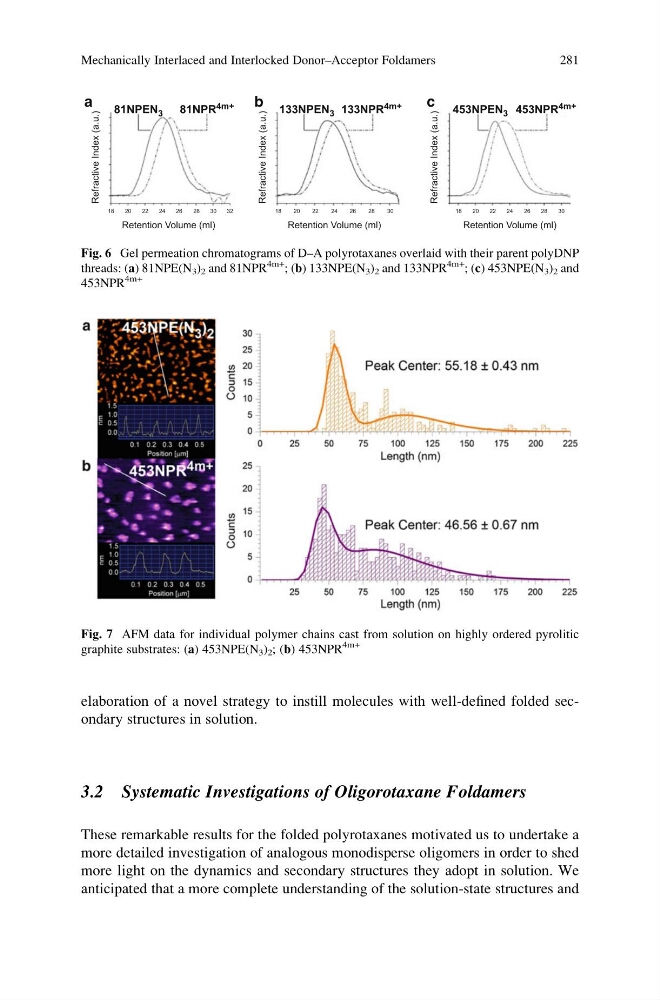
Fig. 6 Gel permeation chromatograms of D–A polyrotaxanes overlaid with their parent polyDNP
threads: (a) 81NPE(N 3 ) 2 and 81NPR
4m+ ; (b) 133NPE(N 3 ) 2 and 133NPR
4m+ ; (c) 453NPE(N 3 ) 2 and
453NPR
4m+
Fig. 7 AFM data for individual polymer chains cast from solution on highly ordered pyrolitic
graphite substrates: (a) 453NPE(N 3 ) 2 ; (b) 453NPR
4m+
Mechanically Interlaced and Interlocked Donor–Acceptor Foldamers
281
3.2 Systematic Investigations of Oligorotaxane Foldamers
These remarkable results for the folded polyrotaxanes motivated us to undertake a
more detailed investigation of analogous monodisperse oligomers in order to shed
more light on the dynamics and secondary structures they adopt in solution. We
anticipated that a more complete understanding of the solution-state structures and
a
b
c
Fig. 6 Gel permeation chromatograms of D–A polyrotaxanes overlaid with their parent polyDNP
threads: (a) 81NPE(N 3 ) 2 and 81NPR
4m+ ; (b) 133NPE(N 3 ) 2 and 133NPR
4m+ ; (c) 453NPE(N 3 ) 2 and
453NPR
4m+
Fig. 7 AFM data for individual polymer chains cast from solution on highly ordered pyrolitic
graphite substrates: (a) 453NPE(N 3 ) 2 ; (b) 453NPR
4m+
Mechanically Interlaced and Interlocked Donor–Acceptor Foldamers
281