

tumors with low permeability after systemic administration [38], and reduces
their accumulation in the organs of the reticuloendothelial system
The controllable release of cargo, which can be achieved by tailoring the bond
between the payload and the micelles or by using stimuli-responsive block
copolymers, permits triggered therapeutic activity [39, 40]
Their ability to dissociate into the former block copolymers, which can be excreted
by glomerular filtration in the kidney, avoids any long-term side effects
Besides hydrophobic interactions, block copolymers present high versatility for
engineering the intermolecular forces that can be used to segregate the compartmentalized nanoarchitecture of nanoassemblies [34, 35, 41, 42]. Accordingly, our
group have demonstrated the possibility to self-assemble core–shell polymeric
micelles via electrostatic interaction by using a pair of oppositely charged block
copolymers, i.e., PEG-b-poly(aspartic acid) and PEG-b-poly(L-lysine) [43,
44]. Through a similar approach, we have constructed micelles incorporating
negatively charged antisense oligonucleotides [45], plasmid DNA [46], proteins
[47], and siRNA [48] in their core. We have named these assemblies polyion
complex (PIC) micelles. Whereas the therapeutic efficacy of proteins and genes is
hampered by their instability in physiological conditions and low cellular internalization, and the in vivo application of polymeric gene vectors based on polycations
is limited because of aggregation and toxicity, PIC micelles have demonstrated
high efficacy and low toxicity in vivo, suggesting great potential for development of
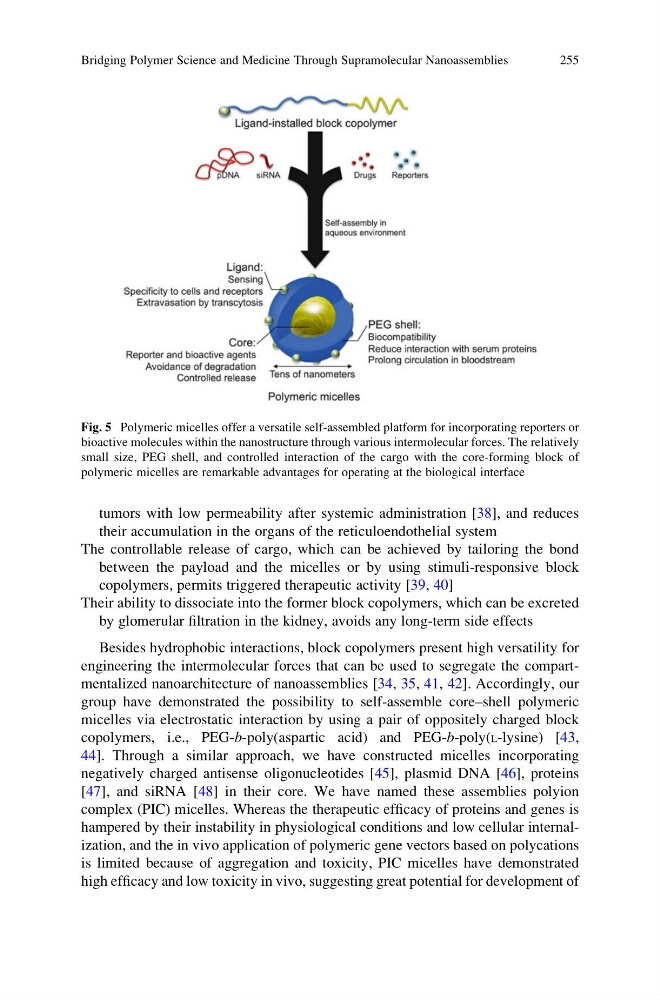
Fig. 5 Polymeric micelles offer a versatile self-assembled platform for incorporating reporters or
bioactive molecules within the nanostructure through various intermolecular forces. The relatively
small size, PEG shell, and controlled interaction of the cargo with the core-forming block of
polymeric micelles are remarkable advantages for operating at the biological interface
Bridging Polymer Science and Medicine Through Supramolecular Nanoassemblies
255
their accumulation in the organs of the reticuloendothelial system
The controllable release of cargo, which can be achieved by tailoring the bond
between the payload and the micelles or by using stimuli-responsive block
copolymers, permits triggered therapeutic activity [39, 40]
Their ability to dissociate into the former block copolymers, which can be excreted
by glomerular filtration in the kidney, avoids any long-term side effects
Besides hydrophobic interactions, block copolymers present high versatility for
engineering the intermolecular forces that can be used to segregate the compartmentalized nanoarchitecture of nanoassemblies [34, 35, 41, 42]. Accordingly, our
group have demonstrated the possibility to self-assemble core–shell polymeric
micelles via electrostatic interaction by using a pair of oppositely charged block
copolymers, i.e., PEG-b-poly(aspartic acid) and PEG-b-poly(L-lysine) [43,
44]. Through a similar approach, we have constructed micelles incorporating
negatively charged antisense oligonucleotides [45], plasmid DNA [46], proteins
[47], and siRNA [48] in their core. We have named these assemblies polyion
complex (PIC) micelles. Whereas the therapeutic efficacy of proteins and genes is
hampered by their instability in physiological conditions and low cellular internalization, and the in vivo application of polymeric gene vectors based on polycations
is limited because of aggregation and toxicity, PIC micelles have demonstrated
high efficacy and low toxicity in vivo, suggesting great potential for development of
Fig. 5 Polymeric micelles offer a versatile self-assembled platform for incorporating reporters or
bioactive molecules within the nanostructure through various intermolecular forces. The relatively
small size, PEG shell, and controlled interaction of the cargo with the core-forming block of
polymeric micelles are remarkable advantages for operating at the biological interface
Bridging Polymer Science and Medicine Through Supramolecular Nanoassemblies
255