

programmable nanoscale affinity interaction, the geometrical relationship of the two
participants is known a priori.
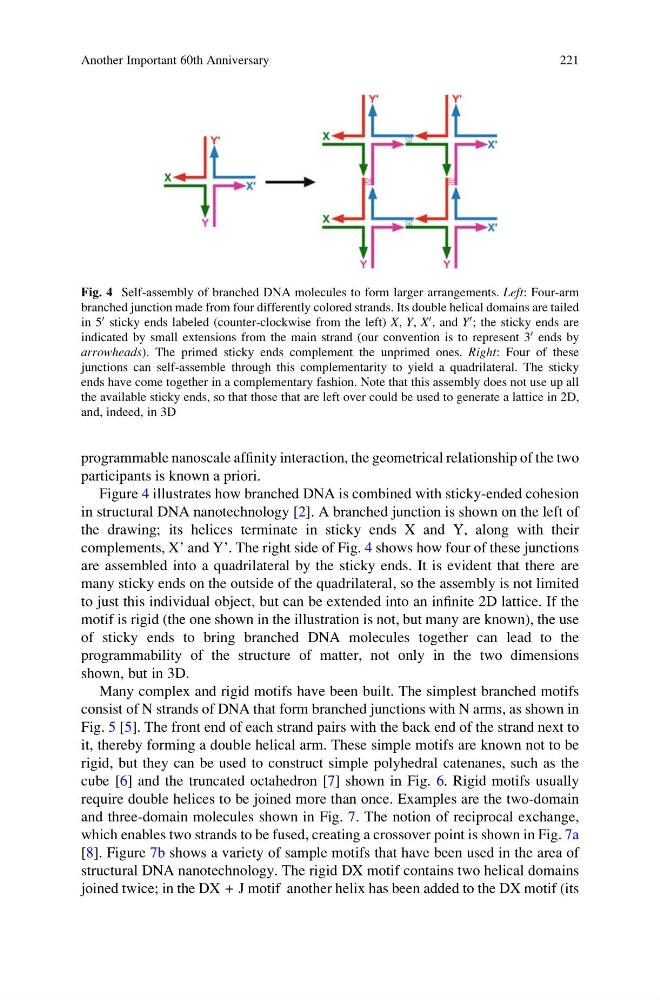
Figure 4 illustrates how branched DNA is combined with sticky-ended cohesion
in structural DNA nanotechnology [2]. A branched junction is shown on the left of
the drawing; its helices terminate in sticky ends X and Y, along with their
complements, X’ and Y’. The right side of Fig. 4 shows how four of these junctions
are assembled into a quadrilateral by the sticky ends. It is evident that there are
many sticky ends on the outside of the quadrilateral, so the assembly is not limited
to just this individual object, but can be extended into an infinite 2D lattice. If the
motif is rigid (the one shown in the illustration is not, but many are known), the use
of sticky ends to bring branched DNA molecules together can lead to the
programmability of the structure of matter, not only in the two dimensions
shown, but in 3D.
Many complex and rigid motifs have been built. The simplest branched motifs
consist of N strands of DNA that form branched junctions with N arms, as shown in
Fig. 5 [5]. The front end of each strand pairs with the back end of the strand next to
it, thereby forming a double helical arm. These simple motifs are known not to be
rigid, but they can be used to construct simple polyhedral catenanes, such as the
cube [6] and the truncated octahedron [7] shown in Fig. 6. Rigid motifs usually
require double helices to be joined more than once. Examples are the two-domain
and three-domain molecules shown in Fig. 7. The notion of reciprocal exchange,
which enables two strands to be fused, creating a crossover point is shown in Fig. 7a
[8]. Figure 7b shows a variety of sample motifs that have been used in the area of
structural DNA nanotechnology. The rigid DX motif contains two helical domains
joined twice; in the DX + J motif another helix has been added to the DX motif (its
Fig. 4 Self-assembly of branched DNA molecules to form larger arrangements. Left: Four-arm
branched junction made from four differently colored strands. Its double helical domains are tailed
in 5
0 sticky ends labeled (counter-clockwise from the left) X, Y, X
0 , and Y
0 ; the sticky ends are
indicated by small extensions from the main strand (our convention is to represent 3
0 ends by
arrowheads). The primed sticky ends complement the unprimed ones. Right: Four of these
junctions can self-assemble through this complementarity to yield a quadrilateral. The sticky
ends have come together in a complementary fashion. Note that this assembly does not use up all
the available sticky ends, so that those that are left over could be used to generate a lattice in 2D,
and, indeed, in 3D
Another Important 60th Anniversary
221
participants is known a priori.
Figure 4 illustrates how branched DNA is combined with sticky-ended cohesion
in structural DNA nanotechnology [2]. A branched junction is shown on the left of
the drawing; its helices terminate in sticky ends X and Y, along with their
complements, X’ and Y’. The right side of Fig. 4 shows how four of these junctions
are assembled into a quadrilateral by the sticky ends. It is evident that there are
many sticky ends on the outside of the quadrilateral, so the assembly is not limited
to just this individual object, but can be extended into an infinite 2D lattice. If the
motif is rigid (the one shown in the illustration is not, but many are known), the use
of sticky ends to bring branched DNA molecules together can lead to the
programmability of the structure of matter, not only in the two dimensions
shown, but in 3D.
Many complex and rigid motifs have been built. The simplest branched motifs
consist of N strands of DNA that form branched junctions with N arms, as shown in
Fig. 5 [5]. The front end of each strand pairs with the back end of the strand next to
it, thereby forming a double helical arm. These simple motifs are known not to be
rigid, but they can be used to construct simple polyhedral catenanes, such as the
cube [6] and the truncated octahedron [7] shown in Fig. 6. Rigid motifs usually
require double helices to be joined more than once. Examples are the two-domain
and three-domain molecules shown in Fig. 7. The notion of reciprocal exchange,
which enables two strands to be fused, creating a crossover point is shown in Fig. 7a
[8]. Figure 7b shows a variety of sample motifs that have been used in the area of
structural DNA nanotechnology. The rigid DX motif contains two helical domains
joined twice; in the DX + J motif another helix has been added to the DX motif (its
Fig. 4 Self-assembly of branched DNA molecules to form larger arrangements. Left: Four-arm
branched junction made from four differently colored strands. Its double helical domains are tailed
in 5
0 sticky ends labeled (counter-clockwise from the left) X, Y, X
0 , and Y
0 ; the sticky ends are
indicated by small extensions from the main strand (our convention is to represent 3
0 ends by
arrowheads). The primed sticky ends complement the unprimed ones. Right: Four of these
junctions can self-assemble through this complementarity to yield a quadrilateral. The sticky
ends have come together in a complementary fashion. Note that this assembly does not use up all
the available sticky ends, so that those that are left over could be used to generate a lattice in 2D,
and, indeed, in 3D
Another Important 60th Anniversary
221