

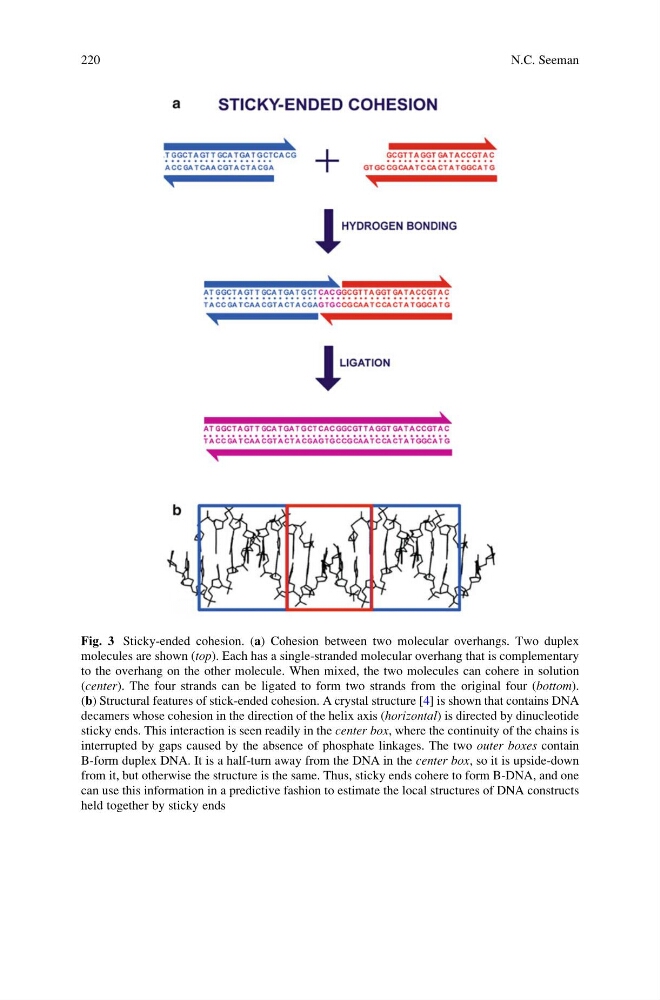
Fig. 3 Sticky-ended cohesion. (a) Cohesion between two molecular overhangs. Two duplex
molecules are shown (top). Each has a single-stranded molecular overhang that is complementary
to the overhang on the other molecule. When mixed, the two molecules can cohere in solution
(center). The four strands can be ligated to form two strands from the original four (bottom).
(b) Structural features of stick-ended cohesion. A crystal structure [4] is shown that contains DNA
decamers whose cohesion in the direction of the helix axis (horizontal) is directed by dinucleotide
sticky ends. This interaction is seen readily in the center box, where the continuity of the chains is
interrupted by gaps caused by the absence of phosphate linkages. The two outer boxes contain
B-form duplex DNA. It is a half-turn away from the DNA in the center box, so it is upside-down
from it, but otherwise the structure is the same. Thus, sticky ends cohere to form B-DNA, and one
can use this information in a predictive fashion to estimate the local structures of DNA constructs
held together by sticky ends
220
N.C. Seeman
molecules are shown (top). Each has a single-stranded molecular overhang that is complementary
to the overhang on the other molecule. When mixed, the two molecules can cohere in solution
(center). The four strands can be ligated to form two strands from the original four (bottom).
(b) Structural features of stick-ended cohesion. A crystal structure [4] is shown that contains DNA
decamers whose cohesion in the direction of the helix axis (horizontal) is directed by dinucleotide
sticky ends. This interaction is seen readily in the center box, where the continuity of the chains is
interrupted by gaps caused by the absence of phosphate linkages. The two outer boxes contain
B-form duplex DNA. It is a half-turn away from the DNA in the center box, so it is upside-down
from it, but otherwise the structure is the same. Thus, sticky ends cohere to form B-DNA, and one
can use this information in a predictive fashion to estimate the local structures of DNA constructs
held together by sticky ends
220
N.C. Seeman