

The answer came from transplanting the biological methodologies of structural
analysis, including X-ray diffraction methods employing helical diffraction theory
[72] on aligned fibers [34–36], isomorphous replacement [73], electron diffraction
and electron density maps [60, 63–65] combined with circular dichroism [74–77]
experiments. They demonstrated that both rod-like [72, 76, 77] and globular [74,
75] assemblies are helical and, therefore, are chiral. The next critical question was
whether the primary structure of the dendron or the structure of the repeat unit
determines the supramolecular organization. Subsequently, we investigated additional constitutional isomeric libraries of AB 2 , AB 3 , AB 4 , and AB 5 amphiphilic
dendrons in which the benzyl ether was replaced by a biphenylmethyl ether [78], a
phenylpropyl ether [79], or a biphenylpropyl ether [80] and even more complex
dendrons [81, 82] as mimics of β- , γ- , and δ-amino acids.
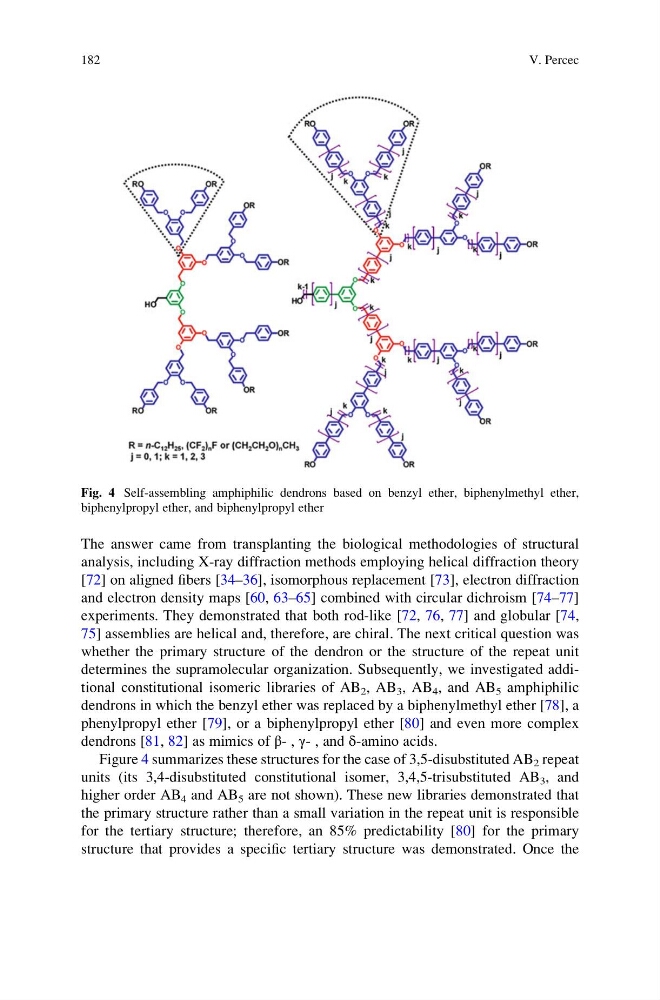
Figure 4 summarizes these structures for the case of 3,5-disubstituted AB 2 repeat
units (its 3,4-disubstituted constitutional isomer, 3,4,5-trisubstituted AB 3 , and
higher order AB 4 and AB 5 are not shown). These new libraries demonstrated that
the primary structure rather than a small variation in the repeat unit is responsible
for the tertiary structure; therefore, an 85% predictability [80] for the primary
structure that provides a specific tertiary structure was demonstrated. Once the
Fig. 4 Self-assembling amphiphilic dendrons based on benzyl ether, biphenylmethyl ether,
biphenylpropyl ether, and biphenylpropyl ether
182
V. Percec
analysis, including X-ray diffraction methods employing helical diffraction theory
[72] on aligned fibers [34–36], isomorphous replacement [73], electron diffraction
and electron density maps [60, 63–65] combined with circular dichroism [74–77]
experiments. They demonstrated that both rod-like [72, 76, 77] and globular [74,
75] assemblies are helical and, therefore, are chiral. The next critical question was
whether the primary structure of the dendron or the structure of the repeat unit
determines the supramolecular organization. Subsequently, we investigated additional constitutional isomeric libraries of AB 2 , AB 3 , AB 4 , and AB 5 amphiphilic
dendrons in which the benzyl ether was replaced by a biphenylmethyl ether [78], a
phenylpropyl ether [79], or a biphenylpropyl ether [80] and even more complex
dendrons [81, 82] as mimics of β- , γ- , and δ-amino acids.
Figure 4 summarizes these structures for the case of 3,5-disubstituted AB 2 repeat
units (its 3,4-disubstituted constitutional isomer, 3,4,5-trisubstituted AB 3 , and
higher order AB 4 and AB 5 are not shown). These new libraries demonstrated that
the primary structure rather than a small variation in the repeat unit is responsible
for the tertiary structure; therefore, an 85% predictability [80] for the primary
structure that provides a specific tertiary structure was demonstrated. Once the
Fig. 4 Self-assembling amphiphilic dendrons based on benzyl ether, biphenylmethyl ether,
biphenylpropyl ether, and biphenylpropyl ether
182
V. Percec