

Of great interest is the ability of dynamers, and of constitutional materials in
general, to undergo supramolecular or molecular self-healing through
reoganization and/or reestablisment of non-covalent interactions or of covalent
bonds, thus offering opportunities to develop mendable polymer materials
[76–80] of supramolecular [59, 81–85] or molecular [67, 86, 87] type, based for
instance on the implementation of reversible Diels–Alder reactions [67, 76, 86, 87].
Biodynamers are dynamic analogs of biopolymers and may be derived by
connecting biological-type (biologous) building blocks through reversible linkages.
Hybrid entities are obtained when biological and nonbiological partners are combined within the same dynamer. Thus, dynamic analogs of nucleic acids, DyNAs, are
generated as cationic dynamers bearing nucleobase residues, whose polymerization
is driven by the binding of polyanionic substrates [88] (see also figure 9 in [42]).
Hybrid dynamic proteoids, containing alternating imine and acylhydrazone
linkages, have been obtained by polycondensation of amphiphilic dialdehydes
with amino acid hydrazides. The polymerization displays nucleation–elongation
behavior driven by hydrophobic effects, resulting in the formation of globular
particles reminiscent of folded proteins (Fig. 6) [89].
Glycodynamers of main-chain type (Fig. 6) [90] or resulting from the polycondensation of monomers bearing lateral glycosidic residues [91, 92] (see also figure
8 in [42]) have been obtained. In the latter case, the formation of a compact bottlebrush type of structure results in a fluorescent dynamer entity. The dynamic nature of
this glycodynamer is demonstrated by the progressive constitutional conversion of a
compound presenting a blue emission into one emitting green light by component
exchange on addition of the adequate partner (Fig. 7) [91, 92].
Non-emissive
Non-emissive
Yellow emission
OPTO-DYNAMICS
Hard film
Gum
Soft film
MECHANO-DYNAMICS
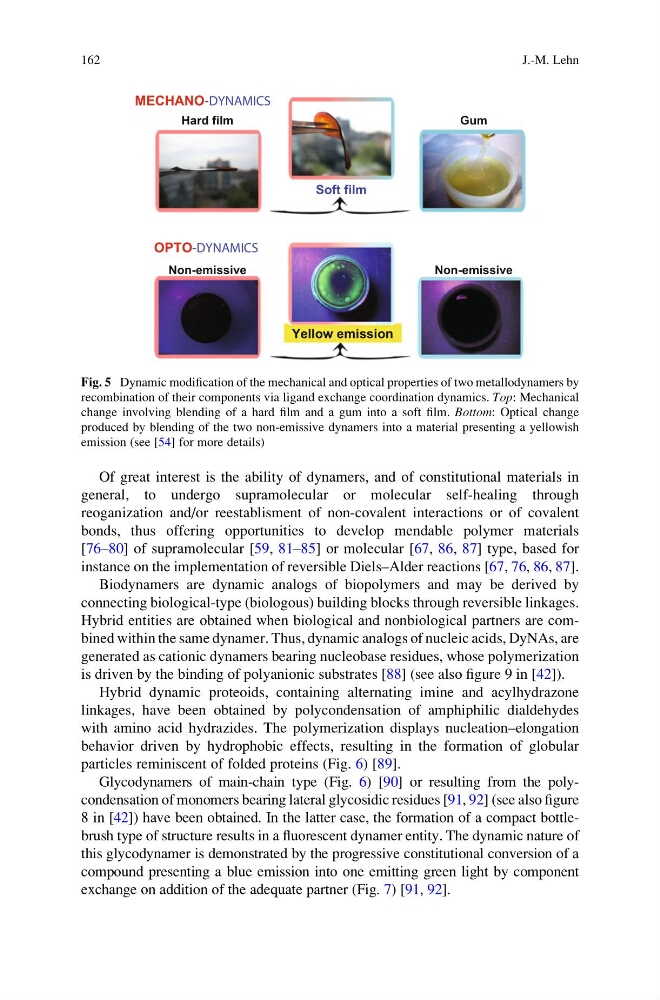
Fig. 5 Dynamic modification of the mechanical and optical properties of two metallodynamers by
recombination of their components via ligand exchange coordination dynamics. Top: Mechanical
change involving blending of a hard film and a gum into a soft film. Bottom: Optical change
produced by blending of the two non-emissive dynamers into a material presenting a yellowish
emission (see [54] for more details)
162
J.-M. Lehn
general, to undergo supramolecular or molecular self-healing through
reoganization and/or reestablisment of non-covalent interactions or of covalent
bonds, thus offering opportunities to develop mendable polymer materials
[76–80] of supramolecular [59, 81–85] or molecular [67, 86, 87] type, based for
instance on the implementation of reversible Diels–Alder reactions [67, 76, 86, 87].
Biodynamers are dynamic analogs of biopolymers and may be derived by
connecting biological-type (biologous) building blocks through reversible linkages.
Hybrid entities are obtained when biological and nonbiological partners are combined within the same dynamer. Thus, dynamic analogs of nucleic acids, DyNAs, are
generated as cationic dynamers bearing nucleobase residues, whose polymerization
is driven by the binding of polyanionic substrates [88] (see also figure 9 in [42]).
Hybrid dynamic proteoids, containing alternating imine and acylhydrazone
linkages, have been obtained by polycondensation of amphiphilic dialdehydes
with amino acid hydrazides. The polymerization displays nucleation–elongation
behavior driven by hydrophobic effects, resulting in the formation of globular
particles reminiscent of folded proteins (Fig. 6) [89].
Glycodynamers of main-chain type (Fig. 6) [90] or resulting from the polycondensation of monomers bearing lateral glycosidic residues [91, 92] (see also figure
8 in [42]) have been obtained. In the latter case, the formation of a compact bottlebrush type of structure results in a fluorescent dynamer entity. The dynamic nature of
this glycodynamer is demonstrated by the progressive constitutional conversion of a
compound presenting a blue emission into one emitting green light by component
exchange on addition of the adequate partner (Fig. 7) [91, 92].
Non-emissive
Non-emissive
Yellow emission
OPTO-DYNAMICS
Hard film
Gum
Soft film
MECHANO-DYNAMICS
Fig. 5 Dynamic modification of the mechanical and optical properties of two metallodynamers by
recombination of their components via ligand exchange coordination dynamics. Top: Mechanical
change involving blending of a hard film and a gum into a soft film. Bottom: Optical change
produced by blending of the two non-emissive dynamers into a material presenting a yellowish
emission (see [54] for more details)
162
J.-M. Lehn