

perylene diimide thioester 44 that was attached to an N-terminal cysteine in LHCII
by way of “chemical ligation” [74]. As described above for QDs,, constructs were
also made with dyes whereby LHCII in fact served as a light-harvester by transferring its excitation energy to an acceptor dye. In earlier work we had seen that
significant EET took place from LHCII to benzoylterrylene-3,4-dicarboximide
(BTI, 45) [75]. The transfer efficiency was limited to 70% at room temperature,
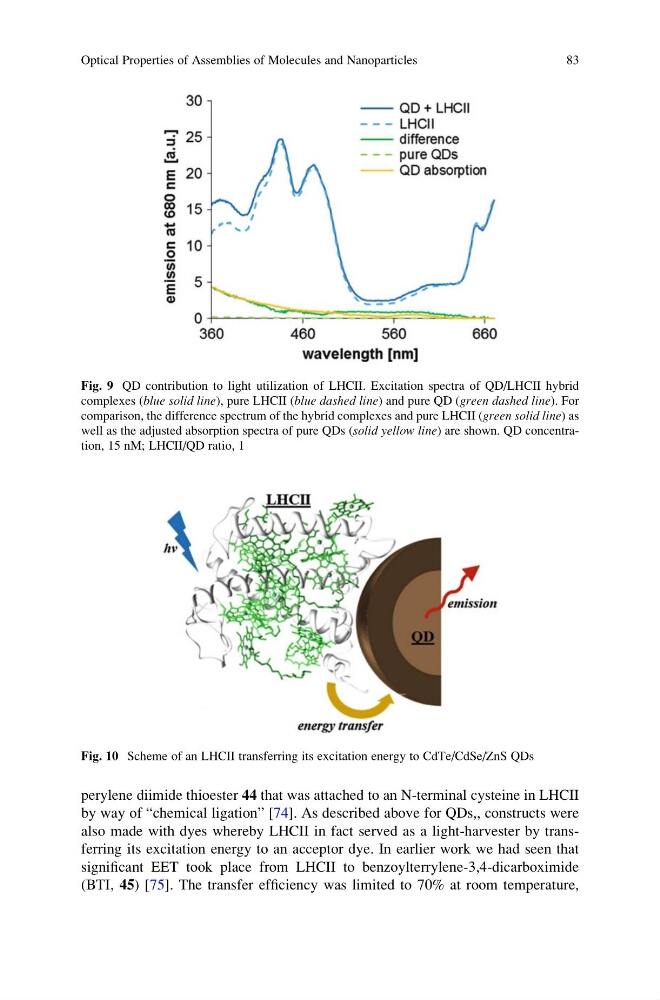
Fig. 9 QD contribution to light utilization of LHCII. Excitation spectra of QD/LHCII hybrid
complexes (blue solid line), pure LHCII (blue dashed line) and pure QD (green dashed line). For
comparison, the difference spectrum of the hybrid complexes and pure LHCII (green solid line) as
well as the adjusted absorption spectra of pure QDs (solid yellow line) are shown. QD concentration, 15 nM; LHCII/QD ratio, 1
Fig. 10 Scheme of an LHCII transferring its excitation energy to CdTe/CdSe/ZnS QDs
Optical Properties of Assemblies of Molecules and Nanoparticles
83
by way of “chemical ligation” [74]. As described above for QDs,, constructs were
also made with dyes whereby LHCII in fact served as a light-harvester by transferring its excitation energy to an acceptor dye. In earlier work we had seen that
significant EET took place from LHCII to benzoylterrylene-3,4-dicarboximide
(BTI, 45) [75]. The transfer efficiency was limited to 70% at room temperature,
Fig. 9 QD contribution to light utilization of LHCII. Excitation spectra of QD/LHCII hybrid
complexes (blue solid line), pure LHCII (blue dashed line) and pure QD (green dashed line). For
comparison, the difference spectrum of the hybrid complexes and pure LHCII (green solid line) as
well as the adjusted absorption spectra of pure QDs (solid yellow line) are shown. QD concentration, 15 nM; LHCII/QD ratio, 1
Fig. 10 Scheme of an LHCII transferring its excitation energy to CdTe/CdSe/ZnS QDs
Optical Properties of Assemblies of Molecules and Nanoparticles
83