

3 Force Spectroscopy and Microscopy of Modular
Macromolecules
With the advent of nanotechnology, there has been a strong increase in interest
in the physics of small systems far from equilibrium. Mechanically driven transformations, as carried out by single-molecule stretching experiments or observed
for molecular machines, offer a unique way to study fundamental theories of
statistical mechanics associated with fluctuation-dissipation theorems. Here, we
describe the mechanics of unfolding fibronectin in the presence of osmolytes as a
model for proteins present in the extracellular matrix. Stretching of single proteins
is done by force spectroscopy, giving insight into the structure of fibronectin. We
found that preferential exclusion of osmolytes enhances the stability of proteins.
Furthermore, we describe the mechanics of oligo calix[4]arene catenanes as a
model system that permits the control of the spatial boundaries for separation of
hydrogen bonds by mechanically arresting the unbound state with tailored loop
entanglement. Thereby, we can investigate hydrogen bond breakage both close to
equilibrium and also far from equilibrium by adjusting the separation velocity using
a linear force ramp. The loops permit the reversible rupture and rejoining of
individual nanocapsules. Experiments carried out by force spectroscopy using an
atomic force microscope are backed up by MD simulations and stochastic modeling
and reveal the presence of an intermediate state between the closed and open state
of a single nanocapsule.
3.1 Preferential Exclusion of Ectoin Enhances
the Mechanical Stability of Fibronectin
Production of osmolytes plays a pivotal role in the adaptation of organisms to
high salt conditions. Compatible solutes may act as stabilizing agents, which
protect cells from denaturing [110–113]. Among the various compatible solutes,
ectoine (1,4,5,6-tetrahydro-2-methyl-4-carboxylic acid; Fig. 25), a zwitterionic
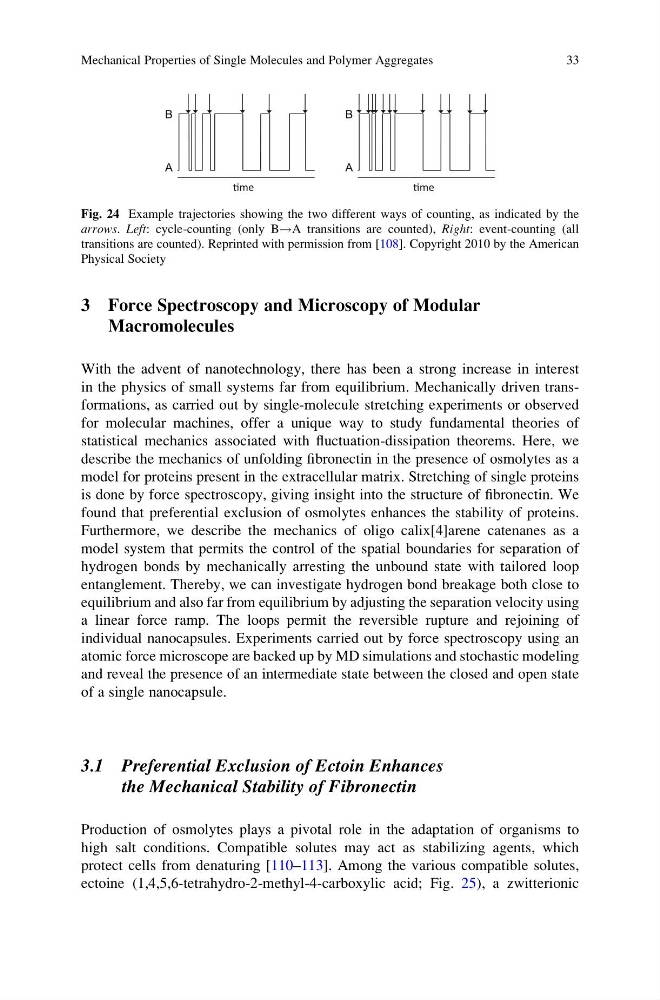
Fig. 24 Example trajectories showing the two different ways of counting, as indicated by the
arrows. Left: cycle-counting (only B!A transitions are counted), Right: event-counting (all
transitions are counted). Reprinted with permission from [108]. Copyright 2010 by the American
Physical Society
Mechanical Properties of Single Molecules and Polymer Aggregates
33
Macromolecules
With the advent of nanotechnology, there has been a strong increase in interest
in the physics of small systems far from equilibrium. Mechanically driven transformations, as carried out by single-molecule stretching experiments or observed
for molecular machines, offer a unique way to study fundamental theories of
statistical mechanics associated with fluctuation-dissipation theorems. Here, we
describe the mechanics of unfolding fibronectin in the presence of osmolytes as a
model for proteins present in the extracellular matrix. Stretching of single proteins
is done by force spectroscopy, giving insight into the structure of fibronectin. We
found that preferential exclusion of osmolytes enhances the stability of proteins.
Furthermore, we describe the mechanics of oligo calix[4]arene catenanes as a
model system that permits the control of the spatial boundaries for separation of
hydrogen bonds by mechanically arresting the unbound state with tailored loop
entanglement. Thereby, we can investigate hydrogen bond breakage both close to
equilibrium and also far from equilibrium by adjusting the separation velocity using
a linear force ramp. The loops permit the reversible rupture and rejoining of
individual nanocapsules. Experiments carried out by force spectroscopy using an
atomic force microscope are backed up by MD simulations and stochastic modeling
and reveal the presence of an intermediate state between the closed and open state
of a single nanocapsule.
3.1 Preferential Exclusion of Ectoin Enhances
the Mechanical Stability of Fibronectin
Production of osmolytes plays a pivotal role in the adaptation of organisms to
high salt conditions. Compatible solutes may act as stabilizing agents, which
protect cells from denaturing [110–113]. Among the various compatible solutes,
ectoine (1,4,5,6-tetrahydro-2-methyl-4-carboxylic acid; Fig. 25), a zwitterionic
Fig. 24 Example trajectories showing the two different ways of counting, as indicated by the
arrows. Left: cycle-counting (only B!A transitions are counted), Right: event-counting (all
transitions are counted). Reprinted with permission from [108]. Copyright 2010 by the American
Physical Society
Mechanical Properties of Single Molecules and Polymer Aggregates
33