

theory of copolymers (or of binary polymer mixtures, respectively) in the presence
of solvent [96–98].
Here, we only consider the simplified case where the backbone of the bottle
brush polymer is very stiff, so that the bottle brush polymer can be approximated as
a rigid cylinder, at least over a large-enough length scale of interest along the
cylinder axis that physical effects due to possible bending of the cylinder must be
negligible. We shall address the most symmetric case, N A ¼ N B ¼ N s and χ AA ¼
χ BB ¼ χ, for the sake of simplicity. An important observation [99] is that for large
N s the problem is in fact equivalent (at least to a very good approximation) to the
problem of mesophase formation of symmetrical block copolymers of chain length
2N s confined into a cylinder of radius R with “neutral walls” (i.e., there is no
enthalpic preference of the cylinder walls to either A or B). When the solvent
quality is poor, then the monomer density in the cylinder can be taken to be
essentially homogeneous, and the interfacial thickness of the polymer–solvent
interface (at the cylinder surface) is of the order of a few monomer diameters.
First of all, we emphasize that there is a negligible difference between the
situation in which A-chains and B-chains (each chain has N s effective monomers)
are grafted alternatively with one chain end to the rigid backbone, and that in which
A x B 1Àx copolymers (with x ¼ 1/2, each chain being twice as large) are grafted with
their junctions to the backbone, such that the total number of monomers is identical.
Secondly, if these junctions were not grafted to the backbone, but free to move in
the cylinder, there would be only a minor entropy gain [99]. Hence, the theory of
block copolymer mesophase formation in cylindrical confinement [100, 101],
where no constraint on the location of these A–B junctions exists, can be
generalized to the present problem [99].
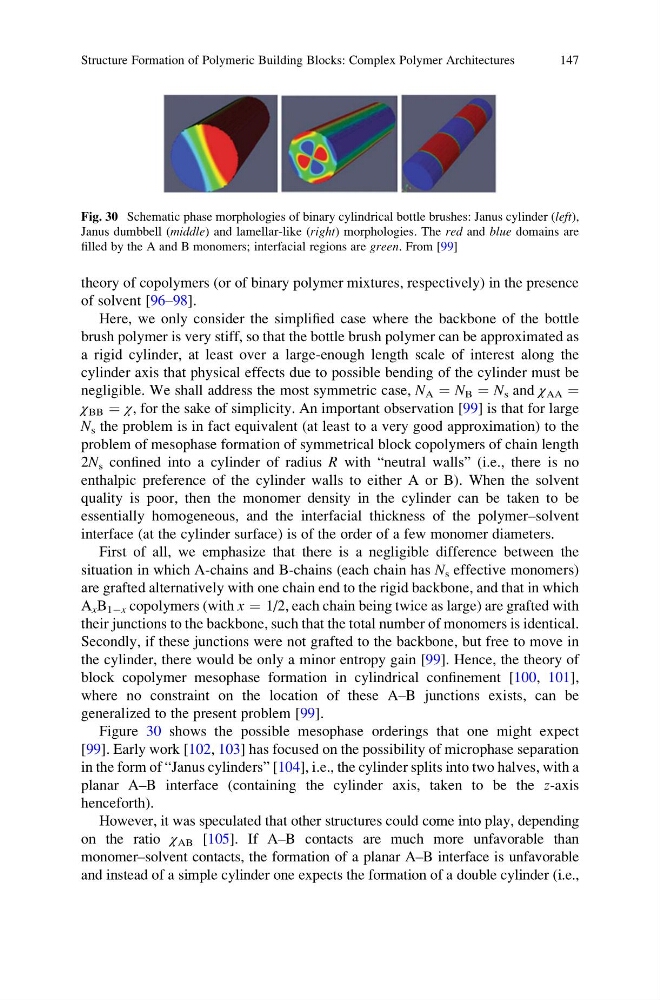
Figure 30 shows the possible mesophase orderings that one might expect
[99]. Early work [102, 103] has focused on the possibility of microphase separation
in the form of “Janus cylinders” [104], i.e., the cylinder splits into two halves, with a
planar A–B interface (containing the cylinder axis, taken to be the z-axis
henceforth).
However, it was speculated that other structures could come into play, depending
on the ratio χ AB [105]. If A–B contacts are much more unfavorable than
monomer–solvent contacts, the formation of a planar A–B interface is unfavorable
and instead of a simple cylinder one expects the formation of a double cylinder (i.e.,
Fig. 30 Schematic phase morphologies of binary cylindrical bottle brushes: Janus cylinder (left),
Janus dumbbell (middle) and lamellar-like (right) morphologies. The red and blue domains are
filled by the A and B monomers; interfacial regions are green. From [99]
Structure Formation of Polymeric Building Blocks: Complex Polymer Architectures
147
of solvent [96–98].
Here, we only consider the simplified case where the backbone of the bottle
brush polymer is very stiff, so that the bottle brush polymer can be approximated as
a rigid cylinder, at least over a large-enough length scale of interest along the
cylinder axis that physical effects due to possible bending of the cylinder must be
negligible. We shall address the most symmetric case, N A ¼ N B ¼ N s and χ AA ¼
χ BB ¼ χ, for the sake of simplicity. An important observation [99] is that for large
N s the problem is in fact equivalent (at least to a very good approximation) to the
problem of mesophase formation of symmetrical block copolymers of chain length
2N s confined into a cylinder of radius R with “neutral walls” (i.e., there is no
enthalpic preference of the cylinder walls to either A or B). When the solvent
quality is poor, then the monomer density in the cylinder can be taken to be
essentially homogeneous, and the interfacial thickness of the polymer–solvent
interface (at the cylinder surface) is of the order of a few monomer diameters.
First of all, we emphasize that there is a negligible difference between the
situation in which A-chains and B-chains (each chain has N s effective monomers)
are grafted alternatively with one chain end to the rigid backbone, and that in which
A x B 1Àx copolymers (with x ¼ 1/2, each chain being twice as large) are grafted with
their junctions to the backbone, such that the total number of monomers is identical.
Secondly, if these junctions were not grafted to the backbone, but free to move in
the cylinder, there would be only a minor entropy gain [99]. Hence, the theory of
block copolymer mesophase formation in cylindrical confinement [100, 101],
where no constraint on the location of these A–B junctions exists, can be
generalized to the present problem [99].
Figure 30 shows the possible mesophase orderings that one might expect
[99]. Early work [102, 103] has focused on the possibility of microphase separation
in the form of “Janus cylinders” [104], i.e., the cylinder splits into two halves, with a
planar A–B interface (containing the cylinder axis, taken to be the z-axis
henceforth).
However, it was speculated that other structures could come into play, depending
on the ratio χ AB [105]. If A–B contacts are much more unfavorable than
monomer–solvent contacts, the formation of a planar A–B interface is unfavorable
and instead of a simple cylinder one expects the formation of a double cylinder (i.e.,
Fig. 30 Schematic phase morphologies of binary cylindrical bottle brushes: Janus cylinder (left),
Janus dumbbell (middle) and lamellar-like (right) morphologies. The red and blue domains are
filled by the A and B monomers; interfacial regions are green. From [99]
Structure Formation of Polymeric Building Blocks: Complex Polymer Architectures
147