

fluctuations in a quasi-one-dimensional (quasi-1D) system most probably destroy
any long-range order.
3.5 Simulations of Cylindrical Bottlebrush Polymers
For the simulations we consider cylindrical bottlebrush polymers, where two types
(A, B) of flexible side chains of length N A , N B are densely grafted to a backbone.
The degree of (in)compatibility between these constituents can be characterized by
a Flory–Huggins parameter χ AB , and the solvent quality is described by
Flory–Huggins parameters χ AA , χ BB , as usually done in the phenomenological
0.1
1
10
1
10
2
10
3
10
4
17.25 nm
(b)
(a)
Intensity [a.u]
s [nm
-1 ]
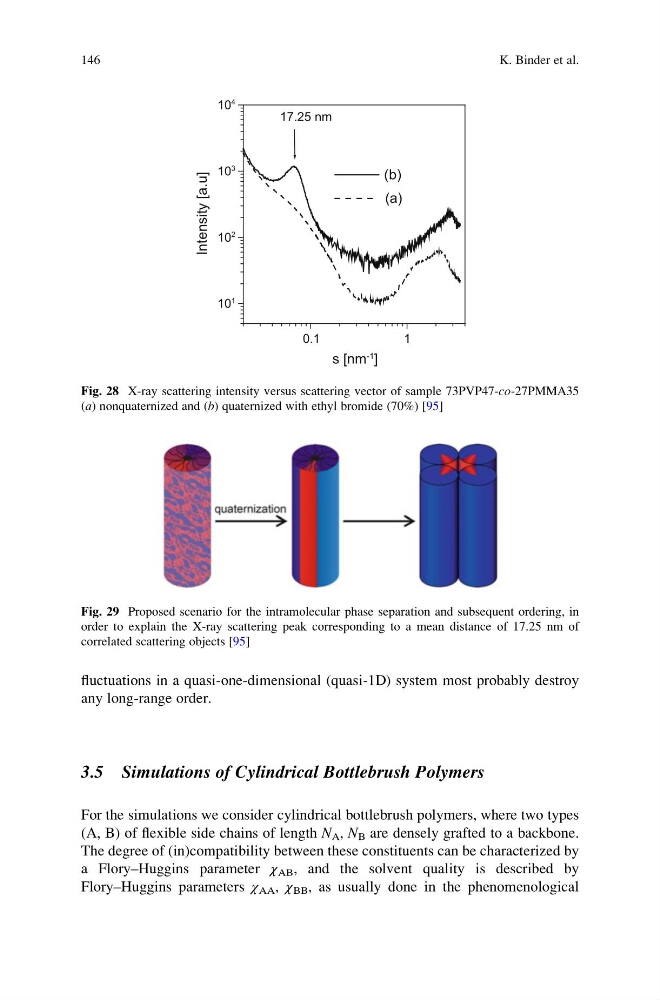
Fig. 28 X-ray scattering intensity versus scattering vector of sample 73PVP47-co-27PMMA35
(a) nonquaternized and (b) quaternized with ethyl bromide (70%) [95]
Fig. 29 Proposed scenario for the intramolecular phase separation and subsequent ordering, in
order to explain the X-ray scattering peak corresponding to a mean distance of 17.25 nm of
correlated scattering objects [95]
146
K. Binder et al.
any long-range order.
3.5 Simulations of Cylindrical Bottlebrush Polymers
For the simulations we consider cylindrical bottlebrush polymers, where two types
(A, B) of flexible side chains of length N A , N B are densely grafted to a backbone.
The degree of (in)compatibility between these constituents can be characterized by
a Flory–Huggins parameter χ AB , and the solvent quality is described by
Flory–Huggins parameters χ AA , χ BB , as usually done in the phenomenological
0.1
1
10
1
10
2
10
3
10
4
17.25 nm
(b)
(a)
Intensity [a.u]
s [nm
-1 ]
Fig. 28 X-ray scattering intensity versus scattering vector of sample 73PVP47-co-27PMMA35
(a) nonquaternized and (b) quaternized with ethyl bromide (70%) [95]
Fig. 29 Proposed scenario for the intramolecular phase separation and subsequent ordering, in
order to explain the X-ray scattering peak corresponding to a mean distance of 17.25 nm of
correlated scattering objects [95]
146
K. Binder et al.