

2.3 Dissociation of Charged PPDs and Ion Transport
What is particularly challenging and what also defines a tight connection with bottle
brush polymers is the incorporation of electrolyte functions. Loading charges on the
surface of the dendrimer, e.g., via sulfonate groups, can make an nonpolar polymer
water soluble. The same can be achieved by core–shell synthesis when polyacrylate
or polylysine chains are grafted from the surface of the dendrimer [16–19]. What is
particularly useful for grafting by controlled radical polymerization is that one can
perfectly control the number of initiator groups and thus the number of resulting
arms [16]. Since these PPDs are water-soluble their ability to cross cellular
membranes can be studied (Sect. 2.5).
Alternatively, a single charge, for example in the form of a borate anion [20] or a
phosphonium cation, can be placed in the core of the dendrimer. This furnishes
organosoluble salts, whereby the ion inside the rigid capsule is spatially separated
from the counterion. It is clear that these objects open new pathways in polyelectrolyte studies, for example, by dielectric spectroscopy. More specifically, there is
now a chance to independently studying dissociation and ion mobility as a function
of ion size [21] (Fig. 5). Dissociable, shape-persistent dendrimers allow the analysis
of the fundamental question of how charges arise in nonpolar liquids.
In nonpolar solvents, ion dissociation is hindered because of the Coulomb
attractive energy [22], which for two monovalent charges is:
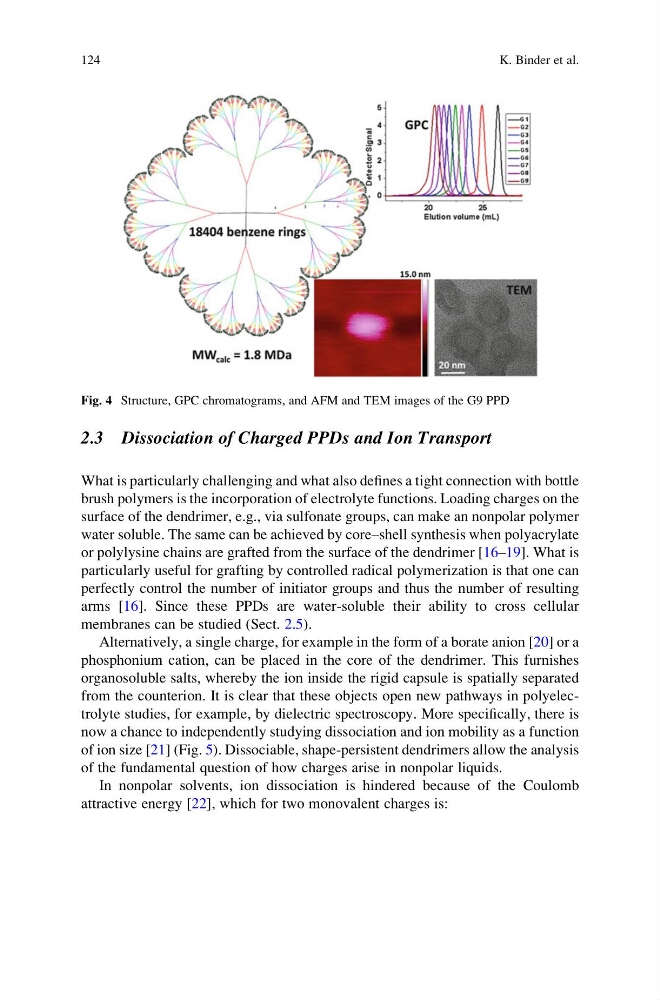
Fig. 4 Structure, GPC chromatograms, and AFM and TEM images of the G9 PPD
124
K. Binder et al.
What is particularly challenging and what also defines a tight connection with bottle
brush polymers is the incorporation of electrolyte functions. Loading charges on the
surface of the dendrimer, e.g., via sulfonate groups, can make an nonpolar polymer
water soluble. The same can be achieved by core–shell synthesis when polyacrylate
or polylysine chains are grafted from the surface of the dendrimer [16–19]. What is
particularly useful for grafting by controlled radical polymerization is that one can
perfectly control the number of initiator groups and thus the number of resulting
arms [16]. Since these PPDs are water-soluble their ability to cross cellular
membranes can be studied (Sect. 2.5).
Alternatively, a single charge, for example in the form of a borate anion [20] or a
phosphonium cation, can be placed in the core of the dendrimer. This furnishes
organosoluble salts, whereby the ion inside the rigid capsule is spatially separated
from the counterion. It is clear that these objects open new pathways in polyelectrolyte studies, for example, by dielectric spectroscopy. More specifically, there is
now a chance to independently studying dissociation and ion mobility as a function
of ion size [21] (Fig. 5). Dissociable, shape-persistent dendrimers allow the analysis
of the fundamental question of how charges arise in nonpolar liquids.
In nonpolar solvents, ion dissociation is hindered because of the Coulomb
attractive energy [22], which for two monovalent charges is:
Fig. 4 Structure, GPC chromatograms, and AFM and TEM images of the G9 PPD
124
K. Binder et al.