

(Fig. 25a). The polymer micelles with coordinated AuCl 4
À were exposed to UV
irradiation to generate gold NPs with a narrow size distribution (3–4 nm in size).
Interestingly, the formation of gold NPs takes place predominantly at the interface
between the intramicellar IPEC and the PMAA corona as well as within the PMAA
corona (Fig. 25b). Further addition of a bis-hydrophilic diblock copolymer P2VPQb-PEO to the PB-b-P2VPQ-b-PMANa micelles generated multilayered micellar
IPECs (Fig. 25c). In this case, gold NPs obtained via reduction of AuCl 4
À
incorporated into such structures were located exclusively within the IPEC shell
surrounded by the PEO corona (Fig. 25d).
The gold, platinum, and palladium NPs were generated within cylindrical micelles
[95] of a PB-b-P2VPQ-b-PMANa triblock terpolymer. The PB cylindrical cores were
covered by an intramicellar IPEC patchy shell assembled from the P2VPQ blocks
complexed with PMAA segments while the excess PMAA segments formed a
hydrophilic corona (Fig. 26c). The metal NPs were obtained using UV irradiation
(gold) or reduction with NaBH 4 (platinum, palladium). TEM and cryo-TEM images
demonstrate a difference in the localization of NPs within the polymer scaffold. The
platinum and gold NPs (Fig. 26a,b) were randomly distributed all over the cylinders,
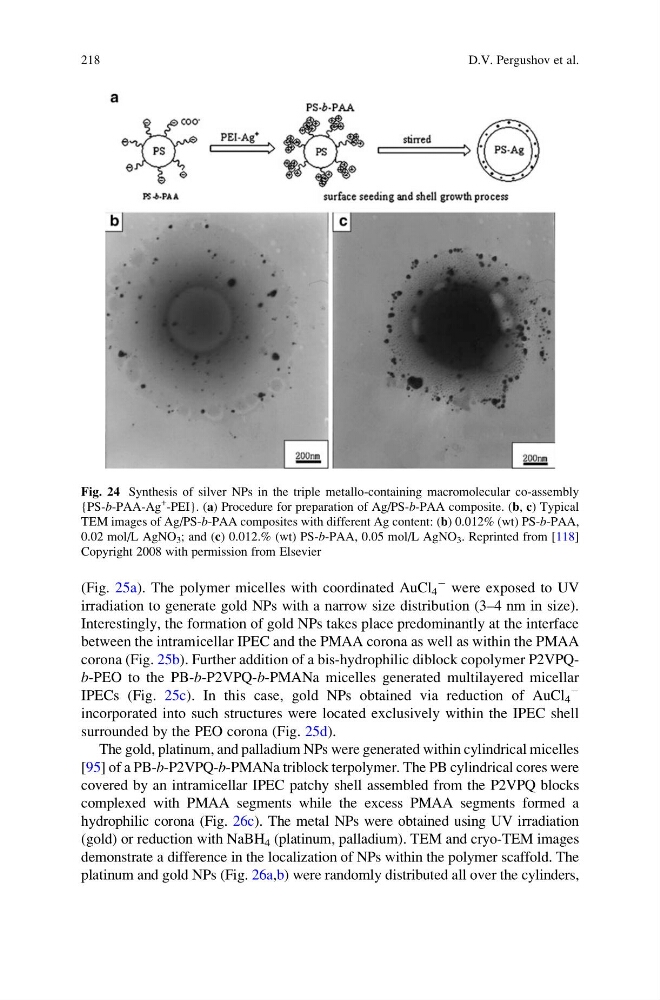
Fig. 24 Synthesis of silver NPs in the triple metallo-containing macromolecular co-assembly
{PS-b-PAA-Ag
+ -PEI}. (a) Procedure for preparation of Ag/PS-b-PAA composite. (b, c) Typical
TEM images of Ag/PS-b-PAA composites with different Ag content: (b) 0.012% (wt) PS-b-PAA,
0.02 mol/L AgNO 3 ; and (c) 0.012.% (wt) PS-b-PAA, 0.05 mol/L AgNO 3 . Reprinted from [118]
Copyright 2008 with permission from Elsevier
218
D.V. Pergushov et al.
À were exposed to UV
irradiation to generate gold NPs with a narrow size distribution (3–4 nm in size).
Interestingly, the formation of gold NPs takes place predominantly at the interface
between the intramicellar IPEC and the PMAA corona as well as within the PMAA
corona (Fig. 25b). Further addition of a bis-hydrophilic diblock copolymer P2VPQb-PEO to the PB-b-P2VPQ-b-PMANa micelles generated multilayered micellar
IPECs (Fig. 25c). In this case, gold NPs obtained via reduction of AuCl 4
À
incorporated into such structures were located exclusively within the IPEC shell
surrounded by the PEO corona (Fig. 25d).
The gold, platinum, and palladium NPs were generated within cylindrical micelles
[95] of a PB-b-P2VPQ-b-PMANa triblock terpolymer. The PB cylindrical cores were
covered by an intramicellar IPEC patchy shell assembled from the P2VPQ blocks
complexed with PMAA segments while the excess PMAA segments formed a
hydrophilic corona (Fig. 26c). The metal NPs were obtained using UV irradiation
(gold) or reduction with NaBH 4 (platinum, palladium). TEM and cryo-TEM images
demonstrate a difference in the localization of NPs within the polymer scaffold. The
platinum and gold NPs (Fig. 26a,b) were randomly distributed all over the cylinders,
Fig. 24 Synthesis of silver NPs in the triple metallo-containing macromolecular co-assembly
{PS-b-PAA-Ag
+ -PEI}. (a) Procedure for preparation of Ag/PS-b-PAA composite. (b, c) Typical
TEM images of Ag/PS-b-PAA composites with different Ag content: (b) 0.012% (wt) PS-b-PAA,
0.02 mol/L AgNO 3 ; and (c) 0.012.% (wt) PS-b-PAA, 0.05 mol/L AgNO 3 . Reprinted from [118]
Copyright 2008 with permission from Elsevier
218
D.V. Pergushov et al.