

The chemical reduction of Ni
2þ in IPECs {PAA-PEI} results in metal NPs. The
magnetization curves of dry films of the obtained nanocomposites qualitatively
resemble those of metallic nickel [81], suggesting that the reaction proceeds as
follows:
NaBH 4 þ PAA À Ni
2þ
ÀPEI þ H 2 O ! Na 3 BO 3 þ Ni
0
þ H 2 "
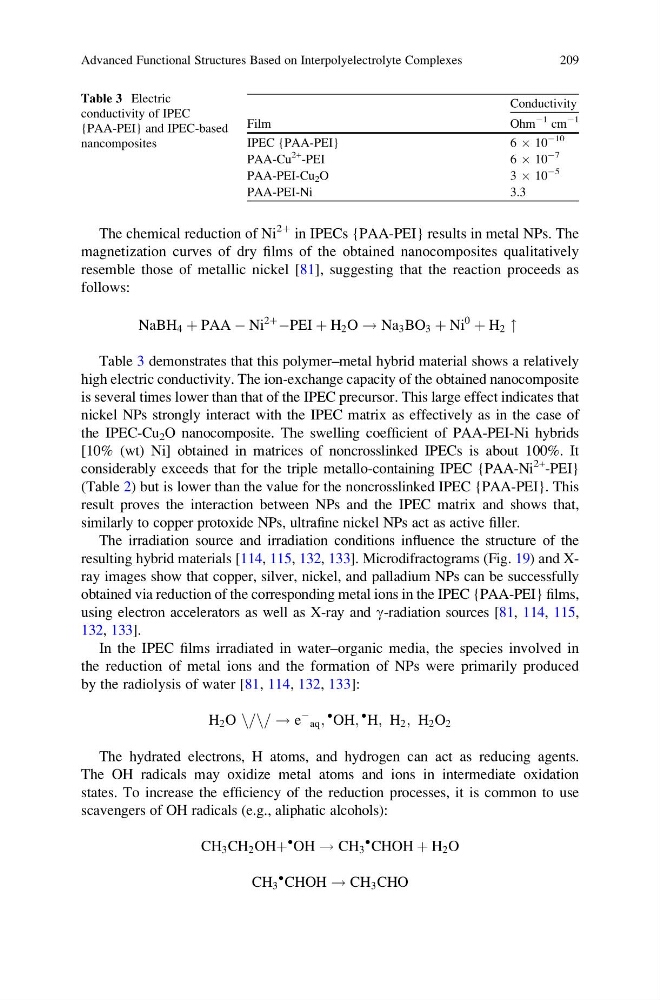
Table 3 demonstrates that this polymer–metal hybrid material shows a relatively
high electric conductivity. The ion-exchange capacity of the obtained nanocomposite
is several times lower than that of the IPEC precursor. This large effect indicates that
nickel NPs strongly interact with the IPEC matrix as effectively as in the case of
the IPEC-Cu 2 О nanocomposite. The swelling coefficient of PAA-PEI-Ni hybrids
[10% (wt) Ni] obtained in matrices of noncrosslinked IPECs is about 100%. It
considerably exceeds that for the triple metallo-containing IPEC {PAA-Ni
2+
-PEI}
(Table 2) but is lower than the value for the noncrosslinked IPEC {PAA-PEI}. This
result proves the interaction between NPs and the IPEC matrix and shows that,
similarly to copper protoxide NPs, ultrafine nickel NPs act as active filler.
The irradiation source and irradiation conditions influence the structure of the
resulting hybrid materials [114, 115, 132, 133]. Microdifractograms (Fig. 19) and Xray images show that copper, silver, nickel, and palladium NPs can be successfully
obtained via reduction of the corresponding metal ions in the IPEC {PAA-PEI} films,
using electron accelerators as well as X-ray and g-radiation sources [81, 114, 115,
132, 133].
In the IPEC films irradiated in water–organic media, the species involved in
the reduction of metal ions and the formation of NPs were primarily produced
by the radiolysis of water [81, 114, 132, 133]:
H 2 O n=n= ! e
À
aq ;
OH;
H; H 2 ; H 2 O 2
The hydrated electrons, H atoms, and hydrogen can act as reducing agents.
The OH radicals may oxidize metal atoms and ions in intermediate oxidation
states. To increase the efficiency of the reduction processes, it is common to use
scavengers of OH radicals (e.g., aliphatic alcohols):
CH 3 CH 2 OHþ
OH ! CH 3
CHOH þ H 2 O
CH 3
CHOH ! CH 3 CHO
Table 3 Electric
conductivity of IPEC
{PAA-PEI} and IPEC-based
nancomposites
Film
Conductivity
Ohm
À1 cm
À1
IPEC {PAA-PEI}
6 Â 10
À10
PAA-Cu
2+ -PEI
6 Â 10
À7
PAA-PEI-Cu 2 O
3 Â 10
À5
PAA-PEI-Ni
3.3
Advanced Functional Structures Based on Interpolyelectrolyte Complexes
209
2þ in IPECs {PAA-PEI} results in metal NPs. The
magnetization curves of dry films of the obtained nanocomposites qualitatively
resemble those of metallic nickel [81], suggesting that the reaction proceeds as
follows:
NaBH 4 þ PAA À Ni
2þ
ÀPEI þ H 2 O ! Na 3 BO 3 þ Ni
0
þ H 2 "
Table 3 demonstrates that this polymer–metal hybrid material shows a relatively
high electric conductivity. The ion-exchange capacity of the obtained nanocomposite
is several times lower than that of the IPEC precursor. This large effect indicates that
nickel NPs strongly interact with the IPEC matrix as effectively as in the case of
the IPEC-Cu 2 О nanocomposite. The swelling coefficient of PAA-PEI-Ni hybrids
[10% (wt) Ni] obtained in matrices of noncrosslinked IPECs is about 100%. It
considerably exceeds that for the triple metallo-containing IPEC {PAA-Ni
2+
-PEI}
(Table 2) but is lower than the value for the noncrosslinked IPEC {PAA-PEI}. This
result proves the interaction between NPs and the IPEC matrix and shows that,
similarly to copper protoxide NPs, ultrafine nickel NPs act as active filler.
The irradiation source and irradiation conditions influence the structure of the
resulting hybrid materials [114, 115, 132, 133]. Microdifractograms (Fig. 19) and Xray images show that copper, silver, nickel, and palladium NPs can be successfully
obtained via reduction of the corresponding metal ions in the IPEC {PAA-PEI} films,
using electron accelerators as well as X-ray and g-radiation sources [81, 114, 115,
132, 133].
In the IPEC films irradiated in water–organic media, the species involved in
the reduction of metal ions and the formation of NPs were primarily produced
by the radiolysis of water [81, 114, 132, 133]:
H 2 O n=n= ! e
À
aq ;
OH;
H; H 2 ; H 2 O 2
The hydrated electrons, H atoms, and hydrogen can act as reducing agents.
The OH radicals may oxidize metal atoms and ions in intermediate oxidation
states. To increase the efficiency of the reduction processes, it is common to use
scavengers of OH radicals (e.g., aliphatic alcohols):
CH 3 CH 2 OHþ
OH ! CH 3
CHOH þ H 2 O
CH 3
CHOH ! CH 3 CHO
Table 3 Electric
conductivity of IPEC
{PAA-PEI} and IPEC-based
nancomposites
Film
Conductivity
Ohm
À1 cm
À1
IPEC {PAA-PEI}
6 Â 10
À10
PAA-Cu
2+ -PEI
6 Â 10
À7
PAA-PEI-Cu 2 O
3 Â 10
À5
PAA-PEI-Ni
3.3
Advanced Functional Structures Based on Interpolyelectrolyte Complexes
209