

The structure and properties of such polymer–inorganic hybrid materials substantially depend on the method of reduction of the metal ions [81, 114, 115, 132, 133].
The chemical reduction of Cu
2þ in IPEC matrices leads to the formation of copper
protoxide NPs [81]. Micrographs of the irradiated film demonstrate that their size is of
about 10 nm. The electric conductivity of the prepared hybrids is very low (Table 3).
The process of the reduction of Cu
2þ in IPECs {PAA-PEI} may be schematically described by the reaction:
NaBH 4 þ PAA À Cu
2þ
ÀPEI þ H 2 O ! Na 3 BO 3 þ PAA À Cu
þ
ÀPEI þ H 2 "
It is worth noting that the redox potential of NaBH 4 is À1.24 V [79]. The redox
potential for Cu
2þ
/Cu
þ is À0.15 V, and that of a reduction of Cu
þ to metal atoms is
À2.9 V [121]. For this reason, a chemical reduction of Cu
2þ leads to Cu
þ and,
therefore, to the formation of copper protoxide NPs in an alkaline environment.
Nanocomposites including Cu 2 О possess about the fivefold lower ion-exchange
capacity of Cu
2þ in comparison to the initial IPEC films. The dramatic decrease in
the ion-exchange capacity shows that considerable fractions of functional groups of
PAA and PEI are blocked because of their interaction with copper prototoxide NPs,
acting as active filler.
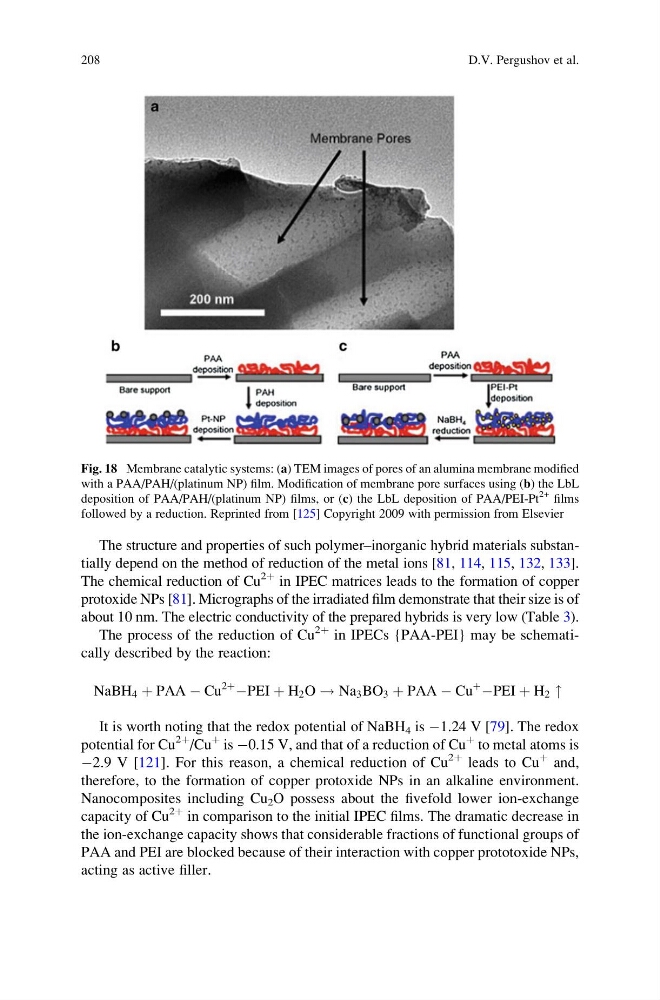
Fig. 18 Membrane catalytic systems: (a) TEM images of pores of an alumina membrane modified
with a PAA/PAH/(platinum NP) film. Modification of membrane pore surfaces using (b) the LbL
deposition of PAA/PAH/(platinum NP) films, or (c) the LbL deposition of PAA/PEI-Pt
2+ films
followed by a reduction. Reprinted from [125] Copyright 2009 with permission from Elsevier
208
D.V. Pergushov et al.
The chemical reduction of Cu
2þ in IPEC matrices leads to the formation of copper
protoxide NPs [81]. Micrographs of the irradiated film demonstrate that their size is of
about 10 nm. The electric conductivity of the prepared hybrids is very low (Table 3).
The process of the reduction of Cu
2þ in IPECs {PAA-PEI} may be schematically described by the reaction:
NaBH 4 þ PAA À Cu
2þ
ÀPEI þ H 2 O ! Na 3 BO 3 þ PAA À Cu
þ
ÀPEI þ H 2 "
It is worth noting that the redox potential of NaBH 4 is À1.24 V [79]. The redox
potential for Cu
2þ
/Cu
þ is À0.15 V, and that of a reduction of Cu
þ to metal atoms is
À2.9 V [121]. For this reason, a chemical reduction of Cu
2þ leads to Cu
þ and,
therefore, to the formation of copper protoxide NPs in an alkaline environment.
Nanocomposites including Cu 2 О possess about the fivefold lower ion-exchange
capacity of Cu
2þ in comparison to the initial IPEC films. The dramatic decrease in
the ion-exchange capacity shows that considerable fractions of functional groups of
PAA and PEI are blocked because of their interaction with copper prototoxide NPs,
acting as active filler.
Fig. 18 Membrane catalytic systems: (a) TEM images of pores of an alumina membrane modified
with a PAA/PAH/(platinum NP) film. Modification of membrane pore surfaces using (b) the LbL
deposition of PAA/PAH/(platinum NP) films, or (c) the LbL deposition of PAA/PEI-Pt
2+ films
followed by a reduction. Reprinted from [125] Copyright 2009 with permission from Elsevier
208
D.V. Pergushov et al.