

provides a simple way to create membrane catalysts. A universal approach for
obtaining catalytic systems is a reduction of metal ions associated with charged
groups of polyions, which constitute a film on the membrane, to obtain metal NPs
[85, 125, 126] (Fig. 18c). On the other hand, the LbL adsorption of polyelectrolytes
and a subsequent binding of preprepared gold or platinum NPs with charged groups
on the polymers is an effective way of modifying the pores of hollow fibers and of
developing catalytic membrane reactors [85, 125] (Fig. 18b).
IPECs containing metal ions swell in water and in water–organic media.
Similarly to the precursor IPECs, they possess high permeability for polar low
molecular weight substances and salts. These properties make it possible to reduce
or precipitate metal ions directly in/into a polymeric matrix for a further preparation
of inorganic NPs. Chemical and radiation–chemical approaches lead to composite
materials with different structures [81, 114, 115, 132–134]. They contain NPs
of metals or their oxides in matrices of IPEC {PAA-PEI}. The behavior of
metallo-containing complex polymer materials is controlled by a size and a spatial
distribution of the embedded NPs. An investigation of factors that regulate the
formation of the metal NPs in the polymer matrices is of a key importance
for a development of composites with required characteristics. Controlled
variations in the content of the metal ions and their distribution in polymer samples
[81, 115, 133] offer a unique opportunity to use IPECs to reveal such factors. The
IPEC {PAA-PEI} loaded with metal ions has provided information about the main
features of reduction of the metal ions, processes of nucleation and growth of the
generated NPs as well as about the environmental conditions that control a spatial
distribution of the NPs in the polymer matrices.
NPs of magnetic oxides show a pronounced superparamagnetic behavior.
A polymer–inorganic hybrid material including particles of iron oxide was
synthesized with the use of an IPEC and its magnetic properties were studied
[134]. Alternative approaches were used for a preparation of metal nanoclusters.
When IPEC films containing Fe
3þ are kept in an alkaline solution, iron hydroxide
nanoclusters are formed. According to the low-temperature Mo ¨ssbauer spectra,
subsequent drying of the IPEC films at 60–70
C results in the formation of iron
oxide NPs in the IPEC {PAA-PEI}:
PAA À Fe
3þ
ÀPEI þ OH
À
! FeðOHÞ 3 in IPEC PAA À PEI
f
g! Fe 2 O 3
Y=-COOH
Δ
= [Pd(NH 3 ) 4 ] 2+
• = Pd seed
= Pd/Ni particle
PAH/PAA multilayer
♦ Pd precursor
after H 2 reduction
EN deposition
Pd seed synthesis
Particle growth by EN
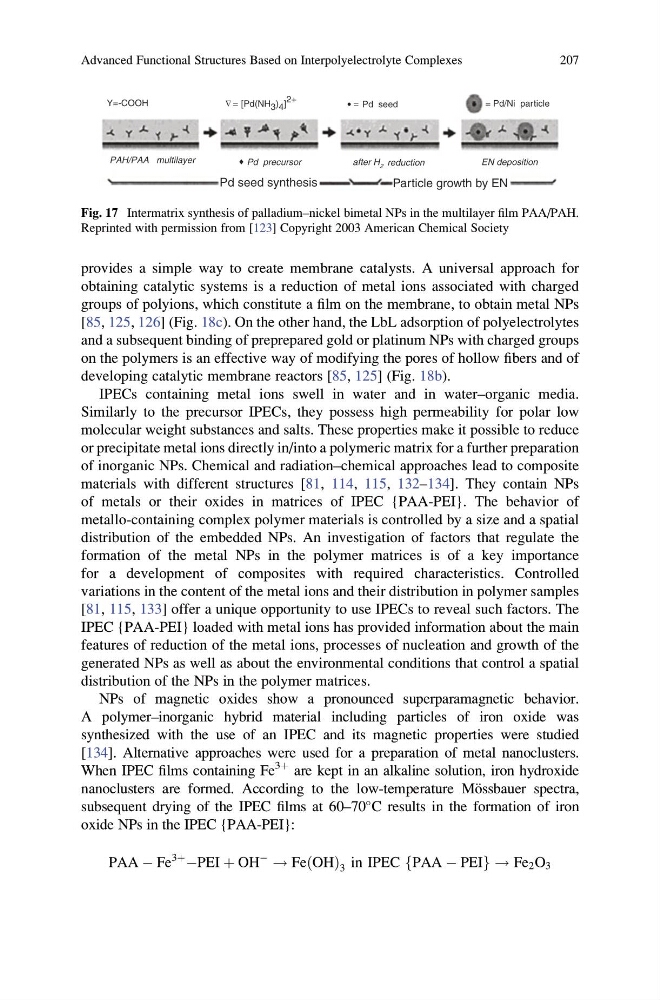
Fig. 17 Intermatrix synthesis of palladium–nickel bimetal NPs in the multilayer film PAA/PAH.
Reprinted with permission from [123] Copyright 2003 American Chemical Society
Advanced Functional Structures Based on Interpolyelectrolyte Complexes
207
obtaining catalytic systems is a reduction of metal ions associated with charged
groups of polyions, which constitute a film on the membrane, to obtain metal NPs
[85, 125, 126] (Fig. 18c). On the other hand, the LbL adsorption of polyelectrolytes
and a subsequent binding of preprepared gold or platinum NPs with charged groups
on the polymers is an effective way of modifying the pores of hollow fibers and of
developing catalytic membrane reactors [85, 125] (Fig. 18b).
IPECs containing metal ions swell in water and in water–organic media.
Similarly to the precursor IPECs, they possess high permeability for polar low
molecular weight substances and salts. These properties make it possible to reduce
or precipitate metal ions directly in/into a polymeric matrix for a further preparation
of inorganic NPs. Chemical and radiation–chemical approaches lead to composite
materials with different structures [81, 114, 115, 132–134]. They contain NPs
of metals or their oxides in matrices of IPEC {PAA-PEI}. The behavior of
metallo-containing complex polymer materials is controlled by a size and a spatial
distribution of the embedded NPs. An investigation of factors that regulate the
formation of the metal NPs in the polymer matrices is of a key importance
for a development of composites with required characteristics. Controlled
variations in the content of the metal ions and their distribution in polymer samples
[81, 115, 133] offer a unique opportunity to use IPECs to reveal such factors. The
IPEC {PAA-PEI} loaded with metal ions has provided information about the main
features of reduction of the metal ions, processes of nucleation and growth of the
generated NPs as well as about the environmental conditions that control a spatial
distribution of the NPs in the polymer matrices.
NPs of magnetic oxides show a pronounced superparamagnetic behavior.
A polymer–inorganic hybrid material including particles of iron oxide was
synthesized with the use of an IPEC and its magnetic properties were studied
[134]. Alternative approaches were used for a preparation of metal nanoclusters.
When IPEC films containing Fe
3þ are kept in an alkaline solution, iron hydroxide
nanoclusters are formed. According to the low-temperature Mo ¨ssbauer spectra,
subsequent drying of the IPEC films at 60–70
C results in the formation of iron
oxide NPs in the IPEC {PAA-PEI}:
PAA À Fe
3þ
ÀPEI þ OH
À
! FeðOHÞ 3 in IPEC PAA À PEI
f
g! Fe 2 O 3
Y=-COOH
Δ
= [Pd(NH 3 ) 4 ] 2+
• = Pd seed
= Pd/Ni particle
PAH/PAA multilayer
♦ Pd precursor
after H 2 reduction
EN deposition
Pd seed synthesis
Particle growth by EN
Fig. 17 Intermatrix synthesis of palladium–nickel bimetal NPs in the multilayer film PAA/PAH.
Reprinted with permission from [123] Copyright 2003 American Chemical Society
Advanced Functional Structures Based on Interpolyelectrolyte Complexes
207