

they typically contain polyanions (such as PSSNa and PAA) and polycations
[such as PEI, poly(allylamine hydrochloride) (PAH), and poly(N,N-diallyldimethylammonium chloride (PDADMAC)].
The functional groups of polyions can coordinate metal ions, thereby acting as
ligands. The sorption of metal ions from solutions is a common way of embedding
metal ions into multilayer polyelectrolyte films. For example, Ag
þ ions were
incorporated into PAA/PAH multilayers from solutions of silver acetate [104].
A variation in the pH made it possible to change the content of metal ions in the
films [105]. Also, palladium ions [104] were successfully included into PAA/PAH
multilayers from aqueous solutions containing [Pd(NH 3 ) 4 ]
2þ ions. It should be
mentioned that polyelectrolyte multilayers containing metal ions can be further
used as precursors for preparation of polymer–metal nanohybrids [82, 83, 103–105].
Control of the assembly of multilayer polyelectrolyte films and the incorporation
of metal ions provide the possibility for development of polymer matrices characterized by a varying content and distribution of the metal ions. The spatial localization
of Ag
þ within multilayer polyelectrolyte films was realized using two different
types of bilayer building blocks [104]. By adding fully ion-paired oppositely charged
polyelectrolyte, a series of PAH/PAA bilayers, which do not include metal ions,
can be inserted between the bilayers, which contain Ag
þ
. This technique allows one
to prepare a sandwich-like metallo-containing film structure.
An alternative technique is based on a directed precoordination of metal ions
with functional groups on polymers, which transforms them into polyions. This
method was developed [106] for precursors of silver NPs synthesized in PEI/PAA
films. Specifically, the PEI-Ag
þ polycation was used as a polymeric component
for construction of polyelectrolyte multilayers with PAA.
Another approach for preparation of similar macromolecular co-assemblies
containing metal ions, which is discussed in the literature [80, 92, 93, 107, 108],
uses so-called “coordination polymers”. Use of bifunctional compounds with two
terminal ligand groups, differing in a spacer length, demonstrates that chains and
rings can be formed in aqueous solutions via coordinating metal ions [109].
An increasing solution concentration favors generation of chains (Fig. 15). This
makes preparation of reversible coordination polymers possible [80, 109]. IPECs
may include such coordination polymers as one of the polymeric components,
though cationic molecules have been used so far. For example, LbL assemblies
were obtained on planar substrates and surfaces of colloid particles using Fe
2þ
-
metallo-supramolecular coordination polyelectrolytes (Fig. 16a) as polycations
[108]. In this strategy, multilayer fabrication is achieved by repeated immersion
of the substrates in solutions containing Fe
2þ -metallo-supramolecular coordination
polyelectrolytes and negatively charged polyions (Fig. 16b,c).
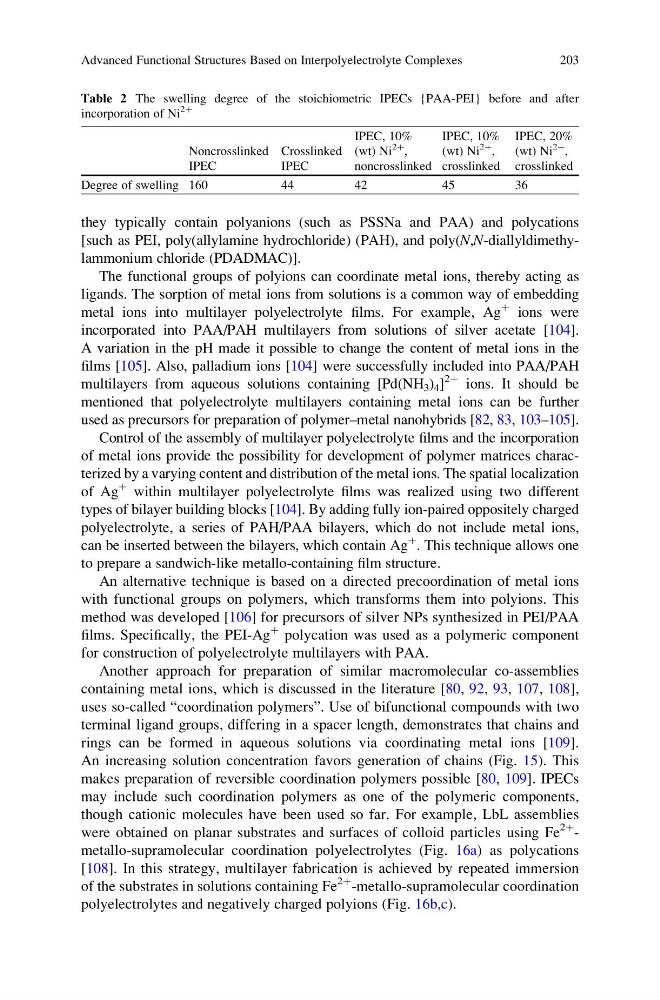
Table 2 The swelling degree of the stoichiometric IPECs {PAA-PEI} before and after
incorporation of Ni
2þ
Noncrosslinked
IPEC
Crosslinked
IPEC
IPEC, 10%
(wt) Ni
2þ
,
noncrosslinked
IPEC, 10%
(wt) Ni
2þ
,
crosslinked
IPEC, 20%
(wt) Ni
2þ
,
crosslinked
Degree of swelling 160
44
42
45
36
Advanced Functional Structures Based on Interpolyelectrolyte Complexes
203
[such as PEI, poly(allylamine hydrochloride) (PAH), and poly(N,N-diallyldimethylammonium chloride (PDADMAC)].
The functional groups of polyions can coordinate metal ions, thereby acting as
ligands. The sorption of metal ions from solutions is a common way of embedding
metal ions into multilayer polyelectrolyte films. For example, Ag
þ ions were
incorporated into PAA/PAH multilayers from solutions of silver acetate [104].
A variation in the pH made it possible to change the content of metal ions in the
films [105]. Also, palladium ions [104] were successfully included into PAA/PAH
multilayers from aqueous solutions containing [Pd(NH 3 ) 4 ]
2þ ions. It should be
mentioned that polyelectrolyte multilayers containing metal ions can be further
used as precursors for preparation of polymer–metal nanohybrids [82, 83, 103–105].
Control of the assembly of multilayer polyelectrolyte films and the incorporation
of metal ions provide the possibility for development of polymer matrices characterized by a varying content and distribution of the metal ions. The spatial localization
of Ag
þ within multilayer polyelectrolyte films was realized using two different
types of bilayer building blocks [104]. By adding fully ion-paired oppositely charged
polyelectrolyte, a series of PAH/PAA bilayers, which do not include metal ions,
can be inserted between the bilayers, which contain Ag
þ
. This technique allows one
to prepare a sandwich-like metallo-containing film structure.
An alternative technique is based on a directed precoordination of metal ions
with functional groups on polymers, which transforms them into polyions. This
method was developed [106] for precursors of silver NPs synthesized in PEI/PAA
films. Specifically, the PEI-Ag
þ polycation was used as a polymeric component
for construction of polyelectrolyte multilayers with PAA.
Another approach for preparation of similar macromolecular co-assemblies
containing metal ions, which is discussed in the literature [80, 92, 93, 107, 108],
uses so-called “coordination polymers”. Use of bifunctional compounds with two
terminal ligand groups, differing in a spacer length, demonstrates that chains and
rings can be formed in aqueous solutions via coordinating metal ions [109].
An increasing solution concentration favors generation of chains (Fig. 15). This
makes preparation of reversible coordination polymers possible [80, 109]. IPECs
may include such coordination polymers as one of the polymeric components,
though cationic molecules have been used so far. For example, LbL assemblies
were obtained on planar substrates and surfaces of colloid particles using Fe
2þ
-
metallo-supramolecular coordination polyelectrolytes (Fig. 16a) as polycations
[108]. In this strategy, multilayer fabrication is achieved by repeated immersion
of the substrates in solutions containing Fe
2þ -metallo-supramolecular coordination
polyelectrolytes and negatively charged polyions (Fig. 16b,c).
Table 2 The swelling degree of the stoichiometric IPECs {PAA-PEI} before and after
incorporation of Ni
2þ
Noncrosslinked
IPEC
Crosslinked
IPEC
IPEC, 10%
(wt) Ni
2þ
,
noncrosslinked
IPEC, 10%
(wt) Ni
2þ
,
crosslinked
IPEC, 20%
(wt) Ni
2þ
,
crosslinked
Degree of swelling 160
44
42
45
36
Advanced Functional Structures Based on Interpolyelectrolyte Complexes
203