

Shuttle and coworkers [205]. In TPV, the layer is under steady-state illumination
with white light of appropriate intensity and the voltage across the device is
measured with a large serial resistor. Therefore, the sample is under quasi-opencircuit conditions. The sample is then illuminated with a short and weak laser pulse,
which increases the charge carrier density and thus causes the voltage across the
device to increase. The decay of the transient photovoltage back to its steady-state
value is, therefore, a direct measure of the non-geminate recombination rate
[189]. To determine the charge within the illuminated blend layer by CE, the device
is held under steady-state illumination at a certain bias and then is switched to short
circuit (zero bias) while at the same time the light is switched off. The current
transient after the switch to short-circuit conditions is integrated and corrected for
the capacitive charge [206].
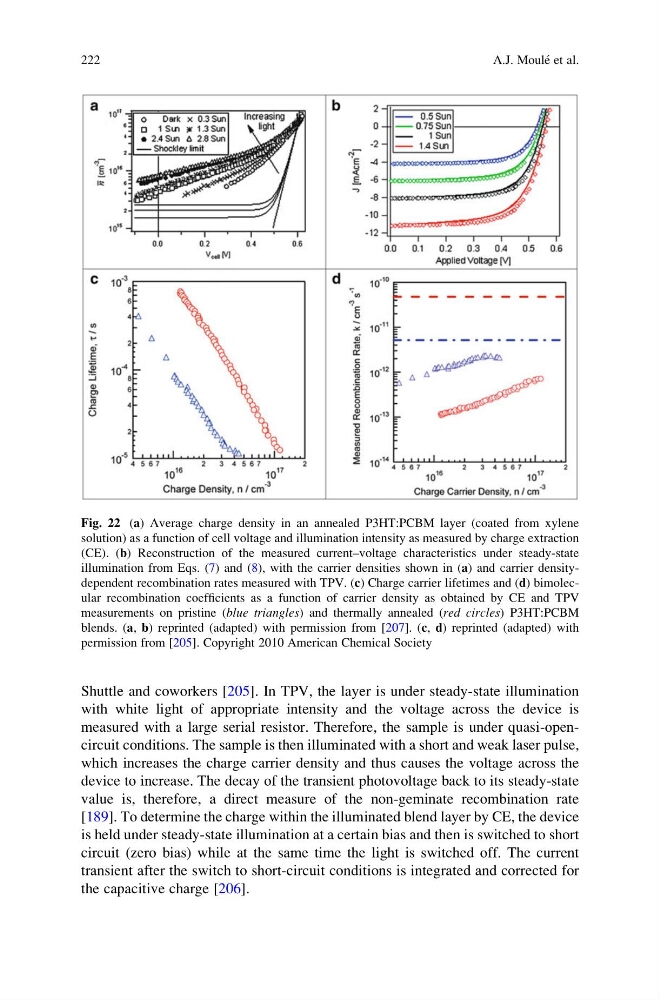
Fig. 22 (a) Average charge density in an annealed P3HT:PCBM layer (coated from xylene
solution) as a function of cell voltage and illumination intensity as measured by charge extraction
(CE). (b) Reconstruction of the measured current–voltage characteristics under steady-state
illumination from Eqs. (7) and (8), with the carrier densities shown in (a) and carrier densitydependent recombination rates measured with TPV. (c) Charge carrier lifetimes and (d) bimolecular recombination coefficients as a function of carrier density as obtained by CE and TPV
measurements on pristine (blue triangles) and thermally annealed (red circles) P3HT:PCBM
blends. (a, b) reprinted (adapted) with permission from [207]. (c, d) reprinted (adapted) with
permission from [205]. Copyright 2010 American Chemical Society
222
A.J. Moule ´ et al.
with white light of appropriate intensity and the voltage across the device is
measured with a large serial resistor. Therefore, the sample is under quasi-opencircuit conditions. The sample is then illuminated with a short and weak laser pulse,
which increases the charge carrier density and thus causes the voltage across the
device to increase. The decay of the transient photovoltage back to its steady-state
value is, therefore, a direct measure of the non-geminate recombination rate
[189]. To determine the charge within the illuminated blend layer by CE, the device
is held under steady-state illumination at a certain bias and then is switched to short
circuit (zero bias) while at the same time the light is switched off. The current
transient after the switch to short-circuit conditions is integrated and corrected for
the capacitive charge [206].
Fig. 22 (a) Average charge density in an annealed P3HT:PCBM layer (coated from xylene
solution) as a function of cell voltage and illumination intensity as measured by charge extraction
(CE). (b) Reconstruction of the measured current–voltage characteristics under steady-state
illumination from Eqs. (7) and (8), with the carrier densities shown in (a) and carrier densitydependent recombination rates measured with TPV. (c) Charge carrier lifetimes and (d) bimolecular recombination coefficients as a function of carrier density as obtained by CE and TPV
measurements on pristine (blue triangles) and thermally annealed (red circles) P3HT:PCBM
blends. (a, b) reprinted (adapted) with permission from [207]. (c, d) reprinted (adapted) with
permission from [205]. Copyright 2010 American Chemical Society
222
A.J. Moule ´ et al.