

crystallites become more prominent. At the same time, the short-circuit current and
the fill factor of the device both increase continuously.
A recent model by Spano enables a quantitative analysis of regioregular P3HT
absorption spectra in relation to the morphology [147, 148]. This model was
developed to describe the absorption of and the emission from H-aggregates
comprising parallel-aligned cofacially packed conjugated chains in the case of
weak exciton coupling. In this limit, the splitting of the electronic levels due to
Coulombic interactions is considerably smaller than the vibrational energy. As a
result, interchain coupling leads to the formation of vibronic bands with their width
essentially determined by the exciton bandwidth W. It was shown later that W is
inversely related to the length of the interacting chain segments in a P3HT aggregate [149]. An important prediction of Spano’s model is that the exciton bandwidth
affects the relative intensities of the individual transitions of the vibronic progression in the absorption. Clark et al. successfully applied this model to optical spectra
of pure P3HT films with a variation in the solvent type used. Higher solvent boiling
points led to smaller W values, which was attributed to an increase in the P3HT
aggregate size [71, 150].
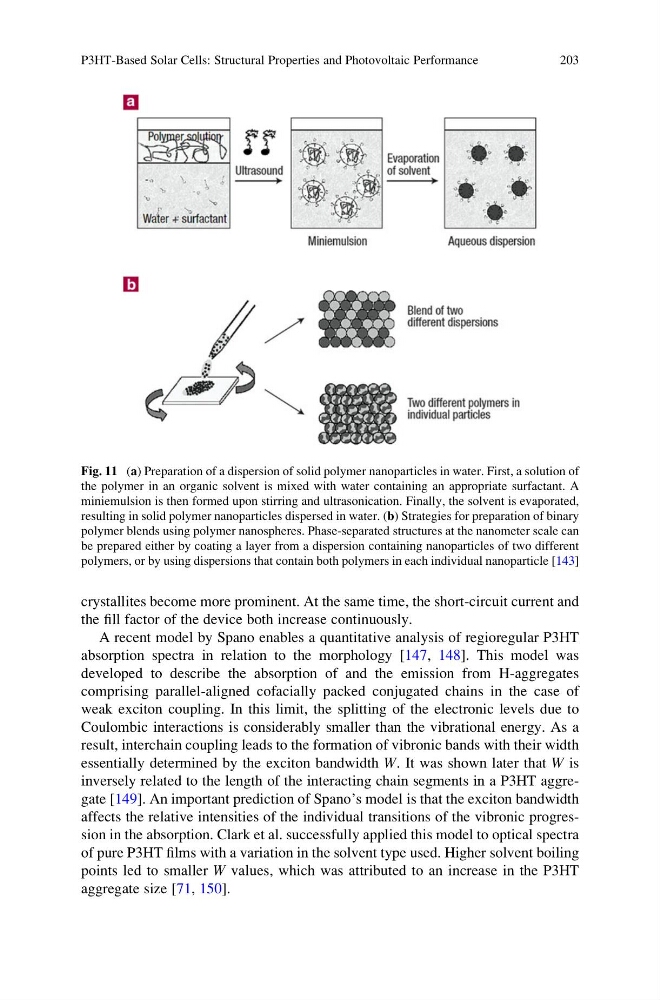
Fig. 11 (a) Preparation of a dispersion of solid polymer nanoparticles in water. First, a solution of
the polymer in an organic solvent is mixed with water containing an appropriate surfactant. A
miniemulsion is then formed upon stirring and ultrasonication. Finally, the solvent is evaporated,
resulting in solid polymer nanoparticles dispersed in water. (b) Strategies for preparation of binary
polymer blends using polymer nanospheres. Phase-separated structures at the nanometer scale can
be prepared either by coating a layer from a dispersion containing nanoparticles of two different
polymers, or by using dispersions that contain both polymers in each individual nanoparticle [143]
P3HT-Based Solar Cells: Structural Properties and Photovoltaic Performance
203
the fill factor of the device both increase continuously.
A recent model by Spano enables a quantitative analysis of regioregular P3HT
absorption spectra in relation to the morphology [147, 148]. This model was
developed to describe the absorption of and the emission from H-aggregates
comprising parallel-aligned cofacially packed conjugated chains in the case of
weak exciton coupling. In this limit, the splitting of the electronic levels due to
Coulombic interactions is considerably smaller than the vibrational energy. As a
result, interchain coupling leads to the formation of vibronic bands with their width
essentially determined by the exciton bandwidth W. It was shown later that W is
inversely related to the length of the interacting chain segments in a P3HT aggregate [149]. An important prediction of Spano’s model is that the exciton bandwidth
affects the relative intensities of the individual transitions of the vibronic progression in the absorption. Clark et al. successfully applied this model to optical spectra
of pure P3HT films with a variation in the solvent type used. Higher solvent boiling
points led to smaller W values, which was attributed to an increase in the P3HT
aggregate size [71, 150].
Fig. 11 (a) Preparation of a dispersion of solid polymer nanoparticles in water. First, a solution of
the polymer in an organic solvent is mixed with water containing an appropriate surfactant. A
miniemulsion is then formed upon stirring and ultrasonication. Finally, the solvent is evaporated,
resulting in solid polymer nanoparticles dispersed in water. (b) Strategies for preparation of binary
polymer blends using polymer nanospheres. Phase-separated structures at the nanometer scale can
be prepared either by coating a layer from a dispersion containing nanoparticles of two different
polymers, or by using dispersions that contain both polymers in each individual nanoparticle [143]
P3HT-Based Solar Cells: Structural Properties and Photovoltaic Performance
203