

2.2 Nanotubes
A nanotube is a nanometer-scale tube-like structure. It may refer to: (i) carbon
nanotube, (ii) silicon nanotube, (iii) boron nitride nanotube, (iv) inorganic nanotube, (v) DNA nanotube, and (vi) membrane nanotube (a tubular membrane connection between cells) (http://en.wikipedia.org/wiki/Nanotube).
Silicon nanotubes are nanoparticles which create a tube-like structure from silicon
atoms. There is wide application of silicone nanotubes in electronic materials, as
silicon is already a vastly important material in the semiconductor industry. Recently,
it has been possible to prepare these nanotubes which are similar to carbon nanotubes
(http://en.wikipedia.org/wiki/Silicon_nanotubes). Silicon nanotubes have been considered for use in electronics, because it appears that silicon nano-materials may
behave like a metal fuel, since the structure can accommodate molecules of hydrogen
so it might resemble coal without the CO 2 (http://www.azonano.com/article.aspx?
ArticleID¼838#, http://www.australianrdreview.com/ARDR%20documents/opinionsf,
%20profiles/Earl_Bardsley_ARDR_04_09.pdf, 06.09.2013). Figure 5 gives an
illustration of a carbon nanotube and a silicon nanotube [24]. Though there is no
literature report on viscoelastic behavior of polymer nanocomposites filled with
silicon nanotubes, some literatures are available on inorganic nanotube (halloysite
nanotube, HNT) filled composites. M. Liu et al. have reported the viscoelastic
properties of inorganic nanotube (halloysite nanotube, HNT) reinforced epoxy resin
nanocomposites [25]. The variation of storage modulus (E
0 ) with temperature for
modified halloysite nanotube (m-HNT) filled epoxy composite is given in Fig. 6.
The silane modified halloysite nanotubes (m-HNTs) were used for the composite
preparation. It is observed that the storage modulus of the filled epoxy is
significantly higher than the neat epoxy. About 40 % increase in storage modulus
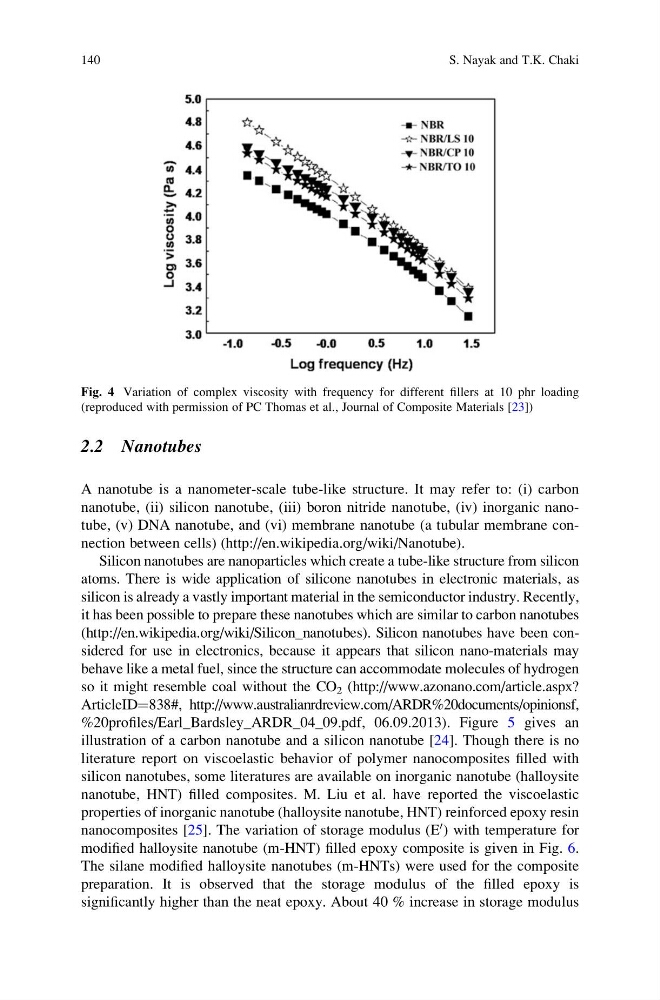
Fig. 4 Variation of complex viscosity with frequency for different fillers at 10 phr loading
(reproduced with permission of PC Thomas et al., Journal of Composite Materials [23])
140
S. Nayak and T.K. Chaki
A nanotube is a nanometer-scale tube-like structure. It may refer to: (i) carbon
nanotube, (ii) silicon nanotube, (iii) boron nitride nanotube, (iv) inorganic nanotube, (v) DNA nanotube, and (vi) membrane nanotube (a tubular membrane connection between cells) (http://en.wikipedia.org/wiki/Nanotube).
Silicon nanotubes are nanoparticles which create a tube-like structure from silicon
atoms. There is wide application of silicone nanotubes in electronic materials, as
silicon is already a vastly important material in the semiconductor industry. Recently,
it has been possible to prepare these nanotubes which are similar to carbon nanotubes
(http://en.wikipedia.org/wiki/Silicon_nanotubes). Silicon nanotubes have been considered for use in electronics, because it appears that silicon nano-materials may
behave like a metal fuel, since the structure can accommodate molecules of hydrogen
so it might resemble coal without the CO 2 (http://www.azonano.com/article.aspx?
ArticleID¼838#, http://www.australianrdreview.com/ARDR%20documents/opinionsf,
%20profiles/Earl_Bardsley_ARDR_04_09.pdf, 06.09.2013). Figure 5 gives an
illustration of a carbon nanotube and a silicon nanotube [24]. Though there is no
literature report on viscoelastic behavior of polymer nanocomposites filled with
silicon nanotubes, some literatures are available on inorganic nanotube (halloysite
nanotube, HNT) filled composites. M. Liu et al. have reported the viscoelastic
properties of inorganic nanotube (halloysite nanotube, HNT) reinforced epoxy resin
nanocomposites [25]. The variation of storage modulus (E
0 ) with temperature for
modified halloysite nanotube (m-HNT) filled epoxy composite is given in Fig. 6.
The silane modified halloysite nanotubes (m-HNTs) were used for the composite
preparation. It is observed that the storage modulus of the filled epoxy is
significantly higher than the neat epoxy. About 40 % increase in storage modulus
Fig. 4 Variation of complex viscosity with frequency for different fillers at 10 phr loading
(reproduced with permission of PC Thomas et al., Journal of Composite Materials [23])
140
S. Nayak and T.K. Chaki