

polymers. Knowing the surface energy of the filler and the surface tension of the
used rubber polymer, it should be possible to predict the dispersibility of the filler
particles in this elastomer; or, to say it more precisely, the thermodynamic contribution of the wetting step on the dispersion process. In the case of nanofiller, a
surface modification by the use of modifier is state of the art; this processing step
leads to a better dispersibility and, additionally, to the formation of chemical
linkages between filler and polymer during the vulcanization. Interfacial forces
between filler and elastomeric matrix, which are a result of the surface energies of
filler particles and polymers, are also important for the mechanical properties of the
resulting composites. Hereby, the calculation of a work of adhesion value between
filler and elastomer is a useful indicator to estimate the internal adhesion between
filler particle surface and rubber polymer.
4 Nonlinear Viscoelastic Behaviour of Rubber Blends
Viscoelasticity is the material property exhibiting both viscous and elastic characteristics when a material is exposed to deformation and exists in many aspects of
our daily life, such as human tissue, tires, seismic isolators etc. Viscoelasticity is
quantified by three important properties: storage modulus (E
0 ), loss modulus (E
00 ),
and damping ratio (tan δ). Storage modulus measures the elastic nature (stiffness)
of a material and describes the ability to instantaneously strain (i.e., deform) and
recover when stressed and released, respectively. In contrast the loss modulus
measures the viscous nature of the material and expresses the resistance to strain
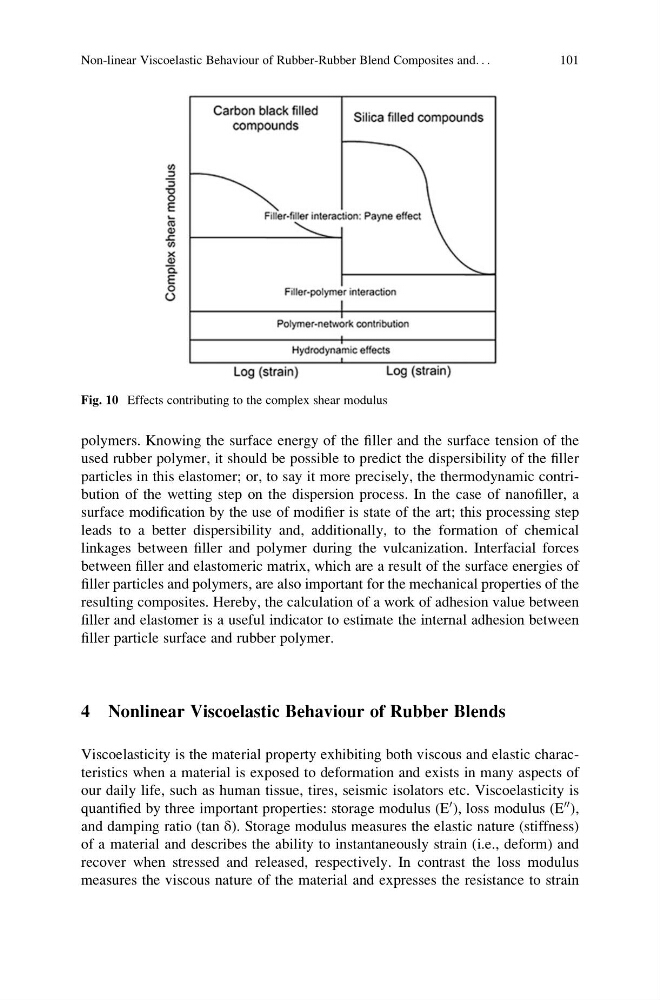
Fig. 10 Effects contributing to the complex shear modulus
Non-linear Viscoelastic Behaviour of Rubber-Rubber Blend Composites and. . .
101
used rubber polymer, it should be possible to predict the dispersibility of the filler
particles in this elastomer; or, to say it more precisely, the thermodynamic contribution of the wetting step on the dispersion process. In the case of nanofiller, a
surface modification by the use of modifier is state of the art; this processing step
leads to a better dispersibility and, additionally, to the formation of chemical
linkages between filler and polymer during the vulcanization. Interfacial forces
between filler and elastomeric matrix, which are a result of the surface energies of
filler particles and polymers, are also important for the mechanical properties of the
resulting composites. Hereby, the calculation of a work of adhesion value between
filler and elastomer is a useful indicator to estimate the internal adhesion between
filler particle surface and rubber polymer.
4 Nonlinear Viscoelastic Behaviour of Rubber Blends
Viscoelasticity is the material property exhibiting both viscous and elastic characteristics when a material is exposed to deformation and exists in many aspects of
our daily life, such as human tissue, tires, seismic isolators etc. Viscoelasticity is
quantified by three important properties: storage modulus (E
0 ), loss modulus (E
00 ),
and damping ratio (tan δ). Storage modulus measures the elastic nature (stiffness)
of a material and describes the ability to instantaneously strain (i.e., deform) and
recover when stressed and released, respectively. In contrast the loss modulus
measures the viscous nature of the material and expresses the resistance to strain
Fig. 10 Effects contributing to the complex shear modulus
Non-linear Viscoelastic Behaviour of Rubber-Rubber Blend Composites and. . .
101