

Another type of auxiliary extractable porogen is gum arabic (GuAr), which was
used for the preparation of PVA cryogels from the above-mentioned two-phase
ternary system, namely from the “water–PVA–GuAr” system. This system contains
the gel-forming PVA and the water-soluble GuAr, whose aqueous solutions per se
are not transformed into cryogels after freezing–frozen storage–thawing stages. The
cryotropic gelation of such feeds at various PVA/GuAr ratios and concentrations, as
well as the properties of the resulting gel matrices were explored in detail in the
study [180]. The micrographs in Fig. 21 demonstrate the hierarchy of the
macropores in such cryogels. Here, the morphology of the cryogel samples is
given at four different magnifications. The dark areas in the pictures are the
PVA-based gel phase stained with Congo Red, while the clear areas are the pores
of various shape and size. The gross through-hole pores with a cross-section of the
order of 1 mm can be observed, even in the survey photograph of a whole
2-mm-thick disc (Fig. 21a). These capillary-sized pores are also seen in an optical
microscope at a low magnification (Fig. 21b). At a fivefold higher resolution
(Fig. 21c), one can distinguish a high porous morphology of the gel matter,
which is the continuous phase in this spongy heterogeneous material, where the
roundish pores are also observed. The micrograph in Fig. 21d of the thin section
illustrates the structure of space between the gross pores. Here, at least two kinds of
pores are distinguished within these gel matrices, namely the “larger” roundish
pores of 10–70 μm in diameter (some of which are somewhat deformed) and the
“smaller” pores, also rounded, of ~1–5 μm in diameter. Hence, these micrographs
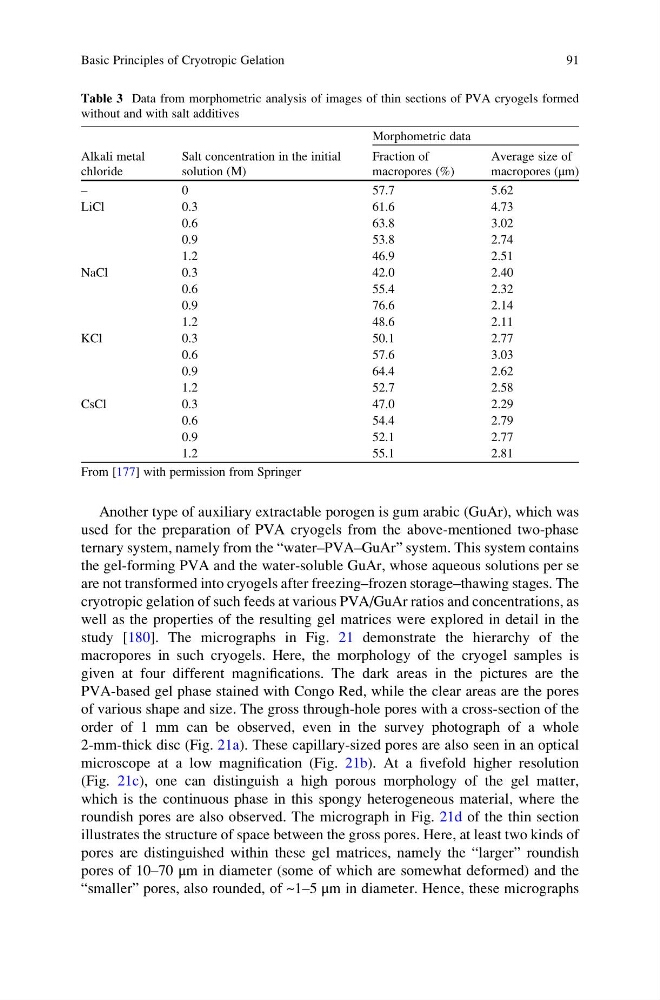
Table 3 Data from morphometric analysis of images of thin sections of PVA cryogels formed
without and with salt additives
Alkali metal
chloride
Salt concentration in the initial
solution (M)
Morphometric data
Fraction of
macropores (%)
Average size of
macropores (μm)
–
0
57.7
5.62
LiCl
0.3
61.6
4.73
0.6
63.8
3.02
0.9
53.8
2.74
1.2
46.9
2.51
NaCl
0.3
42.0
2.40
0.6
55.4
2.32
0.9
76.6
2.14
1.2
48.6
2.11
KCl
0.3
50.1
2.77
0.6
57.6
3.03
0.9
64.4
2.62
1.2
52.7
2.58
CsCl
0.3
47.0
2.29
0.6
54.4
2.79
0.9
52.1
2.77
1.2
55.1
2.81
From [177] with permission from Springer
Basic Principles of Cryotropic Gelation
91
used for the preparation of PVA cryogels from the above-mentioned two-phase
ternary system, namely from the “water–PVA–GuAr” system. This system contains
the gel-forming PVA and the water-soluble GuAr, whose aqueous solutions per se
are not transformed into cryogels after freezing–frozen storage–thawing stages. The
cryotropic gelation of such feeds at various PVA/GuAr ratios and concentrations, as
well as the properties of the resulting gel matrices were explored in detail in the
study [180]. The micrographs in Fig. 21 demonstrate the hierarchy of the
macropores in such cryogels. Here, the morphology of the cryogel samples is
given at four different magnifications. The dark areas in the pictures are the
PVA-based gel phase stained with Congo Red, while the clear areas are the pores
of various shape and size. The gross through-hole pores with a cross-section of the
order of 1 mm can be observed, even in the survey photograph of a whole
2-mm-thick disc (Fig. 21a). These capillary-sized pores are also seen in an optical
microscope at a low magnification (Fig. 21b). At a fivefold higher resolution
(Fig. 21c), one can distinguish a high porous morphology of the gel matter,
which is the continuous phase in this spongy heterogeneous material, where the
roundish pores are also observed. The micrograph in Fig. 21d of the thin section
illustrates the structure of space between the gross pores. Here, at least two kinds of
pores are distinguished within these gel matrices, namely the “larger” roundish
pores of 10–70 μm in diameter (some of which are somewhat deformed) and the
“smaller” pores, also rounded, of ~1–5 μm in diameter. Hence, these micrographs
Table 3 Data from morphometric analysis of images of thin sections of PVA cryogels formed
without and with salt additives
Alkali metal
chloride
Salt concentration in the initial
solution (M)
Morphometric data
Fraction of
macropores (%)
Average size of
macropores (μm)
–
0
57.7
5.62
LiCl
0.3
61.6
4.73
0.6
63.8
3.02
0.9
53.8
2.74
1.2
46.9
2.51
NaCl
0.3
42.0
2.40
0.6
55.4
2.32
0.9
76.6
2.14
1.2
48.6
2.11
KCl
0.3
50.1
2.77
0.6
57.6
3.03
0.9
64.4
2.62
1.2
52.7
2.58
CsCl
0.3
47.0
2.29
0.6
54.4
2.79
0.9
52.1
2.77
1.2
55.1
2.81
From [177] with permission from Springer
Basic Principles of Cryotropic Gelation
91