

organic media obviously proves that the same factors are responsible for the
efficiency of cryotropic gel formation in solvent–polymeric precursor–crosslinking
agent systems, irrespective of the type of crystallizing solvent.
Temperature dependences of the rate of cryogelation reactions and the cryogel
properties were also investigated in reaction systems leading to the formation of
polymerization-type cryogels, i.e., in solvent–monomers–initiator systems.
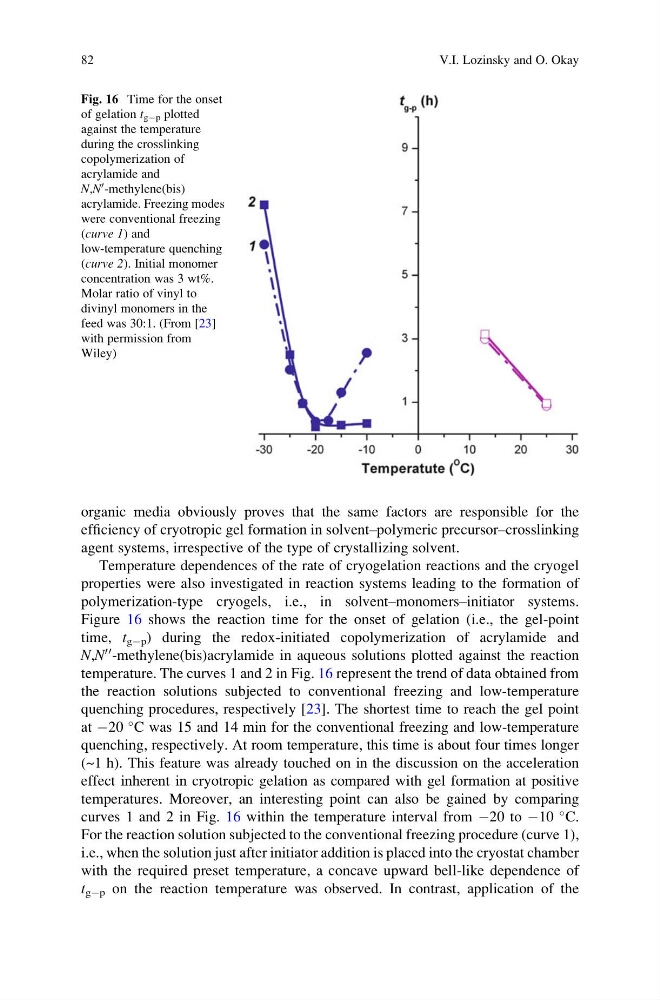
Figure 16 shows the reaction time for the onset of gelation (i.e., the gel-point
time, t gÀp ) during the redox-initiated copolymerization of acrylamide and
N,N
00 -methylene(bis)acrylamide in aqueous solutions plotted against the reaction
temperature. The curves 1 and 2 in Fig. 16 represent the trend of data obtained from
the reaction solutions subjected to conventional freezing and low-temperature
quenching procedures, respectively [23]. The shortest time to reach the gel point
at À20
C was 15 and 14 min for the conventional freezing and low-temperature
quenching, respectively. At room temperature, this time is about four times longer
(~1 h). This feature was already touched on in the discussion on the acceleration
effect inherent in cryotropic gelation as compared with gel formation at positive
temperatures. Moreover, an interesting point can also be gained by comparing
curves 1 and 2 in Fig. 16 within the temperature interval from À20 to À10
C.
For the reaction solution subjected to the conventional freezing procedure (curve 1),
i.e., when the solution just after initiator addition is placed into the cryostat chamber
with the required preset temperature, a concave upward bell-like dependence of
t gÀp on the reaction temperature was observed. In contrast, application of the
Fig. 16 Time for the onset
of gelation t gÀp plotted
against the temperature
during the crosslinking
copolymerization of
acrylamide and
N,N
0 -methylene(bis)
acrylamide. Freezing modes
were conventional freezing
(curve 1) and
low-temperature quenching
(curve 2). Initial monomer
concentration was 3 wt%.
Molar ratio of vinyl to
divinyl monomers in the
feed was 30:1. (From [23]
with permission from
Wiley)
82
V.I. Lozinsky and O. Okay
efficiency of cryotropic gel formation in solvent–polymeric precursor–crosslinking
agent systems, irrespective of the type of crystallizing solvent.
Temperature dependences of the rate of cryogelation reactions and the cryogel
properties were also investigated in reaction systems leading to the formation of
polymerization-type cryogels, i.e., in solvent–monomers–initiator systems.
Figure 16 shows the reaction time for the onset of gelation (i.e., the gel-point
time, t gÀp ) during the redox-initiated copolymerization of acrylamide and
N,N
00 -methylene(bis)acrylamide in aqueous solutions plotted against the reaction
temperature. The curves 1 and 2 in Fig. 16 represent the trend of data obtained from
the reaction solutions subjected to conventional freezing and low-temperature
quenching procedures, respectively [23]. The shortest time to reach the gel point
at À20
C was 15 and 14 min for the conventional freezing and low-temperature
quenching, respectively. At room temperature, this time is about four times longer
(~1 h). This feature was already touched on in the discussion on the acceleration
effect inherent in cryotropic gelation as compared with gel formation at positive
temperatures. Moreover, an interesting point can also be gained by comparing
curves 1 and 2 in Fig. 16 within the temperature interval from À20 to À10
C.
For the reaction solution subjected to the conventional freezing procedure (curve 1),
i.e., when the solution just after initiator addition is placed into the cryostat chamber
with the required preset temperature, a concave upward bell-like dependence of
t gÀp on the reaction temperature was observed. In contrast, application of the
Fig. 16 Time for the onset
of gelation t gÀp plotted
against the temperature
during the crosslinking
copolymerization of
acrylamide and
N,N
0 -methylene(bis)
acrylamide. Freezing modes
were conventional freezing
(curve 1) and
low-temperature quenching
(curve 2). Initial monomer
concentration was 3 wt%.
Molar ratio of vinyl to
divinyl monomers in the
feed was 30:1. (From [23]
with permission from
Wiley)
82
V.I. Lozinsky and O. Okay