

6 Future Perspectives
PVA is a well-known biocompatible material that can be chemically crosslinked
into a hydrogel with many demonstrated biomedical applications. When it is
physically crosslinked into PVA-C using the freeze–thaw cycling process, the
resulting hydrogel (cryogel) possesses additional characteristics such as nontoxicity
and tunable mechanical properties. The anisotropic PVA-C has mechanical properties that closely match those of the natural soft tissue, including orientation. These
additional characteristics make it an especially attractive candidate material for
medical device applications.
For orthopedic devices such as the IVD, the key is to be able to increase the
stiffness and strength of the PVA-C. This could be accomplished via PVA-C
nanocomposites. In both IVD and cartilage applications, a strain-rate dependent
mechanical response is essential. This again may be possible by formulating
PVA-C composites with a specially designed filler that can mimic the properties
of elastin and protoglycans in the tissue.
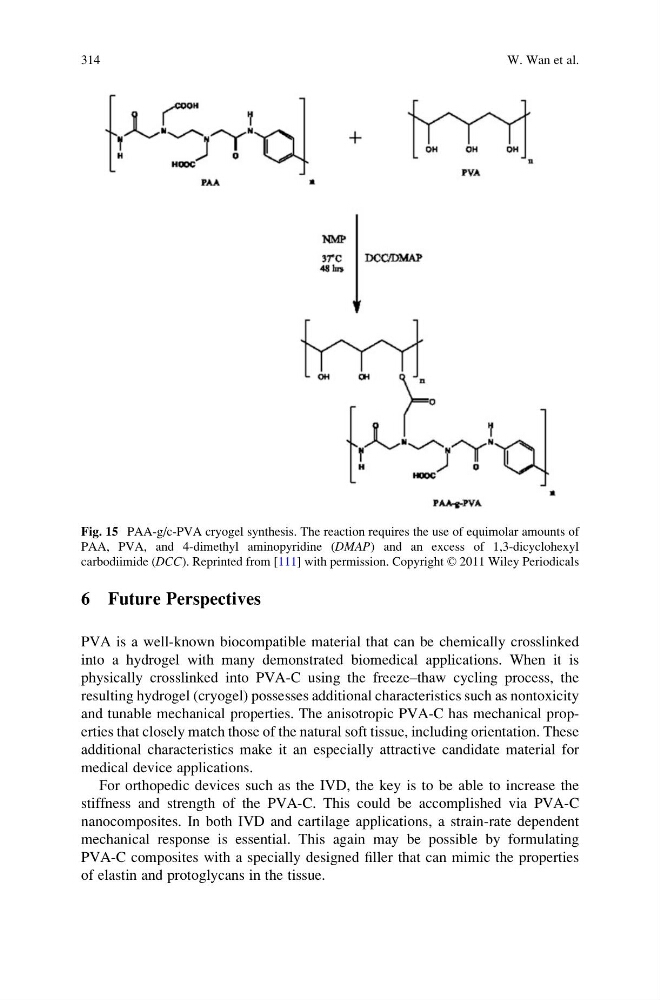
Fig. 15 PAA-g/c-PVA cryogel synthesis. The reaction requires the use of equimolar amounts of
PAA, PVA, and 4-dimethyl aminopyridine (DMAP) and an excess of 1,3-dicyclohexyl
carbodiimide (DCC). Reprinted from [111] with permission. Copyright © 2011 Wiley Periodicals
314
W. Wan et al.
PVA is a well-known biocompatible material that can be chemically crosslinked
into a hydrogel with many demonstrated biomedical applications. When it is
physically crosslinked into PVA-C using the freeze–thaw cycling process, the
resulting hydrogel (cryogel) possesses additional characteristics such as nontoxicity
and tunable mechanical properties. The anisotropic PVA-C has mechanical properties that closely match those of the natural soft tissue, including orientation. These
additional characteristics make it an especially attractive candidate material for
medical device applications.
For orthopedic devices such as the IVD, the key is to be able to increase the
stiffness and strength of the PVA-C. This could be accomplished via PVA-C
nanocomposites. In both IVD and cartilage applications, a strain-rate dependent
mechanical response is essential. This again may be possible by formulating
PVA-C composites with a specially designed filler that can mimic the properties
of elastin and protoglycans in the tissue.
Fig. 15 PAA-g/c-PVA cryogel synthesis. The reaction requires the use of equimolar amounts of
PAA, PVA, and 4-dimethyl aminopyridine (DMAP) and an excess of 1,3-dicyclohexyl
carbodiimide (DCC). Reprinted from [111] with permission. Copyright © 2011 Wiley Periodicals
314
W. Wan et al.