

Typically, tensile properties are measured using material testing machines, but
Fromageau et al. developed a method to measure the tensile properties of PVA-C
using four ultrasound elastography techniques. The authors measured the Young’s
moduli of 10 wt% PVA-C samples that had gone through 1–10 FTCs using this
technique and compared the results with those obtained from tensile testing
machines. Good correlations were obtained for samples from cycle 1 to cycle
6 [60].
3.2 Diffusion Characteristics
The porous structure of PVA-C, comprised of crystalline regions (~3 nm) and
amorphous regions (~19 nm) [10], allows for diffusion of molecules from the
cryogel matrix. Work reported by Stauffer and Peppas showed that the water
diffusion coefficient decreased as the number of FTCs increased [37], with a
diffusion coefficient decrease of 62 % occurring between the second and fifth FTC.
Hickey and Peppas showed that diffusion of solutes from a PVA cryogel
membrane is related to the mesh size, which is roughly related to the percentage
crystallinity. Also, there is a size exclusion phenomenon present as a result of the
presence of the crystallite network. The solute diffusion coefficient for theophylline
and FITC-dextran was determined to be dependent on the mesh size [61].
Release of protein (bovine serum albumin, BSA) molecules from PVA cryogel
nanoparticles was studied by Li et al. [62]. The authors found that the release was
diffusion controlled and that approximately 95 % of the total incorporated protein
was released within 30 h. Furthermore, BSA remained stable during the preparation
process. It was shown that diffusion increased as temperature increased, and
decreased as the number of FTCs increased from one to three. These observations
a
b
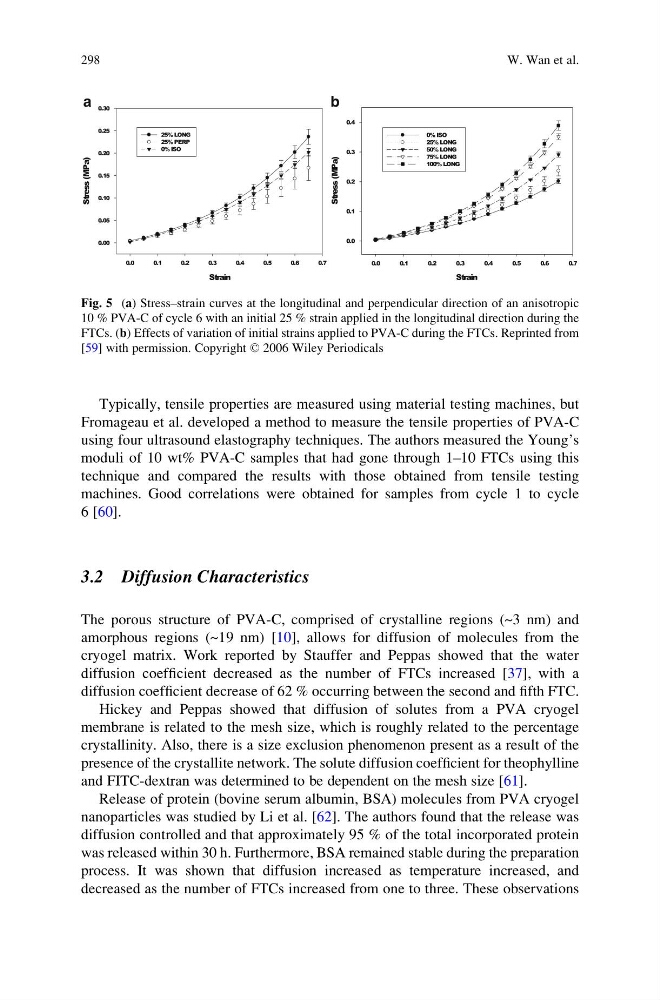
Fig. 5 (a) Stress–strain curves at the longitudinal and perpendicular direction of an anisotropic
10 % PVA-C of cycle 6 with an initial 25 % strain applied in the longitudinal direction during the
FTCs. (b) Effects of variation of initial strains applied to PVA-C during the FTCs. Reprinted from
[59] with permission. Copyright © 2006 Wiley Periodicals
298
W. Wan et al.
Fromageau et al. developed a method to measure the tensile properties of PVA-C
using four ultrasound elastography techniques. The authors measured the Young’s
moduli of 10 wt% PVA-C samples that had gone through 1–10 FTCs using this
technique and compared the results with those obtained from tensile testing
machines. Good correlations were obtained for samples from cycle 1 to cycle
6 [60].
3.2 Diffusion Characteristics
The porous structure of PVA-C, comprised of crystalline regions (~3 nm) and
amorphous regions (~19 nm) [10], allows for diffusion of molecules from the
cryogel matrix. Work reported by Stauffer and Peppas showed that the water
diffusion coefficient decreased as the number of FTCs increased [37], with a
diffusion coefficient decrease of 62 % occurring between the second and fifth FTC.
Hickey and Peppas showed that diffusion of solutes from a PVA cryogel
membrane is related to the mesh size, which is roughly related to the percentage
crystallinity. Also, there is a size exclusion phenomenon present as a result of the
presence of the crystallite network. The solute diffusion coefficient for theophylline
and FITC-dextran was determined to be dependent on the mesh size [61].
Release of protein (bovine serum albumin, BSA) molecules from PVA cryogel
nanoparticles was studied by Li et al. [62]. The authors found that the release was
diffusion controlled and that approximately 95 % of the total incorporated protein
was released within 30 h. Furthermore, BSA remained stable during the preparation
process. It was shown that diffusion increased as temperature increased, and
decreased as the number of FTCs increased from one to three. These observations
a
b
Fig. 5 (a) Stress–strain curves at the longitudinal and perpendicular direction of an anisotropic
10 % PVA-C of cycle 6 with an initial 25 % strain applied in the longitudinal direction during the
FTCs. (b) Effects of variation of initial strains applied to PVA-C during the FTCs. Reprinted from
[59] with permission. Copyright © 2006 Wiley Periodicals
298
W. Wan et al.