

50–70 % [60]. If longer columns are used, it might be possible to improve that
figure.
squeezing
Flow of
squeezed
out liquid
Pore wall with immobilized
affinity ligands
Nanoparticle with
surface displayed
affinity receptors
Keys
Swollen
cryogel
monolith
filled with
liquid
1.Compression
with a glass
rod
2. Re-swelling
upon addition
of liquid
3. Compression
with a glass
rod
12.5 mm
3-4 mm
a
b
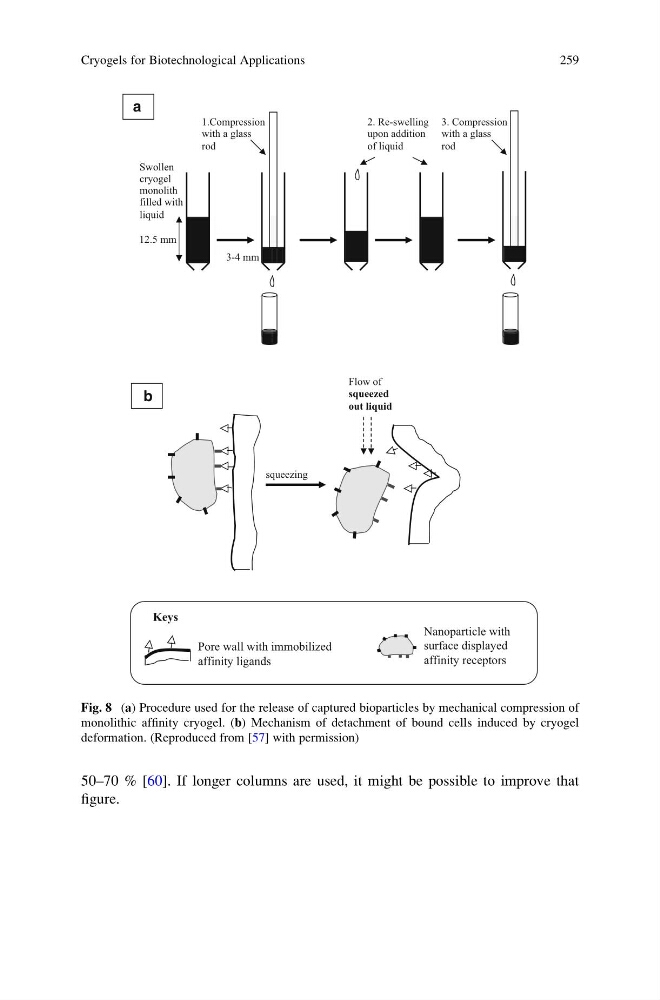
Fig. 8 (a) Procedure used for the release of captured bioparticles by mechanical compression of
monolithic affinity cryogel. (b) Mechanism of detachment of bound cells induced by cryogel
deformation. (Reproduced from [57] with permission)
Cryogels for Biotechnological Applications
259
figure.
squeezing
Flow of
squeezed
out liquid
Pore wall with immobilized
affinity ligands
Nanoparticle with
surface displayed
affinity receptors
Keys
Swollen
cryogel
monolith
filled with
liquid
1.Compression
with a glass
rod
2. Re-swelling
upon addition
of liquid
3. Compression
with a glass
rod
12.5 mm
3-4 mm
a
b
Fig. 8 (a) Procedure used for the release of captured bioparticles by mechanical compression of
monolithic affinity cryogel. (b) Mechanism of detachment of bound cells induced by cryogel
deformation. (Reproduced from [57] with permission)
Cryogels for Biotechnological Applications
259