

dΣ
dΩ
ðQÞ ¼
ϕ 0
V p
ðρ p À ρ 0 Þ
2
ð
R
f ðrÞ Á V p ðrÞ
2 Á PðQ; rÞ dr
(69)
where V p
¼
ð
r
f ðrÞ Á V p ðrÞdr
The normalized distribution function must be chosen according to the particular
physical situation. A typical choice, suitable for many physical situations, is the
Gaussian distribution:
f ðrÞ ¼
1
ffiffiffiffiffiffiffiffiffiffi
2πσ 2
R
p
exp À
ðr À RÞ
2
2σ 2
R
!
(70)
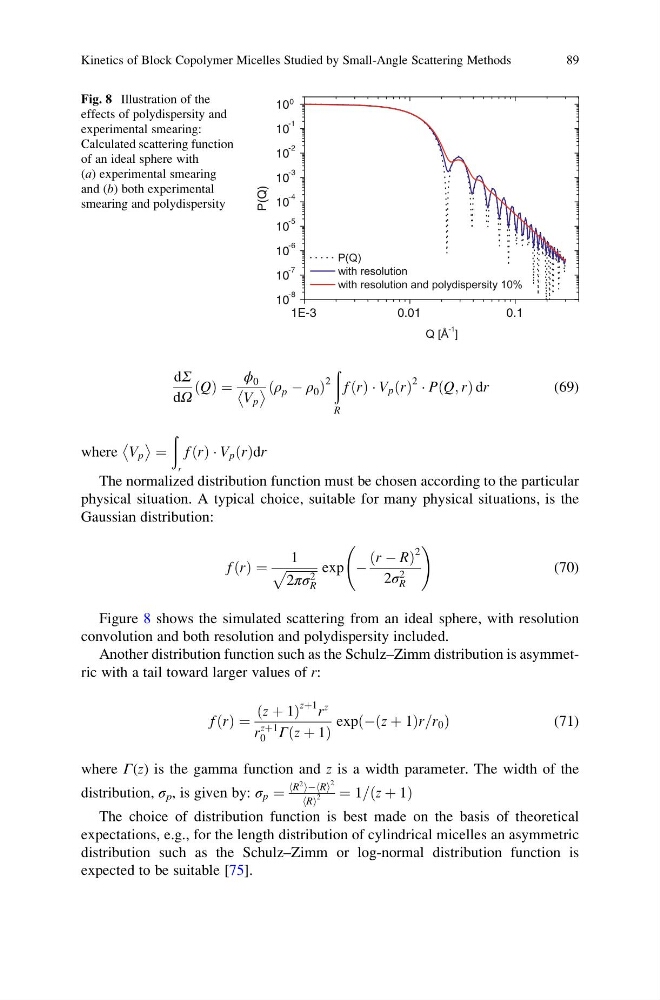
Figure 8 shows the simulated scattering from an ideal sphere, with resolution
convolution and both resolution and polydispersity included.
Another distribution function such as the Schulz–Zimm distribution is asymmetric with a tail toward larger values of r:
f ðrÞ ¼
ðz þ 1Þ
zþ1 r
z
r
zþ1
0 Γðz þ 1Þ
exp Àðz þ 1Þr=r 0
ð
Þ
(71)
where Γ(z) is the gamma function and z is a width parameter. The width of the
distribution, σ p , is given by: σ p ¼
hR
2 iÀhRi
2
hRi
2
¼ 1=ðz þ 1Þ
The choice of distribution function is best made on the basis of theoretical
expectations, e.g., for the length distribution of cylindrical micelles an asymmetric
distribution such as the Schulz–Zimm or log-normal distribution function is
expected to be suitable [75].
1E-3
0.01
0.1
10
-8
10
-7
10
-6
10
-5
10
-4
10
-3
10
-2
10
-1
10
0
P(Q)
Fig. 8 Illustration of the
effects of polydispersity and
experimental smearing:
Calculated scattering function
of an ideal sphere with
(a) experimental smearing
and (b) both experimental
smearing and polydispersity
Kinetics of Block Copolymer Micelles Studied by Small-Angle Scattering Methods
89
dΩ
ðQÞ ¼
ϕ 0
V p
ðρ p À ρ 0 Þ
2
ð
R
f ðrÞ Á V p ðrÞ
2 Á PðQ; rÞ dr
(69)
where V p
¼
ð
r
f ðrÞ Á V p ðrÞdr
The normalized distribution function must be chosen according to the particular
physical situation. A typical choice, suitable for many physical situations, is the
Gaussian distribution:
f ðrÞ ¼
1
ffiffiffiffiffiffiffiffiffiffi
2πσ 2
R
p
exp À
ðr À RÞ
2
2σ 2
R
!
(70)
Figure 8 shows the simulated scattering from an ideal sphere, with resolution
convolution and both resolution and polydispersity included.
Another distribution function such as the Schulz–Zimm distribution is asymmetric with a tail toward larger values of r:
f ðrÞ ¼
ðz þ 1Þ
zþ1 r
z
r
zþ1
0 Γðz þ 1Þ
exp Àðz þ 1Þr=r 0
ð
Þ
(71)
where Γ(z) is the gamma function and z is a width parameter. The width of the
distribution, σ p , is given by: σ p ¼
hR
2 iÀhRi
2
hRi
2
¼ 1=ðz þ 1Þ
The choice of distribution function is best made on the basis of theoretical
expectations, e.g., for the length distribution of cylindrical micelles an asymmetric
distribution such as the Schulz–Zimm or log-normal distribution function is
expected to be suitable [75].
1E-3
0.01
0.1
10
-8
10
-7
10
-6
10
-5
10
-4
10
-3
10
-2
10
-1
10
0
P(Q)
Fig. 8 Illustration of the
effects of polydispersity and
experimental smearing:
Calculated scattering function
of an ideal sphere with
(a) experimental smearing
and (b) both experimental
smearing and polydispersity
Kinetics of Block Copolymer Micelles Studied by Small-Angle Scattering Methods
89