

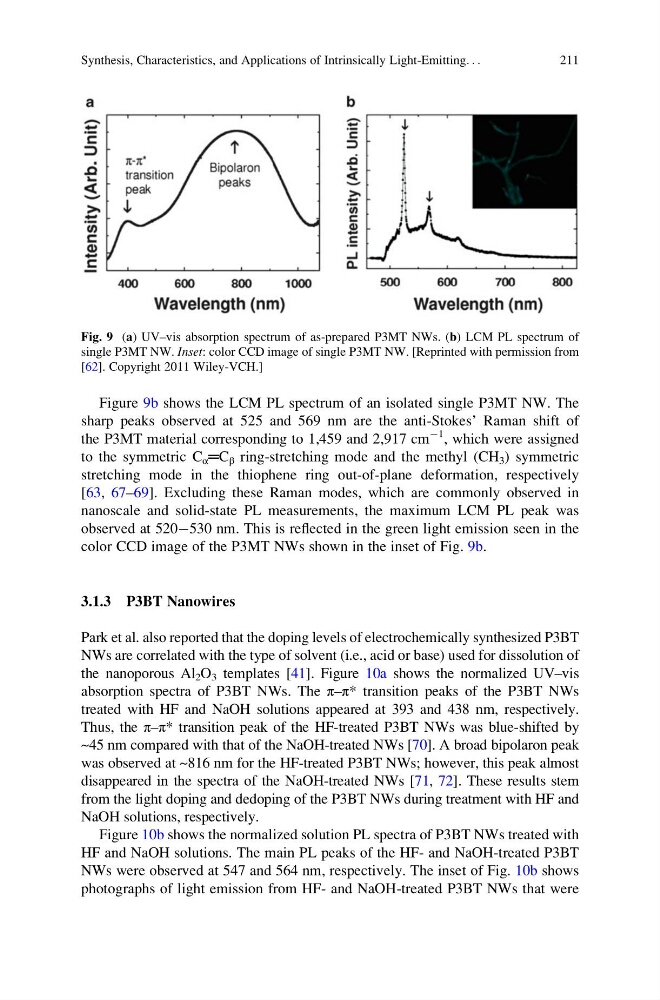
Figure 9b shows the LCM PL spectrum of an isolated single P3MT NW. The
sharp peaks observed at 525 and 569 nm are the anti-Stokes’ Raman shift of
the P3MT material corresponding to 1,459 and 2,917 cm
À1 , which were assigned
to the symmetric C α ═C β ring-stretching mode and the methyl (CH 3 ) symmetric
stretching mode in the thiophene ring out-of-plane deformation, respectively
[63, 67–69]. Excluding these Raman modes, which are commonly observed in
nanoscale and solid-state PL measurements, the maximum LCM PL peak was
observed at 520À530 nm. This is reflected in the green light emission seen in the
color CCD image of the P3MT NWs shown in the inset of Fig. 9b.
3.1.3 P3BT Nanowires
Park et al. also reported that the doping levels of electrochemically synthesized P3BT
NWs are correlated with the type of solvent (i.e., acid or base) used for dissolution of
the nanoporous Al 2 O 3 templates [41]. Figure 10a shows the normalized UV–vis
absorption spectra of P3BT NWs. The π–π* transition peaks of the P3BT NWs
treated with HF and NaOH solutions appeared at 393 and 438 nm, respectively.
Thus, the π–π* transition peak of the HF-treated P3BT NWs was blue-shifted by
~45 nm compared with that of the NaOH-treated NWs [70]. A broad bipolaron peak
was observed at ~816 nm for the HF-treated P3BT NWs; however, this peak almost
disappeared in the spectra of the NaOH-treated NWs [71, 72]. These results stem
from the light doping and dedoping of the P3BT NWs during treatment with HF and
NaOH solutions, respectively.
Figure 10b shows the normalized solution PL spectra of P3BT NWs treated with
HF and NaOH solutions. The main PL peaks of the HF- and NaOH-treated P3BT
NWs were observed at 547 and 564 nm, respectively. The inset of Fig. 10b shows
photographs of light emission from HF- and NaOH-treated P3BT NWs that were
Fig. 9 (a) UV–vis absorption spectrum of as-prepared P3MT NWs. (b) LCM PL spectrum of
single P3MT NW. Inset: color CCD image of single P3MT NW. [Reprinted with permission from
[62]. Copyright 2011 Wiley-VCH.]
Synthesis, Characteristics, and Applications of Intrinsically Light-Emitting. . .
211
sharp peaks observed at 525 and 569 nm are the anti-Stokes’ Raman shift of
the P3MT material corresponding to 1,459 and 2,917 cm
À1 , which were assigned
to the symmetric C α ═C β ring-stretching mode and the methyl (CH 3 ) symmetric
stretching mode in the thiophene ring out-of-plane deformation, respectively
[63, 67–69]. Excluding these Raman modes, which are commonly observed in
nanoscale and solid-state PL measurements, the maximum LCM PL peak was
observed at 520À530 nm. This is reflected in the green light emission seen in the
color CCD image of the P3MT NWs shown in the inset of Fig. 9b.
3.1.3 P3BT Nanowires
Park et al. also reported that the doping levels of electrochemically synthesized P3BT
NWs are correlated with the type of solvent (i.e., acid or base) used for dissolution of
the nanoporous Al 2 O 3 templates [41]. Figure 10a shows the normalized UV–vis
absorption spectra of P3BT NWs. The π–π* transition peaks of the P3BT NWs
treated with HF and NaOH solutions appeared at 393 and 438 nm, respectively.
Thus, the π–π* transition peak of the HF-treated P3BT NWs was blue-shifted by
~45 nm compared with that of the NaOH-treated NWs [70]. A broad bipolaron peak
was observed at ~816 nm for the HF-treated P3BT NWs; however, this peak almost
disappeared in the spectra of the NaOH-treated NWs [71, 72]. These results stem
from the light doping and dedoping of the P3BT NWs during treatment with HF and
NaOH solutions, respectively.
Figure 10b shows the normalized solution PL spectra of P3BT NWs treated with
HF and NaOH solutions. The main PL peaks of the HF- and NaOH-treated P3BT
NWs were observed at 547 and 564 nm, respectively. The inset of Fig. 10b shows
photographs of light emission from HF- and NaOH-treated P3BT NWs that were
Fig. 9 (a) UV–vis absorption spectrum of as-prepared P3MT NWs. (b) LCM PL spectrum of
single P3MT NW. Inset: color CCD image of single P3MT NW. [Reprinted with permission from
[62]. Copyright 2011 Wiley-VCH.]
Synthesis, Characteristics, and Applications of Intrinsically Light-Emitting. . .
211