

useful in controlling reactions involving unstable short-lived reactive
intermediates. Unstable reactive species can be transferred to another location
to be used in the next reaction before they decompose (Fig. 3). By taking
advantage of this feature, chemical transformations that are very difficult or
impossible in macroreactors can be achieved in microreactors [87–90].
1.2 Cationic Polymerization
1.2.1 Basic Principles of Cationic Polymerization of Vinyl Monomers
Cationic polymerization [91, 92] is one of the most fundamental methods of
synthesizing polymers. Although there are several types of cationic polymerization,
the most important is cationic polymerization of vinyl monomers having a cation
stabilizing group (Y) (Scheme 1).
The initiation usually involves the addition of a cationic species (A
+
) to a vinyl
monomer to produce a carbocationic intermediate associated with a counter anion
(X
À ), which is derived from the initiator. In general, proton acids or carbocations
generated from their precursors by acid-promoted ionization reactions [93–95], are
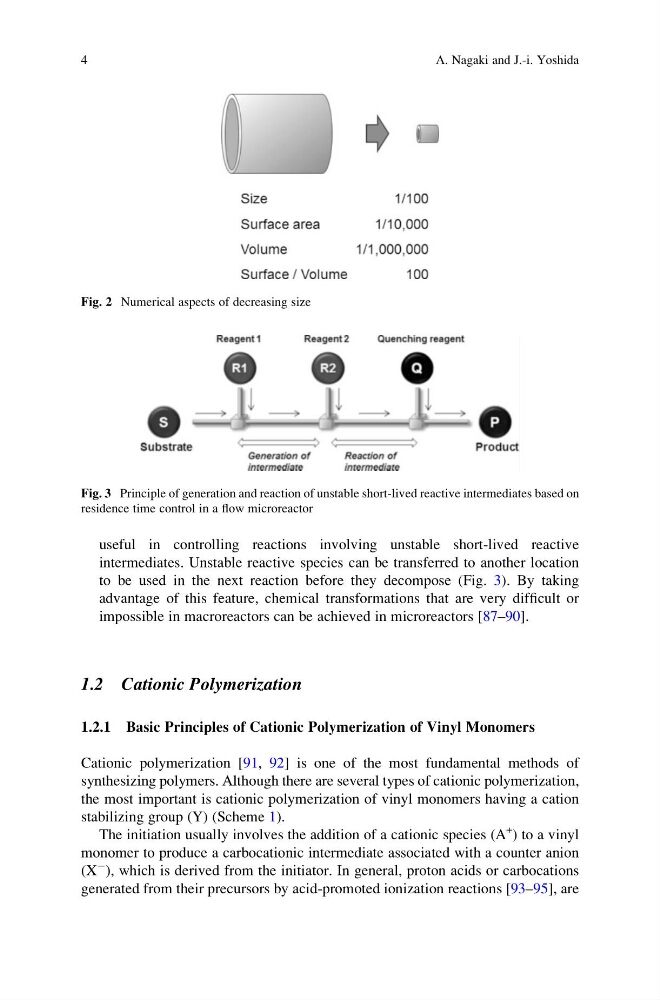
Fig. 2 Numerical aspects of decreasing size
Fig. 3 Principle of generation and reaction of unstable short-lived reactive intermediates based on
residence time control in a flow microreactor
4
A. Nagaki and J.-i. Yoshida
intermediates. Unstable reactive species can be transferred to another location
to be used in the next reaction before they decompose (Fig. 3). By taking
advantage of this feature, chemical transformations that are very difficult or
impossible in macroreactors can be achieved in microreactors [87–90].
1.2 Cationic Polymerization
1.2.1 Basic Principles of Cationic Polymerization of Vinyl Monomers
Cationic polymerization [91, 92] is one of the most fundamental methods of
synthesizing polymers. Although there are several types of cationic polymerization,
the most important is cationic polymerization of vinyl monomers having a cation
stabilizing group (Y) (Scheme 1).
The initiation usually involves the addition of a cationic species (A
+
) to a vinyl
monomer to produce a carbocationic intermediate associated with a counter anion
(X
À ), which is derived from the initiator. In general, proton acids or carbocations
generated from their precursors by acid-promoted ionization reactions [93–95], are
Fig. 2 Numerical aspects of decreasing size
Fig. 3 Principle of generation and reaction of unstable short-lived reactive intermediates based on
residence time control in a flow microreactor
4
A. Nagaki and J.-i. Yoshida