

2.3 Cyclization to Form Carbon–Oxygen Single Bond
An obvious synthetic approach for the construction of cyclic ethers is the intramolecular cyclization of linear precursors through a C–O bond forming event. Despite
this method exhibits evident kinetic and thermodynamic difficulties for mediumsized ring ethers, numerous successful approaches have been reported.
2.3.1 Intramolecular Cyclization of Hydroxy Ketones and Thioketals
Reductive cyclization of hydroxy ketones has been used frequently during the total
synthesis of natural products possessing medium-sized ether moieties. Kumar et al.,
following the pioneering work by Nicolaou et al. on the synthesis of the marine
ladder polyethers [147], reported the total synthesis of (À)-cis-lauthisan [148]. As
shown in Scheme 41, treatment of the hydroxy ketone 200 with Et 3 SiH and
TMSOTf resulted exclusively in the cis-disubstituted eight-membered cyclic
ether 201. Carren ˜o et al. also reported the total synthesis of (À)- and (+)-cislauthisan using the same strategy [149]. Similarly, 202 underwent reductive cyclization to afford the same product 201 also in moderate yield. The formation of
diastereomers was probably due to the pseudoaxial delivery of hydride to the
oxocarbenium ion intermediate.
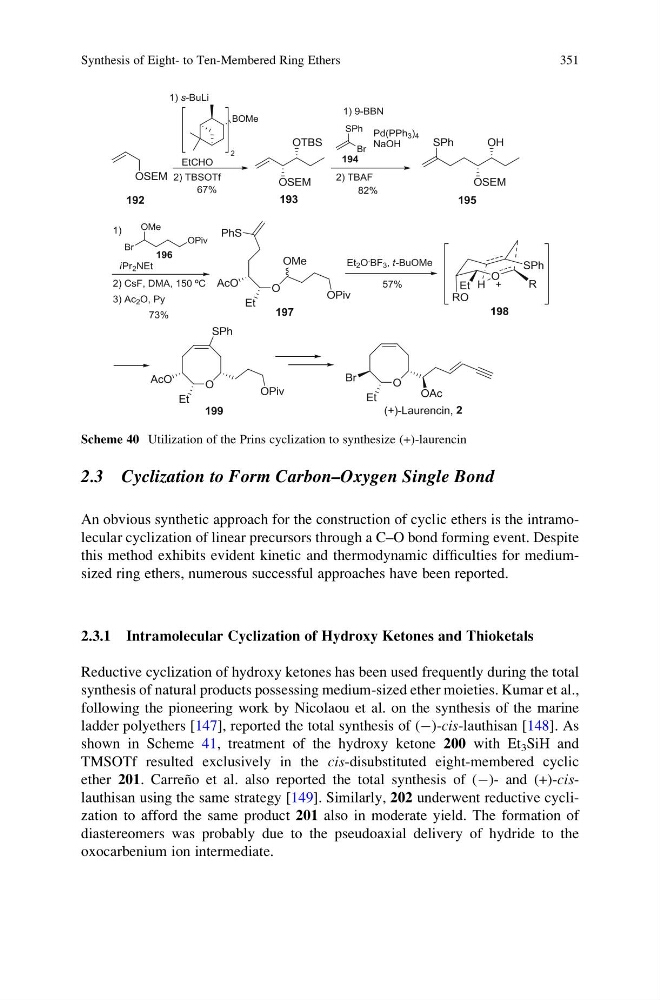
Scheme 40 Utilization of the Prins cyclization to synthesize (+)-laurencin
Synthesis of Eight- to Ten-Membered Ring Ethers
351
An obvious synthetic approach for the construction of cyclic ethers is the intramolecular cyclization of linear precursors through a C–O bond forming event. Despite
this method exhibits evident kinetic and thermodynamic difficulties for mediumsized ring ethers, numerous successful approaches have been reported.
2.3.1 Intramolecular Cyclization of Hydroxy Ketones and Thioketals
Reductive cyclization of hydroxy ketones has been used frequently during the total
synthesis of natural products possessing medium-sized ether moieties. Kumar et al.,
following the pioneering work by Nicolaou et al. on the synthesis of the marine
ladder polyethers [147], reported the total synthesis of (À)-cis-lauthisan [148]. As
shown in Scheme 41, treatment of the hydroxy ketone 200 with Et 3 SiH and
TMSOTf resulted exclusively in the cis-disubstituted eight-membered cyclic
ether 201. Carren ˜o et al. also reported the total synthesis of (À)- and (+)-cislauthisan using the same strategy [149]. Similarly, 202 underwent reductive cyclization to afford the same product 201 also in moderate yield. The formation of
diastereomers was probably due to the pseudoaxial delivery of hydride to the
oxocarbenium ion intermediate.
Scheme 40 Utilization of the Prins cyclization to synthesize (+)-laurencin
Synthesis of Eight- to Ten-Membered Ring Ethers
351