

Propargylic carbocations can be generated from the corresponding alcohols by
complexation of the triple bond with Co 2 (CO) 8 followed by treatment with a strong
Lewis acid (Nicholas-type reaction). When this reaction was applied to ω-epoxy
propargylic alcohols, the oxygen atom of the oxirane functionality can act as
MeO
OH
O
+
O
Cl
MeO
AlCl 3
CH 2 Cl 2 , -10 °C
74%
12 h
69
70
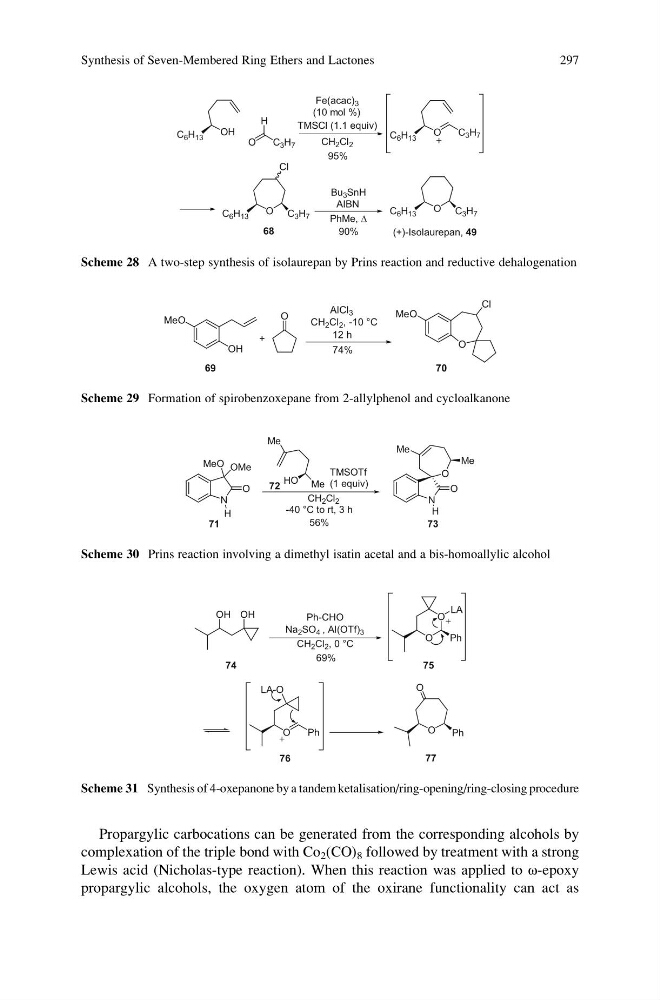
Scheme 29 Formation of spirobenzoxepane from 2-allylphenol and cycloalkanone
OH
C 6 H 13
H
C 3 H 7
O
O
C 6 H 13
C 3 H 7
Fe(acac) 3
(10 mol %)
TMSCl (1.1 equiv)
O
C 6 H 13
C 3 H 7
Cl
O
C 6 H 13
C 3 H 7
CH 2 Cl 2
68
(+)-Isolaurepan, 49
Bu 3 SnH
AIBN
PhMe, D
90%
95%
Scheme 28 A two-step synthesis of isolaurepan by Prins reaction and reductive dehalogenation
N
H
O
MeO OMe
Me
HO Me
73
N
H
O
O
Me
Me
TMSOTf
(1 equiv)
CH 2 Cl 2
-40 °C to rt, 3 h
72
71
56%
Scheme 30 Prins reaction involving a dimethyl isatin acetal and a bis-homoallylic alcohol
OH OH
Ph-CHO
Na 2 SO 4 , Al(OTf) 3
CH 2 Cl 2 , 0 °C
O
O
Ph
LA
O
Ph
LA-O
O
Ph
O
77
69%
74
75
76
Scheme 31 Synthesis of 4-oxepanone by a tandem ketalisation/ring-opening/ring-closing procedure
Synthesis of Seven-Membered Ring Ethers and Lactones
297
complexation of the triple bond with Co 2 (CO) 8 followed by treatment with a strong
Lewis acid (Nicholas-type reaction). When this reaction was applied to ω-epoxy
propargylic alcohols, the oxygen atom of the oxirane functionality can act as
MeO
OH
O
+
O
Cl
MeO
AlCl 3
CH 2 Cl 2 , -10 °C
74%
12 h
69
70
Scheme 29 Formation of spirobenzoxepane from 2-allylphenol and cycloalkanone
OH
C 6 H 13
H
C 3 H 7
O
O
C 6 H 13
C 3 H 7
Fe(acac) 3
(10 mol %)
TMSCl (1.1 equiv)
O
C 6 H 13
C 3 H 7
Cl
O
C 6 H 13
C 3 H 7
CH 2 Cl 2
68
(+)-Isolaurepan, 49
Bu 3 SnH
AIBN
PhMe, D
90%
95%
Scheme 28 A two-step synthesis of isolaurepan by Prins reaction and reductive dehalogenation
N
H
O
MeO OMe
Me
HO Me
73
N
H
O
O
Me
Me
TMSOTf
(1 equiv)
CH 2 Cl 2
-40 °C to rt, 3 h
72
71
56%
Scheme 30 Prins reaction involving a dimethyl isatin acetal and a bis-homoallylic alcohol
OH OH
Ph-CHO
Na 2 SO 4 , Al(OTf) 3
CH 2 Cl 2 , 0 °C
O
O
Ph
LA
O
Ph
LA-O
O
Ph
O
77
69%
74
75
76
Scheme 31 Synthesis of 4-oxepanone by a tandem ketalisation/ring-opening/ring-closing procedure
Synthesis of Seven-Membered Ring Ethers and Lactones
297