

3 Formation of C–O Bonds
3.1 Cyclisations Involving Oxygenated Nucleophiles
3.1.1 Formation of Oxepanes Under Acidic Conditions
1,6-Diols can be transformed into oxepanes by treatment with various proton
sources. For example, sorbitol in refluxing toluene, in the presence of a catalytic
amount of TfOH, furnished the septanoside 20 in 79 % without epimerisation
of the stereogenic centres (Scheme 6). Surprisingly, no formation of five- or
six-membered rings was noticed. Similar results were obtained with other proton
sources such as TsOH (Scheme 7) [17].
CHO
OH
O
CO 2 Et
Cl
OH
OEt
Cl
O
O
Piperidine
O
CO 2 Et
O
i Pr 2 NEt
CH 2 Cl 2
reflux
(Ph) 3 P
CO 2 Et
O
CO 2 Et
CO 2 Et
10
O
CHO CO 2 Et
Cl
OH
9
+
CH 2 Cl 2 , rt
-
O
CO 2 Et
Cl
O
11
-
O
CO 2 Et
Cl
12
-
O
13
14
96%
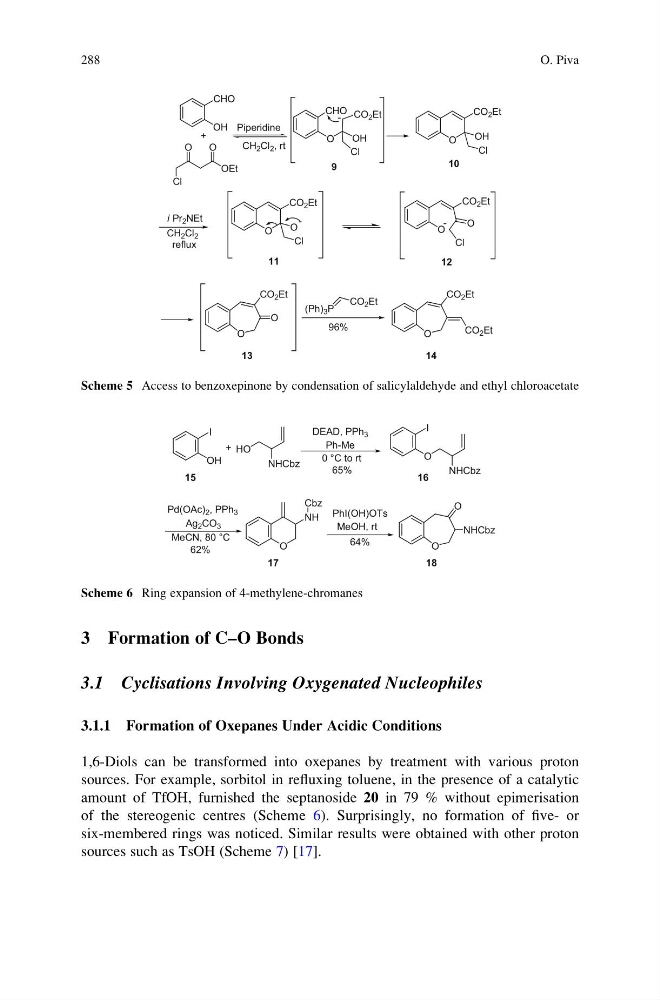
Scheme 5 Access to benzoxepinone by condensation of salicylaldehyde and ethyl chloroacetate
O
O
NHCbz
PhI(OH)OTs
MeOH, rt
18
O
NH
OH
I
O
I
NHCbz
+ HO
NHCbz
DEAD, PPh 3
Ph-Me
0 °C to rt
65%
64%
Pd(OAc) 2 , PPh 3
Cbz
Ag 2 CO 3
MeCN, 80 °C
62%
17
15
16
Scheme 6 Ring expansion of 4-methylene-chromanes
288
O. Piva
3.1 Cyclisations Involving Oxygenated Nucleophiles
3.1.1 Formation of Oxepanes Under Acidic Conditions
1,6-Diols can be transformed into oxepanes by treatment with various proton
sources. For example, sorbitol in refluxing toluene, in the presence of a catalytic
amount of TfOH, furnished the septanoside 20 in 79 % without epimerisation
of the stereogenic centres (Scheme 6). Surprisingly, no formation of five- or
six-membered rings was noticed. Similar results were obtained with other proton
sources such as TsOH (Scheme 7) [17].
CHO
OH
O
CO 2 Et
Cl
OH
OEt
Cl
O
O
Piperidine
O
CO 2 Et
O
i Pr 2 NEt
CH 2 Cl 2
reflux
(Ph) 3 P
CO 2 Et
O
CO 2 Et
CO 2 Et
10
O
CHO CO 2 Et
Cl
OH
9
+
CH 2 Cl 2 , rt
-
O
CO 2 Et
Cl
O
11
-
O
CO 2 Et
Cl
12
-
O
13
14
96%
Scheme 5 Access to benzoxepinone by condensation of salicylaldehyde and ethyl chloroacetate
O
O
NHCbz
PhI(OH)OTs
MeOH, rt
18
O
NH
OH
I
O
I
NHCbz
+ HO
NHCbz
DEAD, PPh 3
Ph-Me
0 °C to rt
65%
64%
Pd(OAc) 2 , PPh 3
Cbz
Ag 2 CO 3
MeCN, 80 °C
62%
17
15
16
Scheme 6 Ring expansion of 4-methylene-chromanes
288
O. Piva