

16 Macrolactonization Applying Phosphorus-Based
Reagents
16.1 Background
Phosphates are prominent alternatives to established protocols. A variety of
reagents are known such as phosphates of type 199 [127] and 200 [128], most
widely used in the synthesis of esters and thiol esters [129]. The phosphorus-based
peptide-coupling reagents PyBrOP [130] 201 and PyBOP [131] 202 originally
designed for peptide bond formation have also been successfully used in the
synthesis of macrolactones (Fig. 5).
For the first two reagents heat labile mixed carbon–phosphorus anhydrides (e.g.,
203, Scheme 57), and for the latter two species 201 and 202 acyloxyphosphonium
[132] intermediates were postulated as reactive species. Since mixed
carbon–phosphorus anhydrides (e.g., 203) tend to give symmetrical anhydrides
(e.g., 204) under heating (Scheme 57), Masamune et al. recognized the need to
perform macrolactonizations at a temperature below 80
C [133].
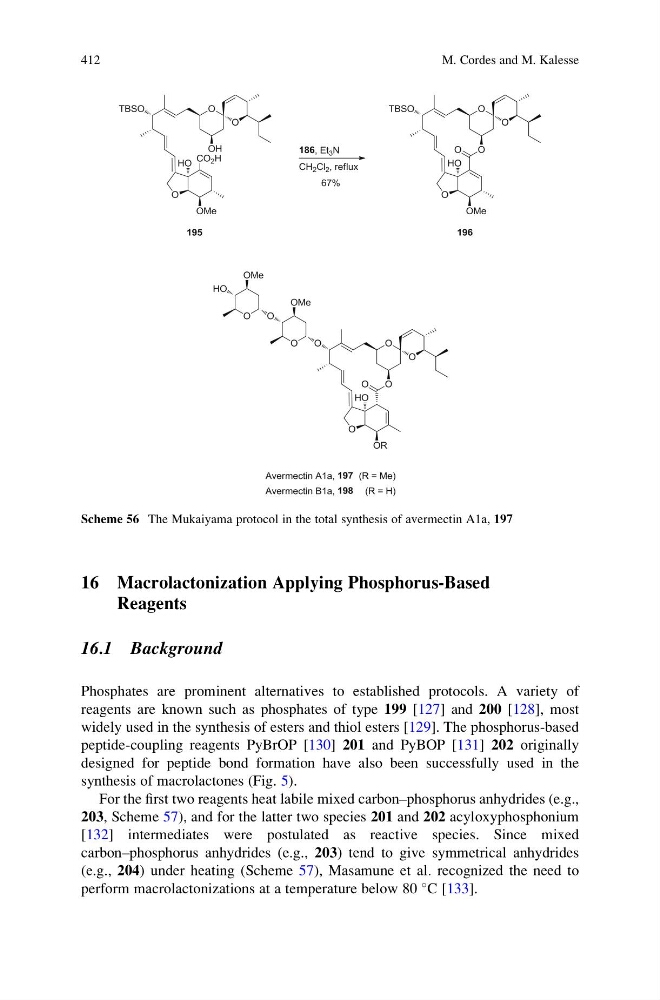
Scheme 56 The Mukaiyama protocol in the total synthesis of avermectin A1a, 197
412
M. Cordes and M. Kalesse
Reagents
16.1 Background
Phosphates are prominent alternatives to established protocols. A variety of
reagents are known such as phosphates of type 199 [127] and 200 [128], most
widely used in the synthesis of esters and thiol esters [129]. The phosphorus-based
peptide-coupling reagents PyBrOP [130] 201 and PyBOP [131] 202 originally
designed for peptide bond formation have also been successfully used in the
synthesis of macrolactones (Fig. 5).
For the first two reagents heat labile mixed carbon–phosphorus anhydrides (e.g.,
203, Scheme 57), and for the latter two species 201 and 202 acyloxyphosphonium
[132] intermediates were postulated as reactive species. Since mixed
carbon–phosphorus anhydrides (e.g., 203) tend to give symmetrical anhydrides
(e.g., 204) under heating (Scheme 57), Masamune et al. recognized the need to
perform macrolactonizations at a temperature below 80
C [133].
Scheme 56 The Mukaiyama protocol in the total synthesis of avermectin A1a, 197
412
M. Cordes and M. Kalesse