

12.2 14-Membered Macrocyclic Lactones
12.2.1 6-Deoxyerythronolide B
White and coworkers reported a late-stage C–H oxidation strategy in the total
synthesis of 6-deoxyerythronolide B 147, the aglycone precursor to erythromycin
antibiotics. An advanced intermediate 145 was cyclized to give the 14-membered
macrocyclic core 146 (34 % yield and 45 % recovered starting material 145) of
6-deoxyerythronolide B 147 using a C–H oxidative macrolactonization (step 19 of
22) proceeding with high regio-, chemo-, and diastereoselectivity (dr > 40/1) [88]
(Scheme 41).
13 Yamaguchi Macrolactonization
13.1 Background
The Yamaguchi protocol using 2,4,6-trichlorobenzoyl chloride 148 is probably the
most popular method for performing macrolactonizations [89]. In the classical
procedure (Scheme 42), the mixed anhydride is preformed in THF in the presence
of triethylamine. Either with or without filtration of the Et 3 N∙HCl salt, since this
is not pivotal in most cases [90], the mixed anhydride is diluted in toluene and
slowly added by syringe pump to a highly diluted solution of DMAP (two to five
equivalents) in toluene at higher temperatures (from 50
C to reflux). The role of
DMAP and related additives has been described in detail [91] and a polymersupported DMAP reagent was employed as well [92].
13.2 12-Membered Macrocyclic Lactones
13.2.1 (+)-Lepicidin A
Since macrolactonizations are usually carried out on very advanced substrates and
consequently methodological studies are rather difficult and rare, there is still no
rule about the best conditions to realize a Yamaguchi macrolactonization on a
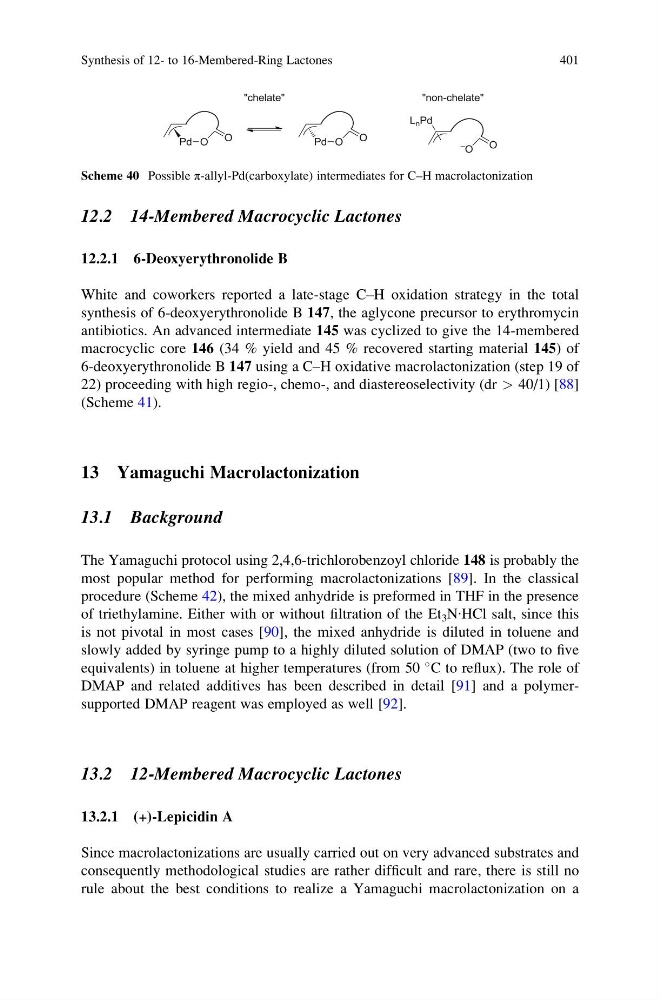
Scheme 40 Possible π-allyl-Pd(carboxylate) intermediates for C–H macrolactonization
Synthesis of 12- to 16-Membered-Ring Lactones
401
12.2.1 6-Deoxyerythronolide B
White and coworkers reported a late-stage C–H oxidation strategy in the total
synthesis of 6-deoxyerythronolide B 147, the aglycone precursor to erythromycin
antibiotics. An advanced intermediate 145 was cyclized to give the 14-membered
macrocyclic core 146 (34 % yield and 45 % recovered starting material 145) of
6-deoxyerythronolide B 147 using a C–H oxidative macrolactonization (step 19 of
22) proceeding with high regio-, chemo-, and diastereoselectivity (dr > 40/1) [88]
(Scheme 41).
13 Yamaguchi Macrolactonization
13.1 Background
The Yamaguchi protocol using 2,4,6-trichlorobenzoyl chloride 148 is probably the
most popular method for performing macrolactonizations [89]. In the classical
procedure (Scheme 42), the mixed anhydride is preformed in THF in the presence
of triethylamine. Either with or without filtration of the Et 3 N∙HCl salt, since this
is not pivotal in most cases [90], the mixed anhydride is diluted in toluene and
slowly added by syringe pump to a highly diluted solution of DMAP (two to five
equivalents) in toluene at higher temperatures (from 50
C to reflux). The role of
DMAP and related additives has been described in detail [91] and a polymersupported DMAP reagent was employed as well [92].
13.2 12-Membered Macrocyclic Lactones
13.2.1 (+)-Lepicidin A
Since macrolactonizations are usually carried out on very advanced substrates and
consequently methodological studies are rather difficult and rare, there is still no
rule about the best conditions to realize a Yamaguchi macrolactonization on a
Scheme 40 Possible π-allyl-Pd(carboxylate) intermediates for C–H macrolactonization
Synthesis of 12- to 16-Membered-Ring Lactones
401