

particular substrate. For example, Evans et al. have shown the influence of the
temperature and rate of addition in reducing diolide formation and destannylation in
the macrolactonization of sensitive 12-membered lepicidin precursor 150 [93]
(Scheme 43). Here, under optimal conditions, when rapid addition and high temperatures were combined, macrocyclization to 150 was realized in gratifying 78 % yield.
13.3 13-Membered Macrocyclic Lactones
13.3.1 Stevastelin C3
In a Yamaguchi macrolactonization approach to the stevastelins, the transformation
of dihydroxy acid 152 and hydroxy acid 153 afforded both 13-membered
stevastelin derivatives 154 and 155 in 82 % and 90 % yield, respectively [94]
(Scheme 44). Interestingly, the formation of the corresponding 15-membered
lactone was not observed.
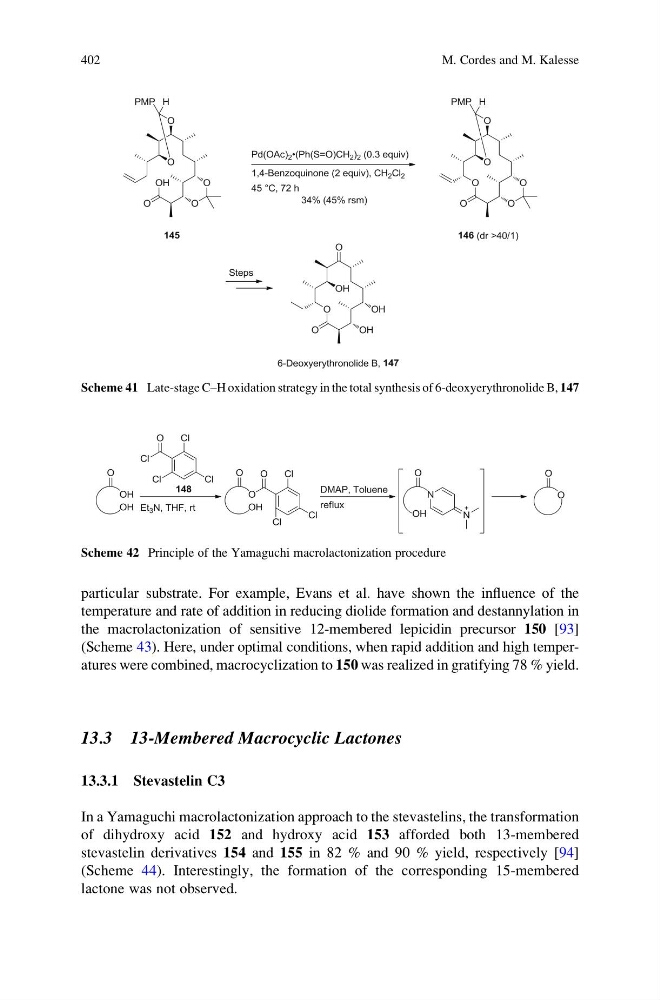
Scheme 41 Late-stage C–H oxidation strategy in the total synthesis of 6-deoxyerythronolide B, 147
Scheme 42 Principle of the Yamaguchi macrolactonization procedure
402
M. Cordes and M. Kalesse
temperature and rate of addition in reducing diolide formation and destannylation in
the macrolactonization of sensitive 12-membered lepicidin precursor 150 [93]
(Scheme 43). Here, under optimal conditions, when rapid addition and high temperatures were combined, macrocyclization to 150 was realized in gratifying 78 % yield.
13.3 13-Membered Macrocyclic Lactones
13.3.1 Stevastelin C3
In a Yamaguchi macrolactonization approach to the stevastelins, the transformation
of dihydroxy acid 152 and hydroxy acid 153 afforded both 13-membered
stevastelin derivatives 154 and 155 in 82 % and 90 % yield, respectively [94]
(Scheme 44). Interestingly, the formation of the corresponding 15-membered
lactone was not observed.
Scheme 41 Late-stage C–H oxidation strategy in the total synthesis of 6-deoxyerythronolide B, 147
Scheme 42 Principle of the Yamaguchi macrolactonization procedure
402
M. Cordes and M. Kalesse