

(present in an aqueous medium) leads to the formation of a
product called urea-triazone (Clapp 2001). The end product
(urea-triazone) obtained in this process can be utilized in
controlled releasing fertilizers applications.
6.3 Coating by Biological Products
Natural polymers are hydrophilic, eco-friendly, cost effective, easily available, and biodegradable. They can be prepared in various forms such as micro-particles, nanoparticles,
beads, and hydrogels. The advantages of slow release are to
increase the water holding capacity, aeration, soil permeability, and microbial activity. Polysaccharides such as
starch, cellulose, dextrans, chitosan, pectin, guar gum,
cyclodextrins, and alginate are utilized in the preparation of
carriers. These carriers act as nano-carrier of bioactive
compounds in agricultural applications (Campos 2013).
Figure 10 explains the challenges in the utilization of conventional fertilizers (active material). Polymer-based nutrient
delivery system is an alternative to solve the challenges.
Natural and biodegradable polymers such as tamarind
powder, guar gum, and xanthan gum are used for the coating
of urea. In this case, diatomite with epichlorohydrin is utilized as a crosslinker. Diatomaceous earth is used as a
medium to grow plants because it is able to hold fertilizers
and release to the roots. This fertilizer possesses high
nutrients, slow release property, and good water retention
capacity (Mukerabigwi et al. 2015). Guar gum or guran is
obtained from the guar plant seed, i.e., Cyamopsis tetragonoloba (L.) TAUB. Xanthan gum is prepared by
gram-negative bacteria Xanthomonas campestris.
A composite made of poly(vinyl alcohol), horn meal,
rapeseed cake, glycerol, and phosphogypsum is utilized for
the coating of fertilizers. The composition of the fillers
decides the mechanical, sorption properties, water vapor
permeability, solubility in water, and the dimensional stability of the composite films. This kind of encapsulation
leads to increase the releasing time of the fertilizers which is
useful in the cultivation of tomato sprouts. This fertilizer is
working well on the development of the roots of the plants
(Treinyte et al. 2017).
Biochar is a carbon material made from biomass. This
charcoal is utilized as a soil amendment material that
enhances plant growth and crop yields. Particularly, it is
useful in fields with depleted soils and lower level organic
resources, nutrients, and water. Chen et al. (2018) reported
about the biochar-polymers complex coating. This complex
contains copolymer of PVA and polyvinylpyrrolidone
(PVP) and biochar. It is applied as coating material in slow
release fertilizers. Biochar helps to: decrease water absorbency of copolymer; increase degradability; improve the
slow releasing property of urea. Particularly, the biochar
made from rice plant exhibits an excellent release behavior,
i.e., 65.28% nutrient leaching (Chen et al. 2018).
6.4 Starch in Slow/controlled Releasing
Demand and utilizations of sulfur-coated fertilizers decrease
because of its high cost, process complexity, and inconsistent
results. Instead of sulfur, bio-polymer coating on fertilizers is
applied. Azeem et al. (2016) have reported that coating of
fertilizers with synthetic polymers (such as polyethylene,
polystyrene, polyacrylamide, and polysulfone) is also not
economical and non-biodegradable. Utilization of
biodegradable and low-cost material such as starch as coating
material is an alternate way. A coating material is prepared
using starch and polyvinyl alcohol (binder). Starch-based
coating of fertilizers in proper thickness allows for promising
controlled release characteristics (Azeem et al. 2016).
Double-coated slow release fertilizer is prepared using ethyl
cellulose as inner coating and starch-based superabsorbent
polymer (starch-SAP) as outer coating. The fertilizer particles
coated with starch-SAP shows superior slow release properties. The starch-SAP coated fertilizer offers reduced nitrogen
release rate and steady release behavior for a period longer
than 96 h to potato plants (Qiao et al. 2016).
Efficient fertilization practices can be developed with the
help of nanoparticles and polymers. Urea is coated with
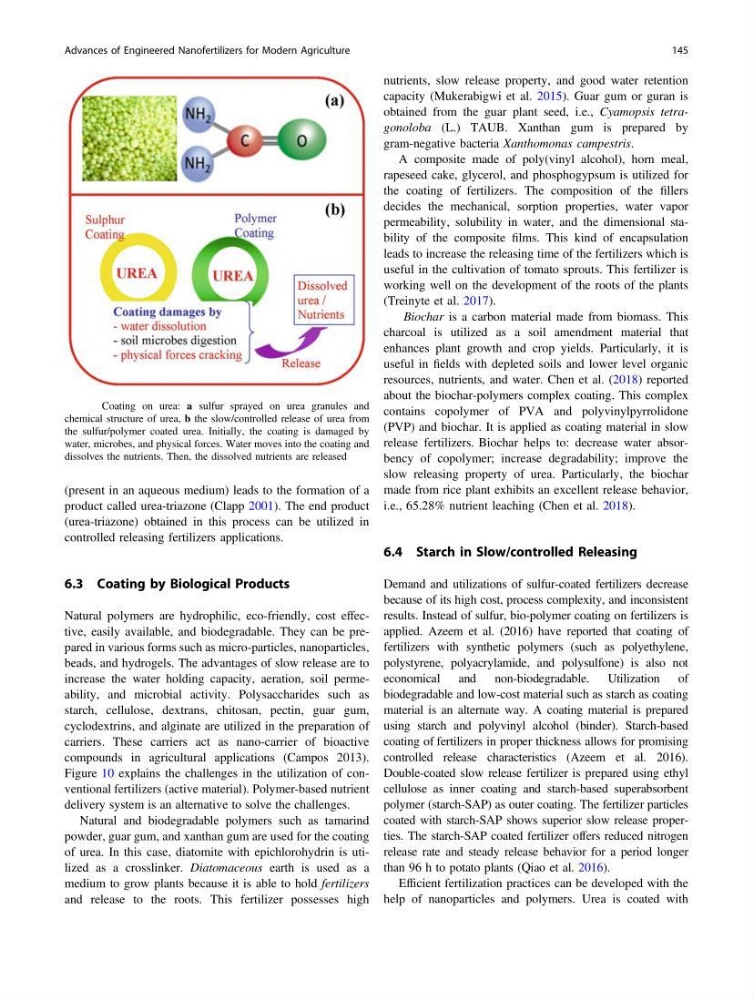
Fig. 9 Coating on urea: a sulfur sprayed on urea granules and
chemical structure of urea, b the slow/controlled release of urea from
the sulfur/polymer coated urea. Initially, the coating is damaged by
water, microbes, and physical forces. Water moves into the coating and
dissolves the nutrients. Then, the dissolved nutrients are released
Advances of Engineered Nanofertilizers for Modern Agriculture
145
product called urea-triazone (Clapp 2001). The end product
(urea-triazone) obtained in this process can be utilized in
controlled releasing fertilizers applications.
6.3 Coating by Biological Products
Natural polymers are hydrophilic, eco-friendly, cost effective, easily available, and biodegradable. They can be prepared in various forms such as micro-particles, nanoparticles,
beads, and hydrogels. The advantages of slow release are to
increase the water holding capacity, aeration, soil permeability, and microbial activity. Polysaccharides such as
starch, cellulose, dextrans, chitosan, pectin, guar gum,
cyclodextrins, and alginate are utilized in the preparation of
carriers. These carriers act as nano-carrier of bioactive
compounds in agricultural applications (Campos 2013).
Figure 10 explains the challenges in the utilization of conventional fertilizers (active material). Polymer-based nutrient
delivery system is an alternative to solve the challenges.
Natural and biodegradable polymers such as tamarind
powder, guar gum, and xanthan gum are used for the coating
of urea. In this case, diatomite with epichlorohydrin is utilized as a crosslinker. Diatomaceous earth is used as a
medium to grow plants because it is able to hold fertilizers
and release to the roots. This fertilizer possesses high
nutrients, slow release property, and good water retention
capacity (Mukerabigwi et al. 2015). Guar gum or guran is
obtained from the guar plant seed, i.e., Cyamopsis tetragonoloba (L.) TAUB. Xanthan gum is prepared by
gram-negative bacteria Xanthomonas campestris.
A composite made of poly(vinyl alcohol), horn meal,
rapeseed cake, glycerol, and phosphogypsum is utilized for
the coating of fertilizers. The composition of the fillers
decides the mechanical, sorption properties, water vapor
permeability, solubility in water, and the dimensional stability of the composite films. This kind of encapsulation
leads to increase the releasing time of the fertilizers which is
useful in the cultivation of tomato sprouts. This fertilizer is
working well on the development of the roots of the plants
(Treinyte et al. 2017).
Biochar is a carbon material made from biomass. This
charcoal is utilized as a soil amendment material that
enhances plant growth and crop yields. Particularly, it is
useful in fields with depleted soils and lower level organic
resources, nutrients, and water. Chen et al. (2018) reported
about the biochar-polymers complex coating. This complex
contains copolymer of PVA and polyvinylpyrrolidone
(PVP) and biochar. It is applied as coating material in slow
release fertilizers. Biochar helps to: decrease water absorbency of copolymer; increase degradability; improve the
slow releasing property of urea. Particularly, the biochar
made from rice plant exhibits an excellent release behavior,
i.e., 65.28% nutrient leaching (Chen et al. 2018).
6.4 Starch in Slow/controlled Releasing
Demand and utilizations of sulfur-coated fertilizers decrease
because of its high cost, process complexity, and inconsistent
results. Instead of sulfur, bio-polymer coating on fertilizers is
applied. Azeem et al. (2016) have reported that coating of
fertilizers with synthetic polymers (such as polyethylene,
polystyrene, polyacrylamide, and polysulfone) is also not
economical and non-biodegradable. Utilization of
biodegradable and low-cost material such as starch as coating
material is an alternate way. A coating material is prepared
using starch and polyvinyl alcohol (binder). Starch-based
coating of fertilizers in proper thickness allows for promising
controlled release characteristics (Azeem et al. 2016).
Double-coated slow release fertilizer is prepared using ethyl
cellulose as inner coating and starch-based superabsorbent
polymer (starch-SAP) as outer coating. The fertilizer particles
coated with starch-SAP shows superior slow release properties. The starch-SAP coated fertilizer offers reduced nitrogen
release rate and steady release behavior for a period longer
than 96 h to potato plants (Qiao et al. 2016).
Efficient fertilization practices can be developed with the
help of nanoparticles and polymers. Urea is coated with
Fig. 9 Coating on urea: a sulfur sprayed on urea granules and
chemical structure of urea, b the slow/controlled release of urea from
the sulfur/polymer coated urea. Initially, the coating is damaged by
water, microbes, and physical forces. Water moves into the coating and
dissolves the nutrients. Then, the dissolved nutrients are released
Advances of Engineered Nanofertilizers for Modern Agriculture
145