

Encapsulating the microorganisms (bacteria or fungi)
improves the nitrogen, phosphorus, and potassium availability that support for the plant growth (Priyom Bose 2020).
Encapsulation of nutrients with nanomaterials is a technique
to make nanofertilizers. Initially, nanomaterials are prepared
in physical (top-down) or chemical (bottom-up) method. In
the next step, nutrients are encapsulated by nanoporous
materials or polymer thin film coating or nano-emulsions of
cationic (NH 4
+
, K
+
, Ca
2+ , Mg
2+ ) or nutrients surface modified with anionic (NO 3
− , PO 4
− , SO 4
− ) nutrients (Subramanian et al. 2015; Panpatte et al. 2016;).
3.4 Application Methods of Nanofertilizers
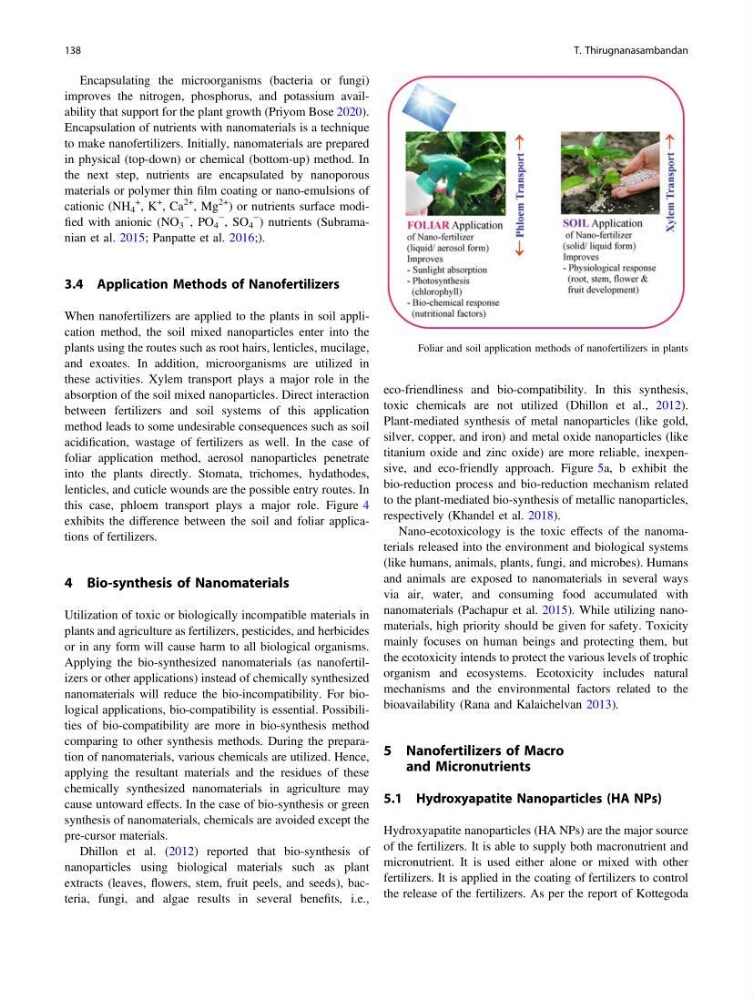
When nanofertilizers are applied to the plants in soil application method, the soil mixed nanoparticles enter into the
plants using the routes such as root hairs, lenticles, mucilage,
and exoates. In addition, microorganisms are utilized in
these activities. Xylem transport plays a major role in the
absorption of the soil mixed nanoparticles. Direct interaction
between fertilizers and soil systems of this application
method leads to some undesirable consequences such as soil
acidification, wastage of fertilizers as well. In the case of
foliar application method, aerosol nanoparticles penetrate
into the plants directly. Stomata, trichomes, hydathodes,
lenticles, and cuticle wounds are the possible entry routes. In
this case, phloem transport plays a major role. Figure 4
exhibits the difference between the soil and foliar applications of fertilizers.
4 Bio-synthesis of Nanomaterials
Utilization of toxic or biologically incompatible materials in
plants and agriculture as fertilizers, pesticides, and herbicides
or in any form will cause harm to all biological organisms.
Applying the bio-synthesized nanomaterials (as nanofertilizers or other applications) instead of chemically synthesized
nanomaterials will reduce the bio-incompatibility. For biological applications, bio-compatibility is essential. Possibilities of bio-compatibility are more in bio-synthesis method
comparing to other synthesis methods. During the preparation of nanomaterials, various chemicals are utilized. Hence,
applying the resultant materials and the residues of these
chemically synthesized nanomaterials in agriculture may
cause untoward effects. In the case of bio-synthesis or green
synthesis of nanomaterials, chemicals are avoided except the
pre-cursor materials.
Dhillon et al. (2012) reported that bio-synthesis of
nanoparticles using biological materials such as plant
extracts (leaves, flowers, stem, fruit peels, and seeds), bacteria, fungi, and algae results in several benefits, i.e.,
eco-friendliness and bio-compatibility. In this synthesis,
toxic chemicals are not utilized (Dhillon et al., 2012).
Plant-mediated synthesis of metal nanoparticles (like gold,
silver, copper, and iron) and metal oxide nanoparticles (like
titanium oxide and zinc oxide) are more reliable, inexpensive, and eco-friendly approach. Figure 5a, b exhibit the
bio-reduction process and bio-reduction mechanism related
to the plant-mediated bio-synthesis of metallic nanoparticles,
respectively (Khandel et al. 2018).
Nano-ecotoxicology is the toxic effects of the nanomaterials released into the environment and biological systems
(like humans, animals, plants, fungi, and microbes). Humans
and animals are exposed to nanomaterials in several ways
via air, water, and consuming food accumulated with
nanomaterials (Pachapur et al. 2015). While utilizing nanomaterials, high priority should be given for safety. Toxicity
mainly focuses on human beings and protecting them, but
the ecotoxicity intends to protect the various levels of trophic
organism and ecosystems. Ecotoxicity includes natural
mechanisms and the environmental factors related to the
bioavailability (Rana and Kalaichelvan 2013).
5 Nanofertilizers of Macro
and Micronutrients
5.1 Hydroxyapatite Nanoparticles (HA NPs)
Hydroxyapatite nanoparticles (HA NPs) are the major source
of the fertilizers. It is able to supply both macronutrient and
micronutrient. It is used either alone or mixed with other
fertilizers. It is applied in the coating of fertilizers to control
the release of the fertilizers. As per the report of Kottegoda
Fig. 4 Foliar and soil application methods of nanofertilizers in plants
138
T. Thirugnanasambandan
improves the nitrogen, phosphorus, and potassium availability that support for the plant growth (Priyom Bose 2020).
Encapsulation of nutrients with nanomaterials is a technique
to make nanofertilizers. Initially, nanomaterials are prepared
in physical (top-down) or chemical (bottom-up) method. In
the next step, nutrients are encapsulated by nanoporous
materials or polymer thin film coating or nano-emulsions of
cationic (NH 4
+
, K
+
, Ca
2+ , Mg
2+ ) or nutrients surface modified with anionic (NO 3
− , PO 4
− , SO 4
− ) nutrients (Subramanian et al. 2015; Panpatte et al. 2016;).
3.4 Application Methods of Nanofertilizers
When nanofertilizers are applied to the plants in soil application method, the soil mixed nanoparticles enter into the
plants using the routes such as root hairs, lenticles, mucilage,
and exoates. In addition, microorganisms are utilized in
these activities. Xylem transport plays a major role in the
absorption of the soil mixed nanoparticles. Direct interaction
between fertilizers and soil systems of this application
method leads to some undesirable consequences such as soil
acidification, wastage of fertilizers as well. In the case of
foliar application method, aerosol nanoparticles penetrate
into the plants directly. Stomata, trichomes, hydathodes,
lenticles, and cuticle wounds are the possible entry routes. In
this case, phloem transport plays a major role. Figure 4
exhibits the difference between the soil and foliar applications of fertilizers.
4 Bio-synthesis of Nanomaterials
Utilization of toxic or biologically incompatible materials in
plants and agriculture as fertilizers, pesticides, and herbicides
or in any form will cause harm to all biological organisms.
Applying the bio-synthesized nanomaterials (as nanofertilizers or other applications) instead of chemically synthesized
nanomaterials will reduce the bio-incompatibility. For biological applications, bio-compatibility is essential. Possibilities of bio-compatibility are more in bio-synthesis method
comparing to other synthesis methods. During the preparation of nanomaterials, various chemicals are utilized. Hence,
applying the resultant materials and the residues of these
chemically synthesized nanomaterials in agriculture may
cause untoward effects. In the case of bio-synthesis or green
synthesis of nanomaterials, chemicals are avoided except the
pre-cursor materials.
Dhillon et al. (2012) reported that bio-synthesis of
nanoparticles using biological materials such as plant
extracts (leaves, flowers, stem, fruit peels, and seeds), bacteria, fungi, and algae results in several benefits, i.e.,
eco-friendliness and bio-compatibility. In this synthesis,
toxic chemicals are not utilized (Dhillon et al., 2012).
Plant-mediated synthesis of metal nanoparticles (like gold,
silver, copper, and iron) and metal oxide nanoparticles (like
titanium oxide and zinc oxide) are more reliable, inexpensive, and eco-friendly approach. Figure 5a, b exhibit the
bio-reduction process and bio-reduction mechanism related
to the plant-mediated bio-synthesis of metallic nanoparticles,
respectively (Khandel et al. 2018).
Nano-ecotoxicology is the toxic effects of the nanomaterials released into the environment and biological systems
(like humans, animals, plants, fungi, and microbes). Humans
and animals are exposed to nanomaterials in several ways
via air, water, and consuming food accumulated with
nanomaterials (Pachapur et al. 2015). While utilizing nanomaterials, high priority should be given for safety. Toxicity
mainly focuses on human beings and protecting them, but
the ecotoxicity intends to protect the various levels of trophic
organism and ecosystems. Ecotoxicity includes natural
mechanisms and the environmental factors related to the
bioavailability (Rana and Kalaichelvan 2013).
5 Nanofertilizers of Macro
and Micronutrients
5.1 Hydroxyapatite Nanoparticles (HA NPs)
Hydroxyapatite nanoparticles (HA NPs) are the major source
of the fertilizers. It is able to supply both macronutrient and
micronutrient. It is used either alone or mixed with other
fertilizers. It is applied in the coating of fertilizers to control
the release of the fertilizers. As per the report of Kottegoda
Fig. 4 Foliar and soil application methods of nanofertilizers in plants
138
T. Thirugnanasambandan