

3.2.1 Synthesis of Enamines
While palladium-catalyzed alkenylation reactions involving amines as nucleophiles
have been extensively explored, the related copper-catalyzed processes are rare and
only few examples have been reported in the literature. The first example was
described in 2001 and implied the particular use of 1,3-dibenzyl-5-iodouracil as
electrophilic counterpart for the access of enamine-type products with potential
pharmacological activity (Scheme 20) [87]. The authors demonstrated that the
conditions previously reported by Buchwald for the arylation of imidazoles [88]
were suitable for the vinylation of numerous amines (including primary
heteroaromatic substrates and both primary and secondary aliphatic ones) to yield
thus the corresponding 5-aminouracil derivatives in yields up to 78%.
A very mild copper-catalyzed vinylation of amines, which involved the use
of advantageous vinyl boronic acids at room temperature, was developed by
Lam (Scheme 21) [89]. They proved that a combination of Cu(OAc) 2 and pyridine
N-oxide was an efficient catalyst system for the coupling of trans-1-hexenyl
boronic acid with certain amines. In this respect, not only N-heterocycles such as
benzimidazole and indazole but also numerous ureas and lactams underwent the
cross-coupling under similar conditions.
Bao reported the Ullmann-type coupling of vinyl bromides and imidazoles in
ionic liquids (Scheme 22) [90]. A combination of copper iodide and L-proline
was found highly effective as catalyst in the presence of [Bmim]BF 4 as solvent.
This protocol was sensitive to the geometry of the starting vinyl bromide and only
E-isomers were found reactive under such conditions. Interestingly, this method
featured the possibility of recycling the catalyst system which was immobilized in
the ionic liquid and hence the same media containing the active catalyst was
utilized up to four times without any significant variation in the reaction outcome.
More recently, the latter authors developed a more simple protocol for the
coupling of vinyl bromides and imidazoles involving the use of the cheaper Cu 2 O
along with a b-keto ester (ethyl 2-oxocyclohexanecarboxylate) as the catalyst of
choice (Scheme 23) [91]. It was found that b-bromostyrenes bearing both electrondonating and electron-withdrawing groups were suitable for the cross-coupling, and
N
N
R = H, Phen (L9)
R = Me, (L10)
R
R
R
R
NHMe
NHMe
NHMe
NHMe
(L11)
DMEDA (L12)
N
N
bpy (L14)
N
N
N
N
OEt
O
O
Me 2 N
OH HCl
O
(L15)
(L16)
N
H
CO 2 H
(L13)
L-Pro (L17)
·
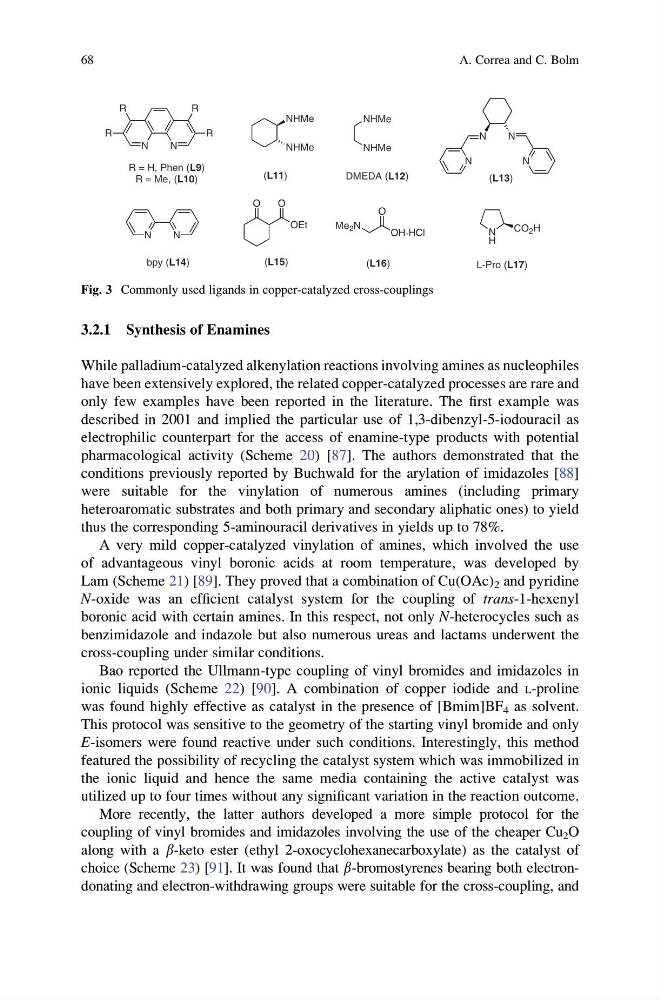
Fig. 3 Commonly used ligands in copper-catalyzed cross-couplings
68
A. Correa and C. Bolm
While palladium-catalyzed alkenylation reactions involving amines as nucleophiles
have been extensively explored, the related copper-catalyzed processes are rare and
only few examples have been reported in the literature. The first example was
described in 2001 and implied the particular use of 1,3-dibenzyl-5-iodouracil as
electrophilic counterpart for the access of enamine-type products with potential
pharmacological activity (Scheme 20) [87]. The authors demonstrated that the
conditions previously reported by Buchwald for the arylation of imidazoles [88]
were suitable for the vinylation of numerous amines (including primary
heteroaromatic substrates and both primary and secondary aliphatic ones) to yield
thus the corresponding 5-aminouracil derivatives in yields up to 78%.
A very mild copper-catalyzed vinylation of amines, which involved the use
of advantageous vinyl boronic acids at room temperature, was developed by
Lam (Scheme 21) [89]. They proved that a combination of Cu(OAc) 2 and pyridine
N-oxide was an efficient catalyst system for the coupling of trans-1-hexenyl
boronic acid with certain amines. In this respect, not only N-heterocycles such as
benzimidazole and indazole but also numerous ureas and lactams underwent the
cross-coupling under similar conditions.
Bao reported the Ullmann-type coupling of vinyl bromides and imidazoles in
ionic liquids (Scheme 22) [90]. A combination of copper iodide and L-proline
was found highly effective as catalyst in the presence of [Bmim]BF 4 as solvent.
This protocol was sensitive to the geometry of the starting vinyl bromide and only
E-isomers were found reactive under such conditions. Interestingly, this method
featured the possibility of recycling the catalyst system which was immobilized in
the ionic liquid and hence the same media containing the active catalyst was
utilized up to four times without any significant variation in the reaction outcome.
More recently, the latter authors developed a more simple protocol for the
coupling of vinyl bromides and imidazoles involving the use of the cheaper Cu 2 O
along with a b-keto ester (ethyl 2-oxocyclohexanecarboxylate) as the catalyst of
choice (Scheme 23) [91]. It was found that b-bromostyrenes bearing both electrondonating and electron-withdrawing groups were suitable for the cross-coupling, and
N
N
R = H, Phen (L9)
R = Me, (L10)
R
R
R
R
NHMe
NHMe
NHMe
NHMe
(L11)
DMEDA (L12)
N
N
bpy (L14)
N
N
N
N
OEt
O
O
Me 2 N
OH HCl
O
(L15)
(L16)
N
H
CO 2 H
(L13)
L-Pro (L17)
·
Fig. 3 Commonly used ligands in copper-catalyzed cross-couplings
68
A. Correa and C. Bolm