

3 Cross-Coupling Reactions
3.1 Palladium-Catalyzed Cross-Couplings
The palladium-catalyzed cross-coupling of amines with aryl halides, often named
Buchwald–Hartwig amination, is nowadays one of the most powerful transformation
in organic synthesis for the assembly of C–N linkages. Likewise, this methodology
has recently matured from a standard laboratory procedure into a general, practical,
and daily used technique in industrial environments [51–53]. However, the related
palladium-catalyzed vinylation process has been comparatively less explored and not
until 2000 did the first examples appear in the literature. Although its mechanism still
remains unexplored and detailed studies have not been so far performed, it is
reasonably accepted that a similar reaction pathway to N-arylation processes should
operate when vinyl halides are used [54]. The generally accepted mechanism
(Scheme 6) involves an initial oxidative addition of the aryl halide to the palladium
(0) complex, which is obtained either by reduction of the Pd(II) source or by simple
ligand exchange from a Pd(0) source. The resulting Pd(II) complex is then converted
by coordination with the amine and followed by deprotonation into the corresponding
amido Pd complex, which eventually releases the coupling product through reductive
elimination and regenerates hence the starting Pd(0) complex.
It must be emphasized that the success of palladium-catalyzed cross-couplings
is crucially restricted to the use of phosphine-type ligands [55], some of which are
shown in Fig. 2.
3.1.1 Synthesis of Enamines
In 2000 Brookhart and Hicks reported one of the very first examples of palladiumcatalyzed cross-coupling reactions between a nitrogen nucleophile and a vinylic
substrate (Scheme 7). They found that the coupling conditions developed by
Buchwald and Hartwig for the N-arylation of amines with aryl triflates were suitable
for the synthesis of 2-anilinotropone derivatives by amination of 2-triflatropone with
a wide range of anilines [56]. In fact, as aryl triflates, vinyl triflates have proven to be
more active substrates than the corresponding alkenyl bromides toward oxidative
addition to palladium(0) complexes in a coordinating solvent such as DMF and are
hence much more reactive electrophilic coupling partners [57]. This methodology
was found efficient for the preparation of a variety of 2-anilinotropone derivatives,
BuO
+
(DPP)Pd(OCOCF 3 ) 2 (5 mol%)
rt to 75 ºC, air
64-95%
R 1
N
H
O
R 2
R 1
N
O
R 2
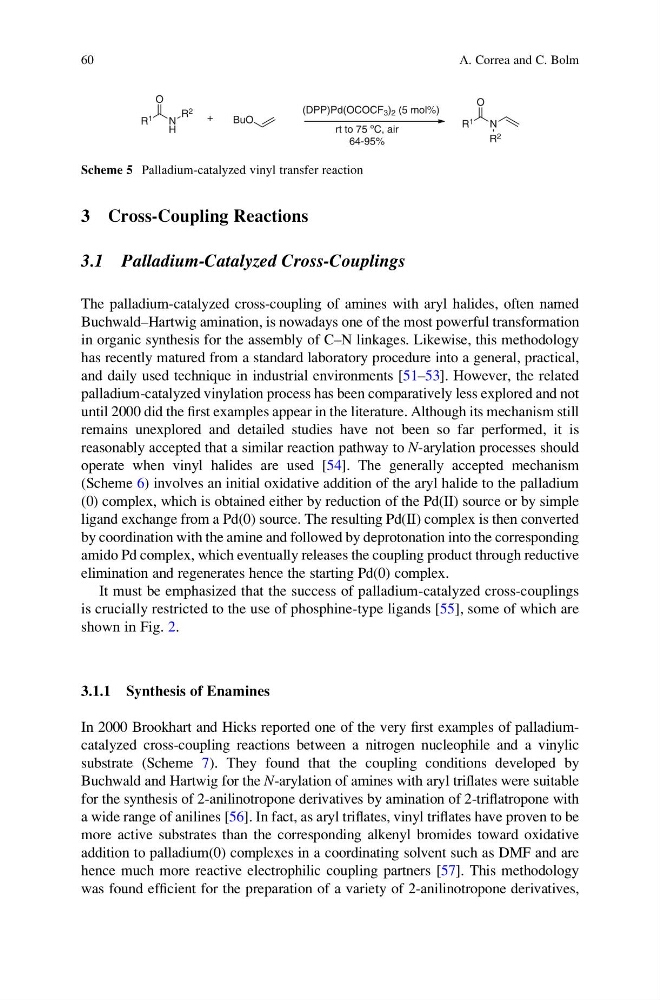
Scheme 5 Palladium-catalyzed vinyl transfer reaction
60
A. Correa and C. Bolm
3.1 Palladium-Catalyzed Cross-Couplings
The palladium-catalyzed cross-coupling of amines with aryl halides, often named
Buchwald–Hartwig amination, is nowadays one of the most powerful transformation
in organic synthesis for the assembly of C–N linkages. Likewise, this methodology
has recently matured from a standard laboratory procedure into a general, practical,
and daily used technique in industrial environments [51–53]. However, the related
palladium-catalyzed vinylation process has been comparatively less explored and not
until 2000 did the first examples appear in the literature. Although its mechanism still
remains unexplored and detailed studies have not been so far performed, it is
reasonably accepted that a similar reaction pathway to N-arylation processes should
operate when vinyl halides are used [54]. The generally accepted mechanism
(Scheme 6) involves an initial oxidative addition of the aryl halide to the palladium
(0) complex, which is obtained either by reduction of the Pd(II) source or by simple
ligand exchange from a Pd(0) source. The resulting Pd(II) complex is then converted
by coordination with the amine and followed by deprotonation into the corresponding
amido Pd complex, which eventually releases the coupling product through reductive
elimination and regenerates hence the starting Pd(0) complex.
It must be emphasized that the success of palladium-catalyzed cross-couplings
is crucially restricted to the use of phosphine-type ligands [55], some of which are
shown in Fig. 2.
3.1.1 Synthesis of Enamines
In 2000 Brookhart and Hicks reported one of the very first examples of palladiumcatalyzed cross-coupling reactions between a nitrogen nucleophile and a vinylic
substrate (Scheme 7). They found that the coupling conditions developed by
Buchwald and Hartwig for the N-arylation of amines with aryl triflates were suitable
for the synthesis of 2-anilinotropone derivatives by amination of 2-triflatropone with
a wide range of anilines [56]. In fact, as aryl triflates, vinyl triflates have proven to be
more active substrates than the corresponding alkenyl bromides toward oxidative
addition to palladium(0) complexes in a coordinating solvent such as DMF and are
hence much more reactive electrophilic coupling partners [57]. This methodology
was found efficient for the preparation of a variety of 2-anilinotropone derivatives,
BuO
+
(DPP)Pd(OCOCF 3 ) 2 (5 mol%)
rt to 75 ºC, air
64-95%
R 1
N
H
O
R 2
R 1
N
O
R 2
Scheme 5 Palladium-catalyzed vinyl transfer reaction
60
A. Correa and C. Bolm