

unactivated alkenes were developed by the same authors and the use of 5 mol% of
Pd(OAc) 2 as catalyst provided the Markovnikov addition products in high yields
when imides and sulfonamides were used as nucleophiles [46].
The major drawback of the protocols commented above is the requirement for
large excess of alkenes to ensure high conversions, and this issue has been recently
circumvented by a modification of the reaction conditions. Thus, use of a higher
catalyst loading (10 mol% of Pd(OAc) 2 ) and high pressure (4 atm) of oxygen, which
acts as stoichiometric oxidant, was found essential to allow the efficient oxidative
amination of alkenes using the latter substrates as the limiting reagent [47].
In the course of these studies on the palladium-catalyzed oxidative aminations of
olefins, Stahl observed that vinyl ethers did not undergo the expected oxidative
amination under aerobic conditions and a vinyl transfer to the nitrogen nucleophile
occurred instead [48]. They further explored such unexpected reactivity and
developed a novel approach toward the synthesis of enamides and related
derivatives involving a formal cross-coupling reaction between the corresponding
nitrogen nucleophile and vinyl ethers. Remarkably, palladium-catalyzed crosscouplings are generally incompatible with the presence of oxygen and, besides,
vinyl ethers unlikely undergo efficient oxidative addition to palladium(0).
Therefore, the authors proposed a mechanism in which the palladium source
remains in the þ2 oxidation state throughout the catalytic cycle and anticipated
the role of oxygen as oxidizer of any catalyst that could be reduced to palladium(0)
during the process. Screening studies led to the identification of (4,7-diphenyl-1,
10-phenanthroline)palladium(II) trifluoroacetate complex as the best catalyst
(Scheme 5).
Rhodium catalysts have also found application in oxidative aminations of
styrenes. Beller and co-workers observed that numerous styrenes reacted with
various kinds of secondary aliphatic amines in the presence of the cationic rhodium
complexe [Rh(cod) 2 ]BF 4 and PPh 3 . Regioselectively the corresponding antiMarkovnikov products (E-enamines) were formed [49]. While the Markovnikov
product was never observed under such conditions, the target enamine was mostly
obtained along with hydrogenated olefin, and in some cases even small amounts
of hydroaminated products were detected [50].
O
HN
O
+
N
O
O
Ph
PdCl 2 (MeCN) 2 (5 mol%),
CuCl 2 (5 mol%)
Ph
Ph
N
O
O
PdCl 2 (Et 3 N) 2 (5 mol%),
CuCl 2 (5 mol%)
DME, O2 (1 atm), 60 ºC
DME, O 2 (1 atm), 60 ºC
77%
99%
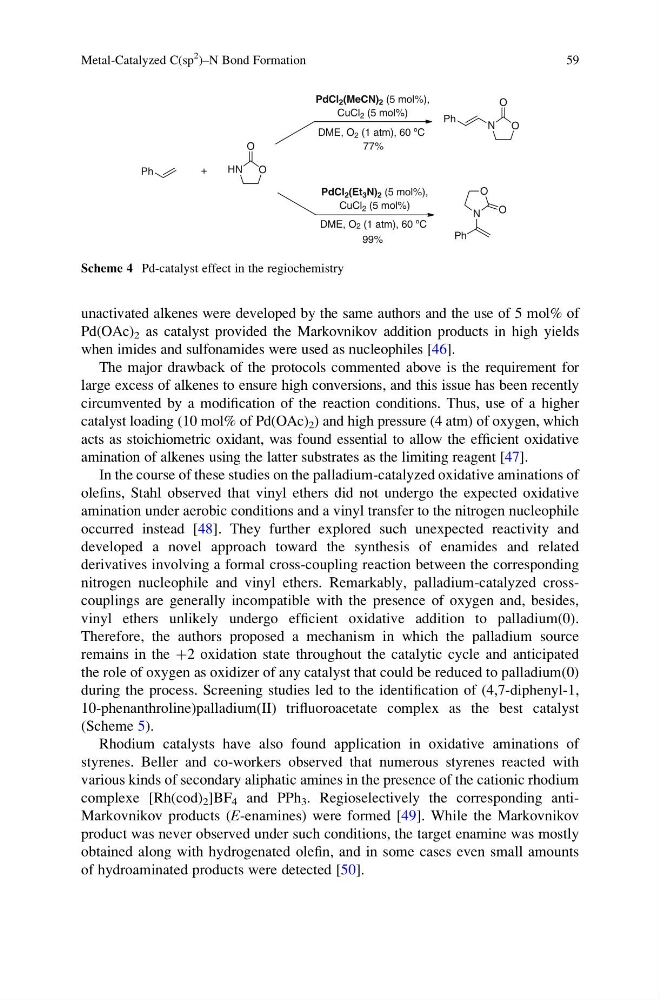
Scheme 4 Pd-catalyst effect in the regiochemistry
Metal-Catalyzed C(sp
2
)–N Bond Formation
59
Pd(OAc) 2 as catalyst provided the Markovnikov addition products in high yields
when imides and sulfonamides were used as nucleophiles [46].
The major drawback of the protocols commented above is the requirement for
large excess of alkenes to ensure high conversions, and this issue has been recently
circumvented by a modification of the reaction conditions. Thus, use of a higher
catalyst loading (10 mol% of Pd(OAc) 2 ) and high pressure (4 atm) of oxygen, which
acts as stoichiometric oxidant, was found essential to allow the efficient oxidative
amination of alkenes using the latter substrates as the limiting reagent [47].
In the course of these studies on the palladium-catalyzed oxidative aminations of
olefins, Stahl observed that vinyl ethers did not undergo the expected oxidative
amination under aerobic conditions and a vinyl transfer to the nitrogen nucleophile
occurred instead [48]. They further explored such unexpected reactivity and
developed a novel approach toward the synthesis of enamides and related
derivatives involving a formal cross-coupling reaction between the corresponding
nitrogen nucleophile and vinyl ethers. Remarkably, palladium-catalyzed crosscouplings are generally incompatible with the presence of oxygen and, besides,
vinyl ethers unlikely undergo efficient oxidative addition to palladium(0).
Therefore, the authors proposed a mechanism in which the palladium source
remains in the þ2 oxidation state throughout the catalytic cycle and anticipated
the role of oxygen as oxidizer of any catalyst that could be reduced to palladium(0)
during the process. Screening studies led to the identification of (4,7-diphenyl-1,
10-phenanthroline)palladium(II) trifluoroacetate complex as the best catalyst
(Scheme 5).
Rhodium catalysts have also found application in oxidative aminations of
styrenes. Beller and co-workers observed that numerous styrenes reacted with
various kinds of secondary aliphatic amines in the presence of the cationic rhodium
complexe [Rh(cod) 2 ]BF 4 and PPh 3 . Regioselectively the corresponding antiMarkovnikov products (E-enamines) were formed [49]. While the Markovnikov
product was never observed under such conditions, the target enamine was mostly
obtained along with hydrogenated olefin, and in some cases even small amounts
of hydroaminated products were detected [50].
O
HN
O
+
N
O
O
Ph
PdCl 2 (MeCN) 2 (5 mol%),
CuCl 2 (5 mol%)
Ph
Ph
N
O
O
PdCl 2 (Et 3 N) 2 (5 mol%),
CuCl 2 (5 mol%)
DME, O2 (1 atm), 60 ºC
DME, O 2 (1 atm), 60 ºC
77%
99%
Scheme 4 Pd-catalyst effect in the regiochemistry
Metal-Catalyzed C(sp
2
)–N Bond Formation
59