

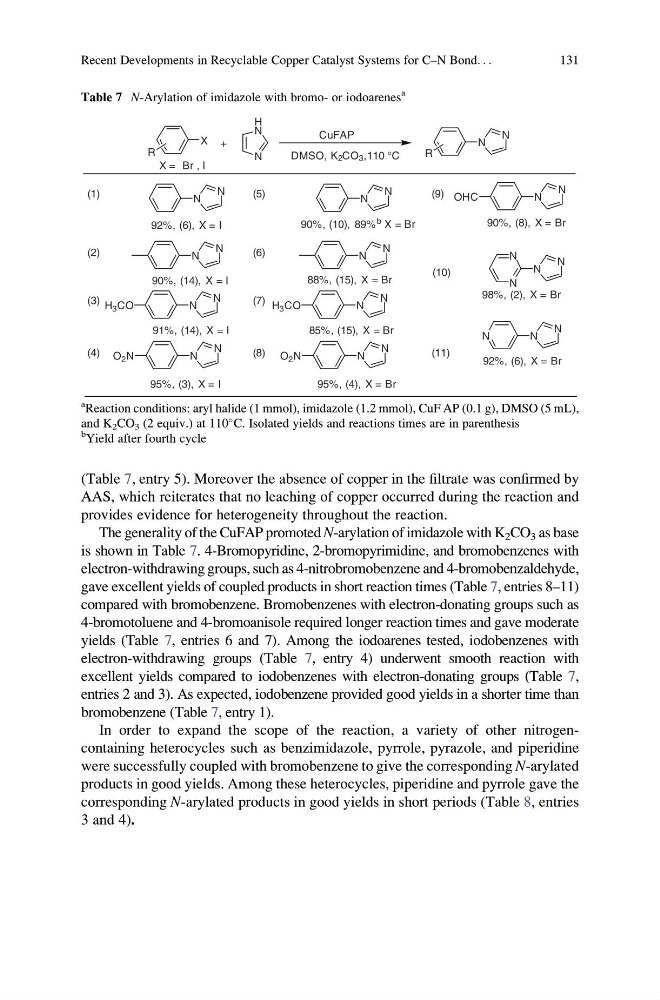
(Table 7, entry 5). Moreover the absence of copper in the filtrate was confirmed by
AAS, which reiterates that no leaching of copper occurred during the reaction and
provides evidence for heterogeneity throughout the reaction.
The generality of the CuFAP promoted N-arylation of imidazole with K 2 CO 3 as base
is shown in Table 7. 4-Bromopyridine, 2-bromopyrimidine, and bromobenzenes with
electron-withdrawing groups, such as 4-nitrobromobenzene and 4-bromobenzaldehyde,
gave excellent yields of coupled products in short reaction times (Table 7, entries 8–11)
compared with bromobenzene. Bromobenzenes with electron-donating groups such as
4-bromotoluene and 4-bromoanisole required longer reaction times and gave moderate
yields (Table 7, entries 6 and 7). Among the iodoarenes tested, iodobenzenes with
electron-withdrawing groups (Table 7, entry 4) underwent smooth reaction with
excellent yields compared to iodobenzenes with electron-donating groups (Table 7,
entries 2 and 3). As expected, iodobenzene provided good yields in a shorter time than
bromobenzene (Table 7, entry 1).
In order to expand the scope of the reaction, a variety of other nitrogencontaining heterocycles such as benzimidazole, pyrrole, pyrazole, and piperidine
were successfully coupled with bromobenzene to give the corresponding N-arylated
products in good yields. Among these heterocycles, piperidine and pyrrole gave the
corresponding N-arylated products in good yields in short periods (Table 8, entries
3 and 4).
Table 7 N-Arylation of imidazole with bromo- or iodoarenes
a
DMSO, K 2 CO 3 ,110 °C
+
N
H
N
N
N
CuFAP
X = Br , I
X
R
R
N
N
92%, (6), X = I
N
N
N
N
N
N
90%, (14), X = I
91%, (14), X = I
95%, (3), X = I
H 3 CO
O 2 N
N
N
90%, (10), 89% b X = Br
N
N
N
N
N
N
88%, (15), X = Br
85%, (15), X = Br
95%, (4), X = Br
H 3 CO
O 2 N
N
N
90%, (8), X = Br
N
N
N
N
N
N
N
98%, (2), X = Br
92%, (6), X = Br
OHC
(1)
(2)
(3)
(4)
(5)
(6)
(7)
(8)
(9)
(10)
(11)
a
Reaction conditions: aryl halide (1 mmol), imidazole (1.2 mmol), CuF AP (0.1 g), DMSO (5 mL),
and K 2 CO 3 (2 equiv.) at 110
C. Isolated yields and reactions times are in parenthesis
b
Yield after fourth cycle
Recent Developments in Recyclable Copper Catalyst Systems for C–N Bond. . .
131
AAS, which reiterates that no leaching of copper occurred during the reaction and
provides evidence for heterogeneity throughout the reaction.
The generality of the CuFAP promoted N-arylation of imidazole with K 2 CO 3 as base
is shown in Table 7. 4-Bromopyridine, 2-bromopyrimidine, and bromobenzenes with
electron-withdrawing groups, such as 4-nitrobromobenzene and 4-bromobenzaldehyde,
gave excellent yields of coupled products in short reaction times (Table 7, entries 8–11)
compared with bromobenzene. Bromobenzenes with electron-donating groups such as
4-bromotoluene and 4-bromoanisole required longer reaction times and gave moderate
yields (Table 7, entries 6 and 7). Among the iodoarenes tested, iodobenzenes with
electron-withdrawing groups (Table 7, entry 4) underwent smooth reaction with
excellent yields compared to iodobenzenes with electron-donating groups (Table 7,
entries 2 and 3). As expected, iodobenzene provided good yields in a shorter time than
bromobenzene (Table 7, entry 1).
In order to expand the scope of the reaction, a variety of other nitrogencontaining heterocycles such as benzimidazole, pyrrole, pyrazole, and piperidine
were successfully coupled with bromobenzene to give the corresponding N-arylated
products in good yields. Among these heterocycles, piperidine and pyrrole gave the
corresponding N-arylated products in good yields in short periods (Table 8, entries
3 and 4).
Table 7 N-Arylation of imidazole with bromo- or iodoarenes
a
DMSO, K 2 CO 3 ,110 °C
+
N
H
N
N
N
CuFAP
X = Br , I
X
R
R
N
N
92%, (6), X = I
N
N
N
N
N
N
90%, (14), X = I
91%, (14), X = I
95%, (3), X = I
H 3 CO
O 2 N
N
N
90%, (10), 89% b X = Br
N
N
N
N
N
N
88%, (15), X = Br
85%, (15), X = Br
95%, (4), X = Br
H 3 CO
O 2 N
N
N
90%, (8), X = Br
N
N
N
N
N
N
N
98%, (2), X = Br
92%, (6), X = Br
OHC
(1)
(2)
(3)
(4)
(5)
(6)
(7)
(8)
(9)
(10)
(11)
a
Reaction conditions: aryl halide (1 mmol), imidazole (1.2 mmol), CuF AP (0.1 g), DMSO (5 mL),
and K 2 CO 3 (2 equiv.) at 110
C. Isolated yields and reactions times are in parenthesis
b
Yield after fourth cycle
Recent Developments in Recyclable Copper Catalyst Systems for C–N Bond. . .
131