

Anti-adhering Property Study of Green Nanotechnology Based …
489
5
6
7
8
9
10
11
24
48
72
96
log CFU/ml
Time (hour)
control chitin
modified chitin (Haldi)
modified chitin (Neem)
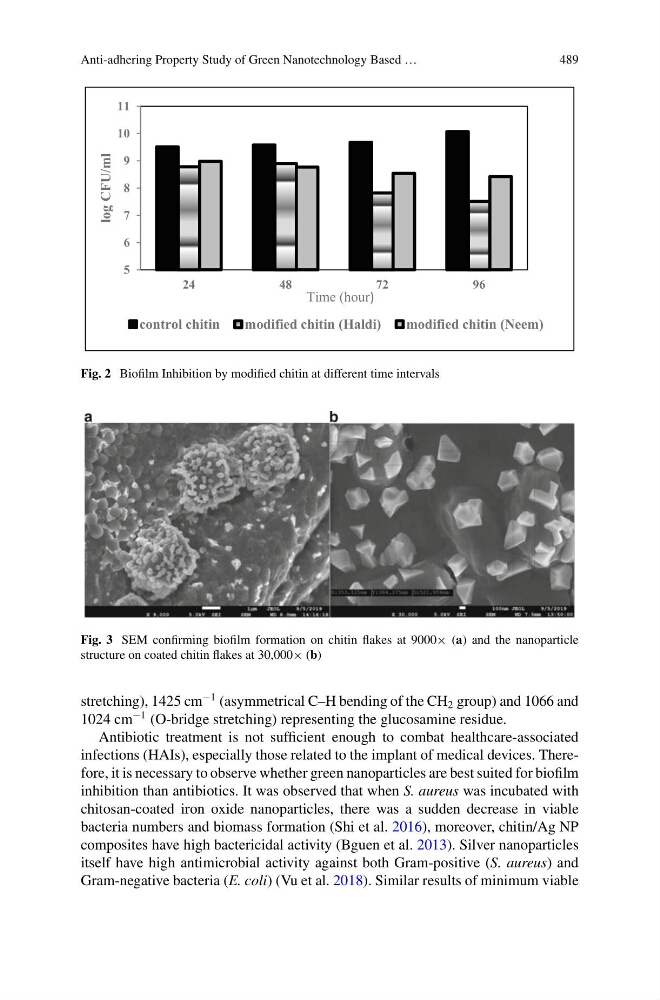
Fig. 2 Biofilm Inhibition by modified chitin at different time intervals
Fig. 3 SEM confirming biofilm formation on chitin flakes at 9000× (a) and the nanoparticle
structure on coated chitin flakes at 30,000× (b)
stretching), 1425 cm
−1 (asymmetrical C–H bending of the CH 2 group) and 1066 and
1024 cm
−1 (O-bridge stretching) representing the glucosamine residue.
Antibiotic treatment is not sufficient enough to combat healthcare-associated
infections (HAIs), especially those related to the implant of medical devices. Therefore, it is necessary to observe whether green nanoparticles are best suited for biofilm
inhibition than antibiotics. It was observed that when S. aureus was incubated with
chitosan-coated iron oxide nanoparticles, there was a sudden decrease in viable
bacteria numbers and biomass formation (Shi et al. 2016), moreover, chitin/Ag NP
composites have high bactericidal activity (Bguen et al. 2013). Silver nanoparticles
itself have high antimicrobial activity against both Gram-positive (S. aureus) and
Gram-negative bacteria (E. coli) (Vu et al. 2018). Similar results of minimum viable
489
5
6
7
8
9
10
11
24
48
72
96
log CFU/ml
Time (hour)
control chitin
modified chitin (Haldi)
modified chitin (Neem)
Fig. 2 Biofilm Inhibition by modified chitin at different time intervals
Fig. 3 SEM confirming biofilm formation on chitin flakes at 9000× (a) and the nanoparticle
structure on coated chitin flakes at 30,000× (b)
stretching), 1425 cm
−1 (asymmetrical C–H bending of the CH 2 group) and 1066 and
1024 cm
−1 (O-bridge stretching) representing the glucosamine residue.
Antibiotic treatment is not sufficient enough to combat healthcare-associated
infections (HAIs), especially those related to the implant of medical devices. Therefore, it is necessary to observe whether green nanoparticles are best suited for biofilm
inhibition than antibiotics. It was observed that when S. aureus was incubated with
chitosan-coated iron oxide nanoparticles, there was a sudden decrease in viable
bacteria numbers and biomass formation (Shi et al. 2016), moreover, chitin/Ag NP
composites have high bactericidal activity (Bguen et al. 2013). Silver nanoparticles
itself have high antimicrobial activity against both Gram-positive (S. aureus) and
Gram-negative bacteria (E. coli) (Vu et al. 2018). Similar results of minimum viable