

490
A. Chatterjee et al.
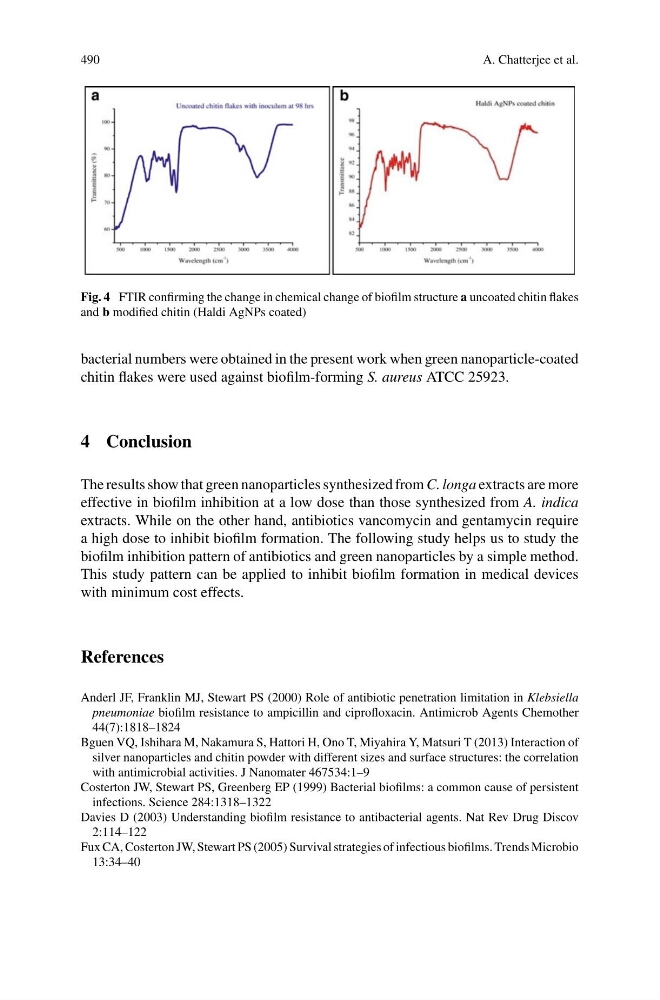
Fig. 4 FTIR confirming the change in chemical change of biofilm structure a uncoated chitin flakes
and b modified chitin (Haldi AgNPs coated)
bacterial numbers were obtained in the present work when green nanoparticle-coated
chitin flakes were used against biofilm-forming S. aureus ATCC 25923.
4 Conclusion
The results show that green nanoparticles synthesized from C. longa extracts are more
effective in biofilm inhibition at a low dose than those synthesized from A. indica
extracts. While on the other hand, antibiotics vancomycin and gentamycin require
a high dose to inhibit biofilm formation. The following study helps us to study the
biofilm inhibition pattern of antibiotics and green nanoparticles by a simple method.
This study pattern can be applied to inhibit biofilm formation in medical devices
with minimum cost effects.
References
Anderl JF, Franklin MJ, Stewart PS (2000) Role of antibiotic penetration limitation in Klebsiella
pneumoniae biofilm resistance to ampicillin and ciprofloxacin. Antimicrob Agents Chemother
44(7):1818–1824
Bguen VQ, Ishihara M, Nakamura S, Hattori H, Ono T, Miyahira Y, Matsuri T (2013) Interaction of
silver nanoparticles and chitin powder with different sizes and surface structures: the correlation
with antimicrobial activities. J Nanomater 467534:1–9
Costerton JW, Stewart PS, Greenberg EP (1999) Bacterial biofilms: a common cause of persistent
infections. Science 284:1318–1322
Davies D (2003) Understanding biofilm resistance to antibacterial agents. Nat Rev Drug Discov
2:114–122
Fux CA, Costerton JW, Stewart PS (2005) Survival strategies of infectious biofilms. Trends Microbio
13:34–40
A. Chatterjee et al.
Fig. 4 FTIR confirming the change in chemical change of biofilm structure a uncoated chitin flakes
and b modified chitin (Haldi AgNPs coated)
bacterial numbers were obtained in the present work when green nanoparticle-coated
chitin flakes were used against biofilm-forming S. aureus ATCC 25923.
4 Conclusion
The results show that green nanoparticles synthesized from C. longa extracts are more
effective in biofilm inhibition at a low dose than those synthesized from A. indica
extracts. While on the other hand, antibiotics vancomycin and gentamycin require
a high dose to inhibit biofilm formation. The following study helps us to study the
biofilm inhibition pattern of antibiotics and green nanoparticles by a simple method.
This study pattern can be applied to inhibit biofilm formation in medical devices
with minimum cost effects.
References
Anderl JF, Franklin MJ, Stewart PS (2000) Role of antibiotic penetration limitation in Klebsiella
pneumoniae biofilm resistance to ampicillin and ciprofloxacin. Antimicrob Agents Chemother
44(7):1818–1824
Bguen VQ, Ishihara M, Nakamura S, Hattori H, Ono T, Miyahira Y, Matsuri T (2013) Interaction of
silver nanoparticles and chitin powder with different sizes and surface structures: the correlation
with antimicrobial activities. J Nanomater 467534:1–9
Costerton JW, Stewart PS, Greenberg EP (1999) Bacterial biofilms: a common cause of persistent
infections. Science 284:1318–1322
Davies D (2003) Understanding biofilm resistance to antibacterial agents. Nat Rev Drug Discov
2:114–122
Fux CA, Costerton JW, Stewart PS (2005) Survival strategies of infectious biofilms. Trends Microbio
13:34–40