

364
S. H. Das et al.
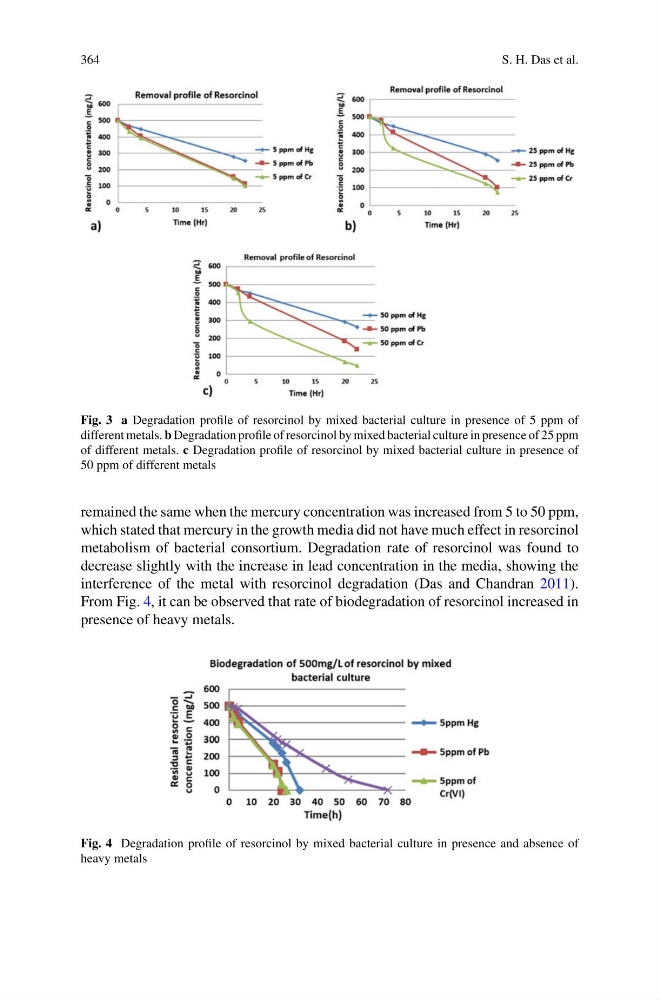
Fig. 3 a Degradation profile of resorcinol by mixed bacterial culture in presence of 5 ppm of
different metals. b Degradation profile of resorcinol by mixed bacterial culture in presence of 25 ppm
of different metals. c Degradation profile of resorcinol by mixed bacterial culture in presence of
50 ppm of different metals
remained the same when the mercury concentration was increased from 5 to 50 ppm,
which stated that mercury in the growth media did not have much effect in resorcinol
metabolism of bacterial consortium. Degradation rate of resorcinol was found to
decrease slightly with the increase in lead concentration in the media, showing the
interference of the metal with resorcinol degradation (Das and Chandran 2011).
From Fig. 4, it can be observed that rate of biodegradation of resorcinol increased in
presence of heavy metals.
Fig. 4 Degradation profile of resorcinol by mixed bacterial culture in presence and absence of
heavy metals
S. H. Das et al.
Fig. 3 a Degradation profile of resorcinol by mixed bacterial culture in presence of 5 ppm of
different metals. b Degradation profile of resorcinol by mixed bacterial culture in presence of 25 ppm
of different metals. c Degradation profile of resorcinol by mixed bacterial culture in presence of
50 ppm of different metals
remained the same when the mercury concentration was increased from 5 to 50 ppm,
which stated that mercury in the growth media did not have much effect in resorcinol
metabolism of bacterial consortium. Degradation rate of resorcinol was found to
decrease slightly with the increase in lead concentration in the media, showing the
interference of the metal with resorcinol degradation (Das and Chandran 2011).
From Fig. 4, it can be observed that rate of biodegradation of resorcinol increased in
presence of heavy metals.
Fig. 4 Degradation profile of resorcinol by mixed bacterial culture in presence and absence of
heavy metals