

Optimization of Process Parameters for Biodegradation …
363
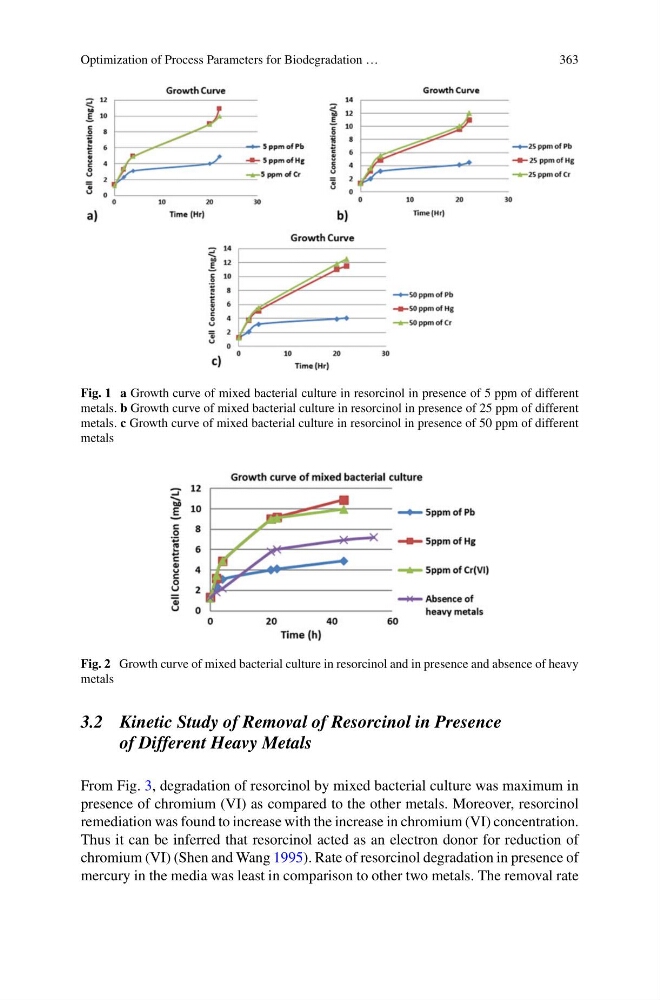
Fig. 1 a Growth curve of mixed bacterial culture in resorcinol in presence of 5 ppm of different
metals. b Growth curve of mixed bacterial culture in resorcinol in presence of 25 ppm of different
metals. c Growth curve of mixed bacterial culture in resorcinol in presence of 50 ppm of different
metals
Fig. 2 Growth curve of mixed bacterial culture in resorcinol and in presence and absence of heavy
metals
3.2 Kinetic Study of Removal of Resorcinol in Presence
of Different Heavy Metals
From Fig. 3, degradation of resorcinol by mixed bacterial culture was maximum in
presence of chromium (VI) as compared to the other metals. Moreover, resorcinol
remediation was found to increase with the increase in chromium (VI) concentration.
Thus it can be inferred that resorcinol acted as an electron donor for reduction of
chromium (VI) (Shen and Wang 1995). Rate of resorcinol degradation in presence of
mercury in the media was least in comparison to other two metals. The removal rate
363
Fig. 1 a Growth curve of mixed bacterial culture in resorcinol in presence of 5 ppm of different
metals. b Growth curve of mixed bacterial culture in resorcinol in presence of 25 ppm of different
metals. c Growth curve of mixed bacterial culture in resorcinol in presence of 50 ppm of different
metals
Fig. 2 Growth curve of mixed bacterial culture in resorcinol and in presence and absence of heavy
metals
3.2 Kinetic Study of Removal of Resorcinol in Presence
of Different Heavy Metals
From Fig. 3, degradation of resorcinol by mixed bacterial culture was maximum in
presence of chromium (VI) as compared to the other metals. Moreover, resorcinol
remediation was found to increase with the increase in chromium (VI) concentration.
Thus it can be inferred that resorcinol acted as an electron donor for reduction of
chromium (VI) (Shen and Wang 1995). Rate of resorcinol degradation in presence of
mercury in the media was least in comparison to other two metals. The removal rate