

270
S. Majumdar and J. Bhowal
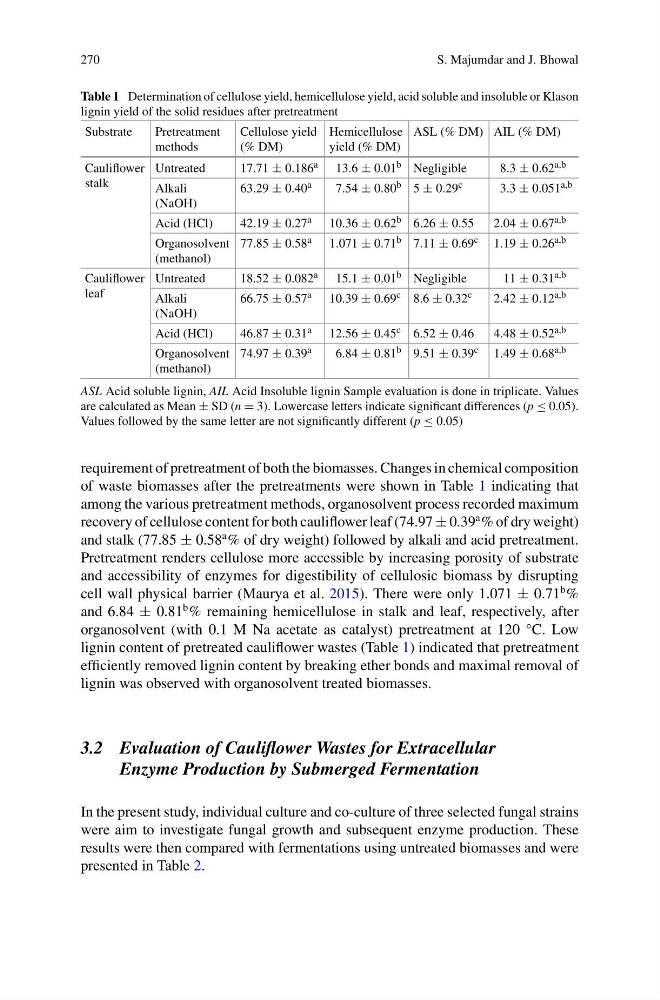
Table 1 Determination of cellulose yield, hemicellulose yield, acid soluble and insoluble or Klason
lignin yield of the solid residues after pretreatment
Substrate
Pretreatment
methods
Cellulose yield
(% DM)
Hemicellulose
yield (% DM)
ASL (% DM) AIL (% DM)
Cauliflower
stalk
Untreated
17.71 ± 0.186 a 13.6 ± 0.01 b Negligible
8.3 ± 0.62 a,b
Alkali
(NaOH)
63.29 ± 0.40 a
7.54 ± 0.80 b 5 ± 0.29 c
3.3 ± 0.051 a,b
Acid (HCl)
42.19 ± 0.27 a 10.36 ± 0.62 b 6.26 ± 0.55
2.04 ± 0.67 a,b
Organosolvent
(methanol)
77.85 ± 0.58 a 1.071 ± 0.71 b 7.11 ± 0.69 c 1.19 ± 0.26 a,b
Cauliflower
leaf
Untreated
18.52 ± 0.082 a 15.1 ± 0.01 b Negligible
11 ± 0.31 a,b
Alkali
(NaOH)
66.75 ± 0.57 a 10.39 ± 0.69 c 8.6 ± 0.32 c
2.42 ± 0.12 a,b
Acid (HCl)
46.87 ± 0.31 a 12.56 ± 0.45 c 6.52 ± 0.46
4.48 ± 0.52 a,b
Organosolvent
(methanol)
74.97 ± 0.39 a
6.84 ± 0.81 b 9.51 ± 0.39 c 1.49 ± 0.68 a,b
ASL Acid soluble lignin, AIL Acid Insoluble lignin Sample evaluation is done in triplicate. Values
are calculated as Mean ± SD (n = 3). Lowercase letters indicate significant differences (p ≤ 0.05).
Values followed by the same letter are not significantly different (p ≤ 0.05)
requirement of pretreatment of both the biomasses. Changes in chemical composition
of waste biomasses after the pretreatments were shown in Table 1 indicating that
among the various pretreatment methods, organosolvent process recorded maximum
recovery of cellulose content for both cauliflower leaf (74.97 ± 0.39
a % of dry weight)
and stalk (77.85 ± 0.58
a % of dry weight) followed by alkali and acid pretreatment.
Pretreatment renders cellulose more accessible by increasing porosity of substrate
and accessibility of enzymes for digestibility of cellulosic biomass by disrupting
cell wall physical barrier (Maurya et al. 2015). There were only 1.071 ± 0.71
b %
and 6.84 ± 0.81
b % remaining hemicellulose in stalk and leaf, respectively, after
organosolvent (with 0.1 M Na acetate as catalyst) pretreatment at 120 °C. Low
lignin content of pretreated cauliflower wastes (Table 1) indicated that pretreatment
efficiently removed lignin content by breaking ether bonds and maximal removal of
lignin was observed with organosolvent treated biomasses.
3.2 Evaluation of Cauliflower Wastes for Extracellular
Enzyme Production by Submerged Fermentation
In the present study, individual culture and co-culture of three selected fungal strains
were aim to investigate fungal growth and subsequent enzyme production. These
results were then compared with fermentations using untreated biomasses and were
presented in Table 2.
S. Majumdar and J. Bhowal
Table 1 Determination of cellulose yield, hemicellulose yield, acid soluble and insoluble or Klason
lignin yield of the solid residues after pretreatment
Substrate
Pretreatment
methods
Cellulose yield
(% DM)
Hemicellulose
yield (% DM)
ASL (% DM) AIL (% DM)
Cauliflower
stalk
Untreated
17.71 ± 0.186 a 13.6 ± 0.01 b Negligible
8.3 ± 0.62 a,b
Alkali
(NaOH)
63.29 ± 0.40 a
7.54 ± 0.80 b 5 ± 0.29 c
3.3 ± 0.051 a,b
Acid (HCl)
42.19 ± 0.27 a 10.36 ± 0.62 b 6.26 ± 0.55
2.04 ± 0.67 a,b
Organosolvent
(methanol)
77.85 ± 0.58 a 1.071 ± 0.71 b 7.11 ± 0.69 c 1.19 ± 0.26 a,b
Cauliflower
leaf
Untreated
18.52 ± 0.082 a 15.1 ± 0.01 b Negligible
11 ± 0.31 a,b
Alkali
(NaOH)
66.75 ± 0.57 a 10.39 ± 0.69 c 8.6 ± 0.32 c
2.42 ± 0.12 a,b
Acid (HCl)
46.87 ± 0.31 a 12.56 ± 0.45 c 6.52 ± 0.46
4.48 ± 0.52 a,b
Organosolvent
(methanol)
74.97 ± 0.39 a
6.84 ± 0.81 b 9.51 ± 0.39 c 1.49 ± 0.68 a,b
ASL Acid soluble lignin, AIL Acid Insoluble lignin Sample evaluation is done in triplicate. Values
are calculated as Mean ± SD (n = 3). Lowercase letters indicate significant differences (p ≤ 0.05).
Values followed by the same letter are not significantly different (p ≤ 0.05)
requirement of pretreatment of both the biomasses. Changes in chemical composition
of waste biomasses after the pretreatments were shown in Table 1 indicating that
among the various pretreatment methods, organosolvent process recorded maximum
recovery of cellulose content for both cauliflower leaf (74.97 ± 0.39
a % of dry weight)
and stalk (77.85 ± 0.58
a % of dry weight) followed by alkali and acid pretreatment.
Pretreatment renders cellulose more accessible by increasing porosity of substrate
and accessibility of enzymes for digestibility of cellulosic biomass by disrupting
cell wall physical barrier (Maurya et al. 2015). There were only 1.071 ± 0.71
b %
and 6.84 ± 0.81
b % remaining hemicellulose in stalk and leaf, respectively, after
organosolvent (with 0.1 M Na acetate as catalyst) pretreatment at 120 °C. Low
lignin content of pretreated cauliflower wastes (Table 1) indicated that pretreatment
efficiently removed lignin content by breaking ether bonds and maximal removal of
lignin was observed with organosolvent treated biomasses.
3.2 Evaluation of Cauliflower Wastes for Extracellular
Enzyme Production by Submerged Fermentation
In the present study, individual culture and co-culture of three selected fungal strains
were aim to investigate fungal growth and subsequent enzyme production. These
results were then compared with fermentations using untreated biomasses and were
presented in Table 2.