

148
P. Chaudhuri et al.
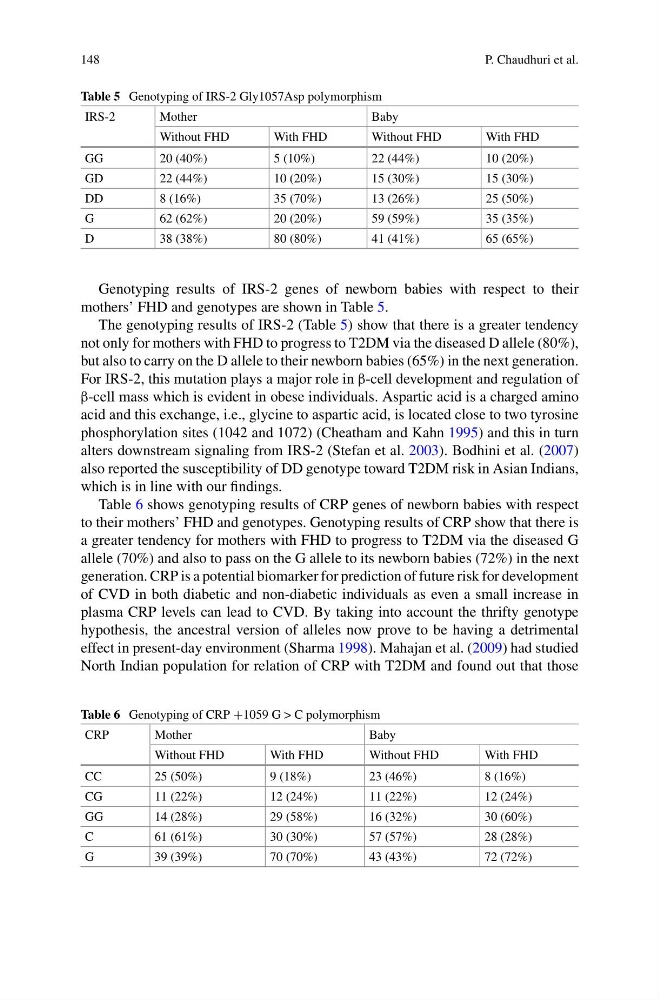
Table 5 Genotyping of IRS-2 Gly1057Asp polymorphism
IRS-2
Mother
Baby
Without FHD
With FHD
Without FHD
With FHD
GG
20 (40%)
5 (10%)
22 (44%)
10 (20%)
GD
22 (44%)
10 (20%)
15 (30%)
15 (30%)
DD
8 (16%)
35 (70%)
13 (26%)
25 (50%)
G
62 (62%)
20 (20%)
59 (59%)
35 (35%)
D
38 (38%)
80 (80%)
41 (41%)
65 (65%)
Genotyping results of IRS-2 genes of newborn babies with respect to their
mothers’ FHD and genotypes are shown in Table 5.
The genotyping results of IRS-2 (Table 5) show that there is a greater tendency
not only for mothers with FHD to progress to T2DM via the diseased D allele (80%),
but also to carry on the D allele to their newborn babies (65%) in the next generation.
For IRS-2, this mutation plays a major role in β-cell development and regulation of
β-cell mass which is evident in obese individuals. Aspartic acid is a charged amino
acid and this exchange, i.e., glycine to aspartic acid, is located close to two tyrosine
phosphorylation sites (1042 and 1072) (Cheatham and Kahn 1995) and this in turn
alters downstream signaling from IRS-2 (Stefan et al. 2003). Bodhini et al. (2007)
also reported the susceptibility of DD genotype toward T2DM risk in Asian Indians,
which is in line with our findings.
Table 6 shows genotyping results of CRP genes of newborn babies with respect
to their mothers’ FHD and genotypes. Genotyping results of CRP show that there is
a greater tendency for mothers with FHD to progress to T2DM via the diseased G
allele (70%) and also to pass on the G allele to its newborn babies (72%) in the next
generation. CRP is a potential biomarker for prediction of future risk for development
of CVD in both diabetic and non-diabetic individuals as even a small increase in
plasma CRP levels can lead to CVD. By taking into account the thrifty genotype
hypothesis, the ancestral version of alleles now prove to be having a detrimental
effect in present-day environment (Sharma 1998). Mahajan et al. (2009) had studied
North Indian population for relation of CRP with T2DM and found out that those
Table 6 Genotyping of CRP +1059 G > C polymorphism
CRP
Mother
Baby
Without FHD
With FHD
Without FHD
With FHD
CC
25 (50%)
9 (18%)
23 (46%)
8 (16%)
CG
11 (22%)
12 (24%)
11 (22%)
12 (24%)
GG
14 (28%)
29 (58%)
16 (32%)
30 (60%)
C
61 (61%)
30 (30%)
57 (57%)
28 (28%)
G
39 (39%)
70 (70%)
43 (43%)
72 (72%)
P. Chaudhuri et al.
Table 5 Genotyping of IRS-2 Gly1057Asp polymorphism
IRS-2
Mother
Baby
Without FHD
With FHD
Without FHD
With FHD
GG
20 (40%)
5 (10%)
22 (44%)
10 (20%)
GD
22 (44%)
10 (20%)
15 (30%)
15 (30%)
DD
8 (16%)
35 (70%)
13 (26%)
25 (50%)
G
62 (62%)
20 (20%)
59 (59%)
35 (35%)
D
38 (38%)
80 (80%)
41 (41%)
65 (65%)
Genotyping results of IRS-2 genes of newborn babies with respect to their
mothers’ FHD and genotypes are shown in Table 5.
The genotyping results of IRS-2 (Table 5) show that there is a greater tendency
not only for mothers with FHD to progress to T2DM via the diseased D allele (80%),
but also to carry on the D allele to their newborn babies (65%) in the next generation.
For IRS-2, this mutation plays a major role in β-cell development and regulation of
β-cell mass which is evident in obese individuals. Aspartic acid is a charged amino
acid and this exchange, i.e., glycine to aspartic acid, is located close to two tyrosine
phosphorylation sites (1042 and 1072) (Cheatham and Kahn 1995) and this in turn
alters downstream signaling from IRS-2 (Stefan et al. 2003). Bodhini et al. (2007)
also reported the susceptibility of DD genotype toward T2DM risk in Asian Indians,
which is in line with our findings.
Table 6 shows genotyping results of CRP genes of newborn babies with respect
to their mothers’ FHD and genotypes. Genotyping results of CRP show that there is
a greater tendency for mothers with FHD to progress to T2DM via the diseased G
allele (70%) and also to pass on the G allele to its newborn babies (72%) in the next
generation. CRP is a potential biomarker for prediction of future risk for development
of CVD in both diabetic and non-diabetic individuals as even a small increase in
plasma CRP levels can lead to CVD. By taking into account the thrifty genotype
hypothesis, the ancestral version of alleles now prove to be having a detrimental
effect in present-day environment (Sharma 1998). Mahajan et al. (2009) had studied
North Indian population for relation of CRP with T2DM and found out that those
Table 6 Genotyping of CRP +1059 G > C polymorphism
CRP
Mother
Baby
Without FHD
With FHD
Without FHD
With FHD
CC
25 (50%)
9 (18%)
23 (46%)
8 (16%)
CG
11 (22%)
12 (24%)
11 (22%)
12 (24%)
GG
14 (28%)
29 (58%)
16 (32%)
30 (60%)
C
61 (61%)
30 (30%)
57 (57%)
28 (28%)
G
39 (39%)
70 (70%)
43 (43%)
72 (72%)