

114
P. Ghosh and U. Ghosh
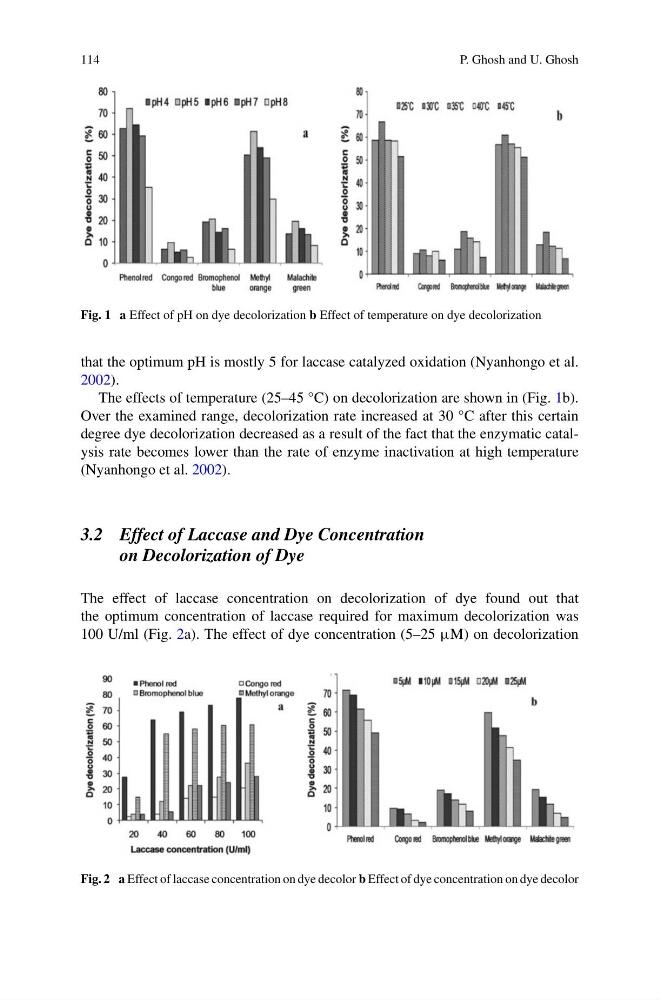
Fig. 1 a Effect of pH on dye decolorization b Effect of temperature on dye decolorization
that the optimum pH is mostly 5 for laccase catalyzed oxidation (Nyanhongo et al.
2002).
The effects of temperature (25–45 °C) on decolorization are shown in (Fig. 1b).
Over the examined range, decolorization rate increased at 30 °C after this certain
degree dye decolorization decreased as a result of the fact that the enzymatic catalysis rate becomes lower than the rate of enzyme inactivation at high temperature
(Nyanhongo et al. 2002).
3.2 Effect of Laccase and Dye Concentration
on Decolorization of Dye
The effect of laccase concentration on decolorization of dye found out that
the optimum concentration of laccase required for maximum decolorization was
100 U/ml (Fig. 2a). The effect of dye concentration (5–25 µM) on decolorization
Fig. 2 a Effect of laccase concentration on dye decolor b Effect of dye concentration on dye decolor
P. Ghosh and U. Ghosh
Fig. 1 a Effect of pH on dye decolorization b Effect of temperature on dye decolorization
that the optimum pH is mostly 5 for laccase catalyzed oxidation (Nyanhongo et al.
2002).
The effects of temperature (25–45 °C) on decolorization are shown in (Fig. 1b).
Over the examined range, decolorization rate increased at 30 °C after this certain
degree dye decolorization decreased as a result of the fact that the enzymatic catalysis rate becomes lower than the rate of enzyme inactivation at high temperature
(Nyanhongo et al. 2002).
3.2 Effect of Laccase and Dye Concentration
on Decolorization of Dye
The effect of laccase concentration on decolorization of dye found out that
the optimum concentration of laccase required for maximum decolorization was
100 U/ml (Fig. 2a). The effect of dye concentration (5–25 µM) on decolorization
Fig. 2 a Effect of laccase concentration on dye decolor b Effect of dye concentration on dye decolor