

Correlation of Fine Scale Microstructure and Mechanical …
139
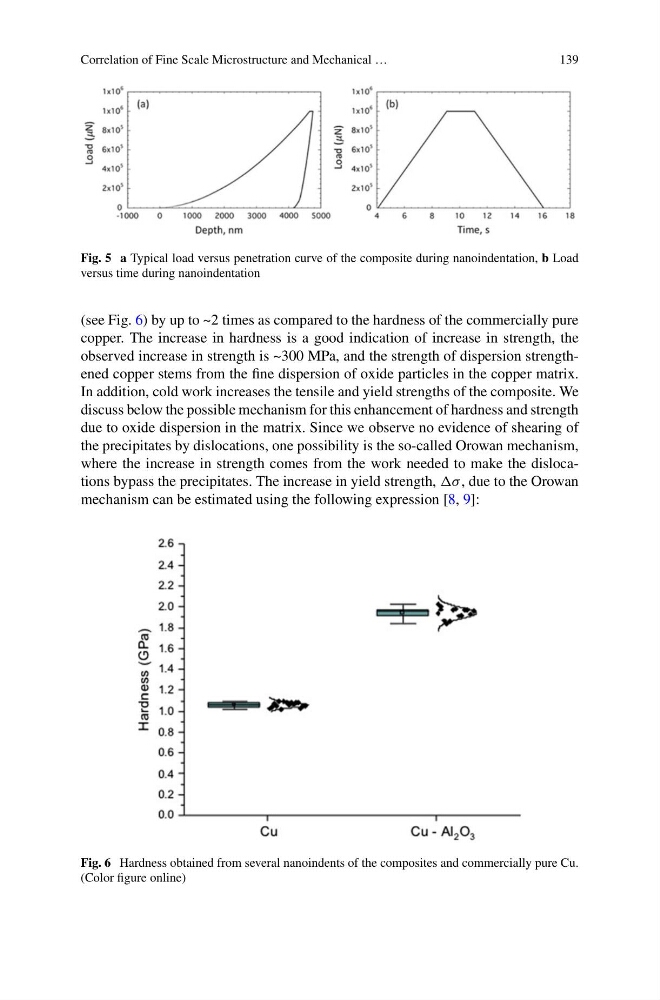
Fig. 5 a Typical load versus penetration curve of the composite during nanoindentation, b Load
versus time during nanoindentation
(see Fig. 6) by up to ~2 times as compared to the hardness of the commercially pure
copper. The increase in hardness is a good indication of increase in strength, the
observed increase in strength is ~300 MPa, and the strength of dispersion strengthened copper stems from the fine dispersion of oxide particles in the copper matrix.
In addition, cold work increases the tensile and yield strengths of the composite. We
discuss below the possible mechanism for this enhancement of hardness and strength
due to oxide dispersion in the matrix. Since we observe no evidence of shearing of
the precipitates by dislocations, one possibility is the so-called Orowan mechanism,
where the increase in strength comes from the work needed to make the dislocations bypass the precipitates. The increase in yield strength, σ, due to the Orowan
mechanism can be estimated using the following expression [8, 9]:
Fig. 6 Hardness obtained from several nanoindents of the composites and commercially pure Cu.
(Color figure online)
139
Fig. 5 a Typical load versus penetration curve of the composite during nanoindentation, b Load
versus time during nanoindentation
(see Fig. 6) by up to ~2 times as compared to the hardness of the commercially pure
copper. The increase in hardness is a good indication of increase in strength, the
observed increase in strength is ~300 MPa, and the strength of dispersion strengthened copper stems from the fine dispersion of oxide particles in the copper matrix.
In addition, cold work increases the tensile and yield strengths of the composite. We
discuss below the possible mechanism for this enhancement of hardness and strength
due to oxide dispersion in the matrix. Since we observe no evidence of shearing of
the precipitates by dislocations, one possibility is the so-called Orowan mechanism,
where the increase in strength comes from the work needed to make the dislocations bypass the precipitates. The increase in yield strength, σ, due to the Orowan
mechanism can be estimated using the following expression [8, 9]:
Fig. 6 Hardness obtained from several nanoindents of the composites and commercially pure Cu.
(Color figure online)