

3.2 Designing for Mainly Dual Activity
63
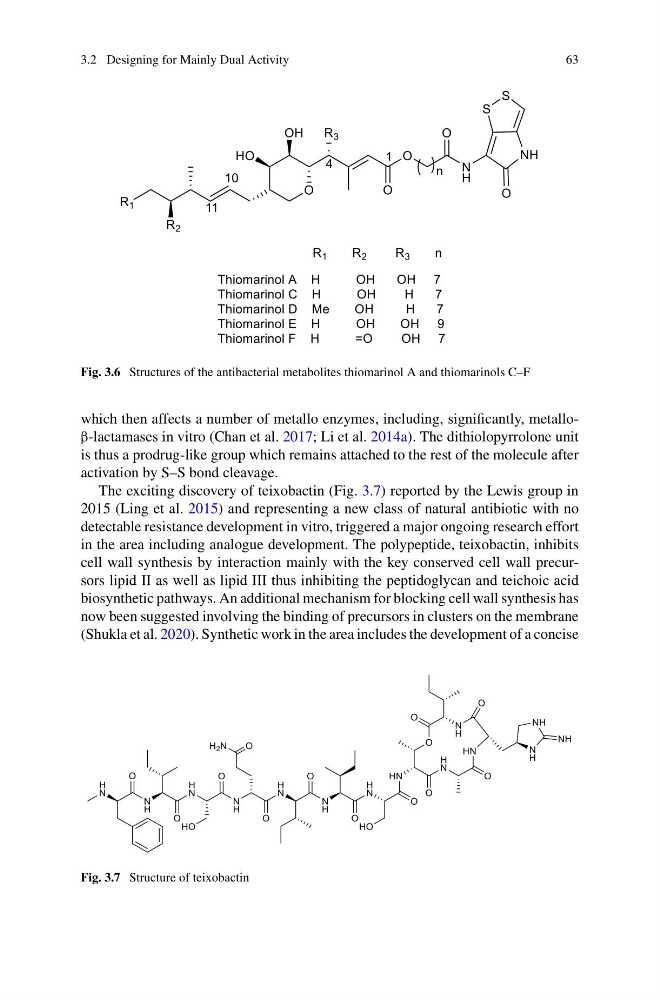
Fig. 3.6 Structures of the antibacterial metabolites thiomarinol A and thiomarinols C–F
which then affects a number of metallo enzymes, including, significantly, metalloβ-lactamases in vitro (Chan et al. 2017; Li et al. 2014a). The dithiolopyrrolone unit
is thus a prodrug-like group which remains attached to the rest of the molecule after
activation by S–S bond cleavage.
The exciting discovery of teixobactin (Fig. 3.7) reported by the Lewis group in
2015 (Ling et al. 2015) and representing a new class of natural antibiotic with no
detectable resistance development in vitro, triggered a major ongoing research effort
in the area including analogue development. The polypeptide, teixobactin, inhibits
cell wall synthesis by interaction mainly with the key conserved cell wall precursors lipid II as well as lipid III thus inhibiting the peptidoglycan and teichoic acid
biosynthetic pathways. An additional mechanism for blocking cell wall synthesis has
now been suggested involving the binding of precursors in clusters on the membrane
(Shukla et al. 2020). Synthetic work in the area includes the development of a concise
Fig. 3.7 Structure of teixobactin
63
Fig. 3.6 Structures of the antibacterial metabolites thiomarinol A and thiomarinols C–F
which then affects a number of metallo enzymes, including, significantly, metalloβ-lactamases in vitro (Chan et al. 2017; Li et al. 2014a). The dithiolopyrrolone unit
is thus a prodrug-like group which remains attached to the rest of the molecule after
activation by S–S bond cleavage.
The exciting discovery of teixobactin (Fig. 3.7) reported by the Lewis group in
2015 (Ling et al. 2015) and representing a new class of natural antibiotic with no
detectable resistance development in vitro, triggered a major ongoing research effort
in the area including analogue development. The polypeptide, teixobactin, inhibits
cell wall synthesis by interaction mainly with the key conserved cell wall precursors lipid II as well as lipid III thus inhibiting the peptidoglycan and teichoic acid
biosynthetic pathways. An additional mechanism for blocking cell wall synthesis has
now been suggested involving the binding of precursors in clusters on the membrane
(Shukla et al. 2020). Synthetic work in the area includes the development of a concise
Fig. 3.7 Structure of teixobactin